

Finding a turnkey factory construction general contractor allows the Investor to work with a single point of contact from site selection, legal completion, design, and steel structure manufacturing to construction and handover. For FDI enterprises new to Vietnam, this is the most effective way to shorten schedules and control costs. In the article below, Hai Long Construction summarizes the 7-step process that we have applied to hundreds of industrial factory projects we have executed.
What is a factory construction general contractor?
A factory construction general contractor is an entity that signs a single contract with the investor and takes full responsibility for all project tasks. Instead of researching and coordinating multiple individual contractors (design, steel structure, construction, M&E, fire protection, etc.), the investor entrusts the entire package to one general contractor.
Depending on the scope, the contract can be for construction only or Design & Build. With the turnkey factory construction model, the general contractor also supports investment consulting and legal procedures before commencement.
4 benefits of choosing a turnkey factory construction general contractor
- Single point of responsibility: all issues regarding quality, schedule, or variations are handled by the general contractor, avoiding the situation where contractors blame each other.
- Shortened schedule: design, steel structure manufacturing, and foundation construction can run in parallel instead of sequentially, helping the factory go into operation sooner.
- Cost control: the budget is fixed from the beginning based on the optimized design plan, limiting cost overruns due to changes between bid packages.
- Reduced management burden: particularly suitable for foreign investors who do not yet have a project management team in Vietnam.
7-step turnkey factory construction process
A systematic factory construction process helps investors know exactly where they are and what needs to be prepared. Below are the 7 steps Hai Long implements for a turnkey project.
Step 1: Needs assessment and investment site selection consulting
The general contractor works with the investor on production functions, scale, equipment lines, and expansion plans. From there, they provide advice on selecting an industrial park suitable in terms of location, infrastructure, land rental costs, and permitted industries.
Step 2: Completing investment legalities
For FDI enterprises, this step includes obtaining the Investment Registration Certificate (IRC), Enterprise Registration Certificate (ERC), and signing the land lease agreement in the industrial park. The more accurate the documentation, the shorter the approval waiting time. [LINK: Investment Support Consulting Page]
Step 3: Design and plan optimization
The design team establishes the master plan, architectural design, structural design, and M&E. This step determines the majority of the costs: choosing the span, column spacing, crane load, or reasonable foundation solutions can significantly save on steel and concrete volume.
Step 4: Construction permits, fire protection approval, and environmental procedures
The general contractor prepares dossiers for design appraisal, construction permits, fire protection design approval, and environmental procedures (EIA or environmental license depending on the project type). Some projects in industrial parks with approved detailed planning may be exempt from construction permits; the contractor will review this specifically for each project.
Step 5: Steel structure manufacturing at the factory
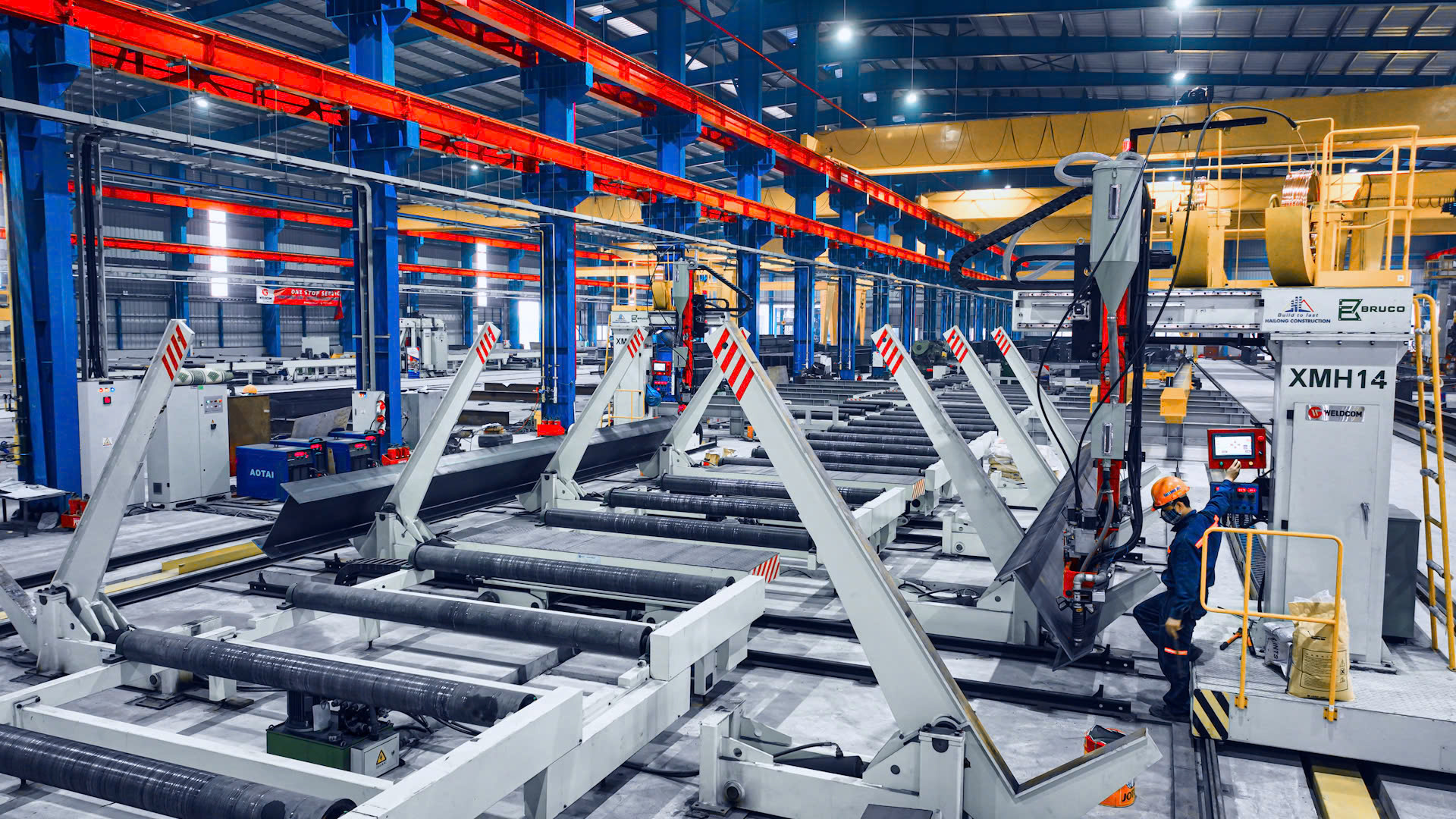
As soon as the structural drawings are approved, columns, rafters, purlins, and bracing systems are fabricated at the factory, in parallel with foundation construction on-site. A general contractor with their own steel structure factory will be proactive in both quality and supply schedule.
Step 6: Construction, erection, and M&E
Items are implemented according to the master plan: foundations and flooring, steel frame erection, roofing and cladding, electrical systems, water supply and drainage, fire protection, and yard infrastructure. The site manager and safety engineers supervise continuously to ensure quality and labor safety.
Step 7: Acceptance, as-built documentation, and handover
The general contractor coordinates with the investor and authorities for fire protection acceptance, completion acceptance, preparation of as-built documents, and handover for operation. After handover, the project continues to be under warranty according to the contract.
5 criteria for choosing a reputable industrial construction general contractor
- Legal capacity: possessing construction activity capacity certificates suitable for the project grade, with priority given to Grade I for both design and construction.
- Practical experience: having completed many projects of the same scale and industry, especially projects for foreign investors.
- Financial capacity: strong enough to advance capital for materials, ensuring the schedule is not interrupted when steel prices fluctuate.
- Proactive resources: having their own steel structure factory and construction equipment instead of relying entirely on subcontractors.
- Management system: ISO 9001 (quality), ISO 14001 (environment), and ISO 45001 (occupational health and safety) standards applied.
Hai Long Construction – general contractor for factory building construction with 27 years of experience
Starting from a corrugated iron and purlin workshop in 1999, Hai Long Construction is currently in the TOP 10 Industrial and Infrastructure Construction Contractors in Vietnam and the TOP 500 Largest Enterprises in Vietnam as evaluated by Vietnam Report.
- Implementing the Design & Build (D&B) model since 2006; Grade I capacity certificate for industrial design and construction.
- Design consultancy center with over 30 engineers; total workforce of 460 employees.
- 5-hectare steel structure factory in Hai Phong, with a capacity of 35,000 tons/year.
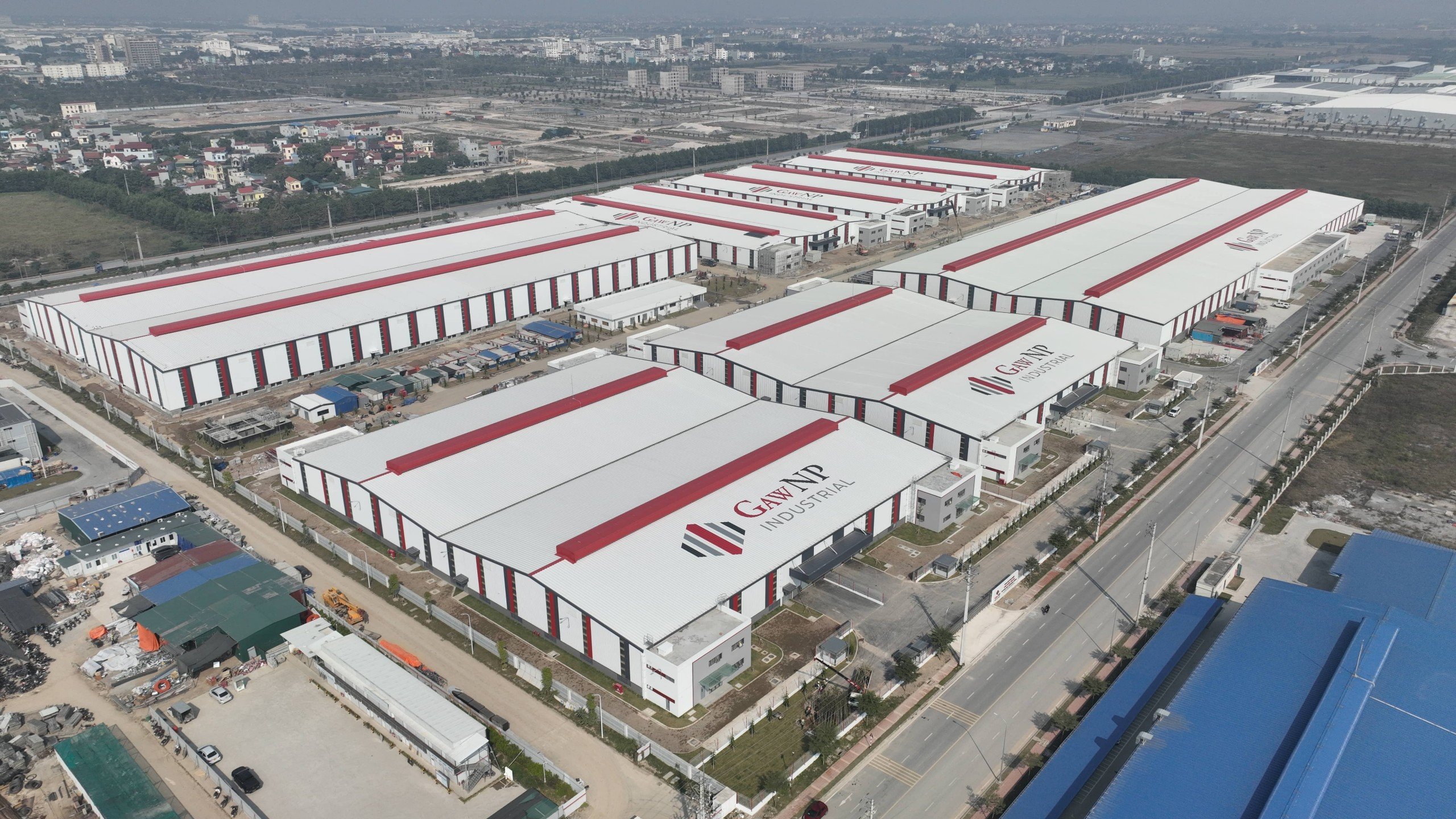
Hai Long has served as general contractor for many FDI projects such as GawNP Nam Dinh Vu Industrial Center (105,050 m² floor area), Jinka Factory (128,701 m² floor area), U.D.Electronic Vietnam, Sirtec International, and Huaping Vietnam.
Frequently Asked Questions
How long does a turnkey factory construction project take?
The timeline depends on the scale, geology, and legal progress. By running design, steel structure fabrication, and foundation construction in parallel, the turnkey model is usually significantly faster than splitting the contract packages.
Does the general contractor support FDI enterprises with investment procedures?
Yes. Hai Long provides support from site selection, obtaining IRC and construction permits, to fire safety and environmental impact assessment (EIA) procedures.
What is the difference between a construction general contractor and a Design & Build general contractor?
A construction general contractor works according to drawings provided by the investor; a D&B general contractor is responsible for both design and construction, making it easier to optimize costs and schedules.
How can I estimate the cost of factory construction?
Costs depend on the area, span, load, geology, and the investor's standards. Send a preliminary request to receive a free cost estimate.
Contact for factory construction general contractor consultancy
Are you planning to build a factory in Hai Phong, Ninh Binh, Bac Ninh, or other Northern provinces? Let the Hai Long team advise you on solutions and provide a preliminary quote.
- Hotline: (+84) 846 625 888 – (+84) 976 860 686
- Email: info@hailongjsc.vn
- Headquarters: 8th Floor, Taiyo Building, 97 Bach Dang, Hong Bang Ward, Hai Phong