

Currently, pre-engineered steel buildings are widely applied in industrial, civil, and military construction, etc. Pre-engineered steel buildings are primarily constructed from steel structure, so what is steel structure? How is it composed? Below, Hai Long would like to introduce the concept of steel structure and provide a general overview of steel structure.
1. What is steel structure?
With improvements in quality and metal production processes, steel has become one of the most popular materials used in the world and plays an important role in the construction industry.
A steel structure is the load-bearing structure of construction works designed and composed of steel. This is a type of structure widely used in the construction industry, especially in large-scale construction projects (pre-engineered steel building) due to the useful properties of steel. Thanks to the high load-bearing strength of steel, this structure is very sturdy and requires less material than other types of structures such as concrete or wood structures.
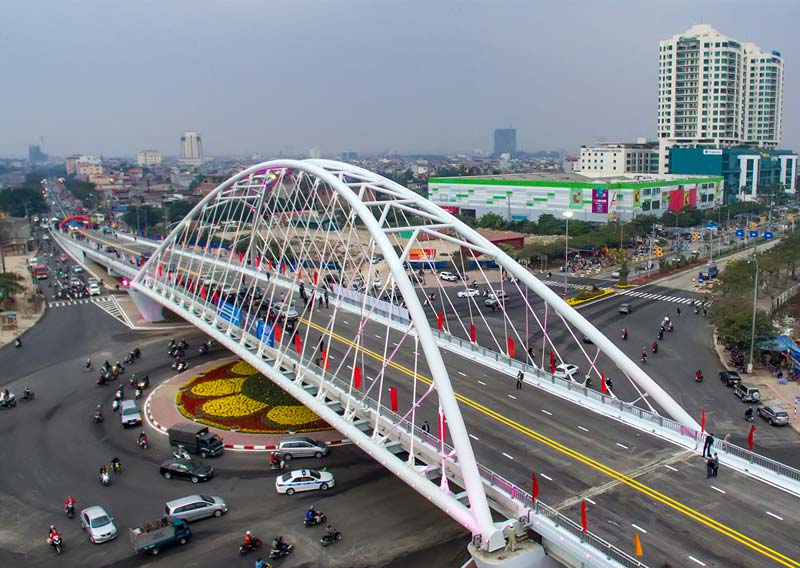
In modern construction, steel frame structures are commonly used for types of construction works such as: industrial factory buildings, offices, fences, bridges, conveyors, etc.


2. Main types of structures
- Frame structure: Beams, columns, rafters, bracing, purlins
- Grid structure: grid or dome structure
- Prestressed structure
- Beam bridge
- Cable-stayed bridge
- Truss structure: bars or trusses
- Arch bridge
- Arch architecture
- Suspension bridge
- Truss bridge: truss components

3. Reasons to choose steel structure
Fast construction time
Components are manufactured at the factory (carried out in parallel with the foundation construction on-site) and assembled on-site according to the specified architectural and technical drawings immediately after the foundation is completed, helping to shorten construction time on-site.
Large span capability
Steel structures have the ability to create large-span space trusses, providing more room for various purposes. These spaces will not be affected by columns, and the distance between columns can be greater than 30m, which is convenient for processing and construction: processing in the factory (strictly controlling progress and quality) and transporting for assembly at the construction site.
Enhancing the aesthetics of the project
Steel structures bring a unique beauty to the project, suitable for modern architectural styles. Steel frames are often lightweight and easy to shape, helping to create highlights in architecture.
Guaranteed quality
Components are processed at the factory through strict processes, standards, and quality control before construction at the site. This helps the construction process take place safely and ensures the quality of the project.
Flexibility
Easy to upgrade and modify in the future for new applications, such as flexibility in expanding space by adding additional steel frames. Furthermore, because the structure is connected by bolts, it is entirely possible to disassemble the components and reuse or install them in a new location.
4. Input materials for steel structure production
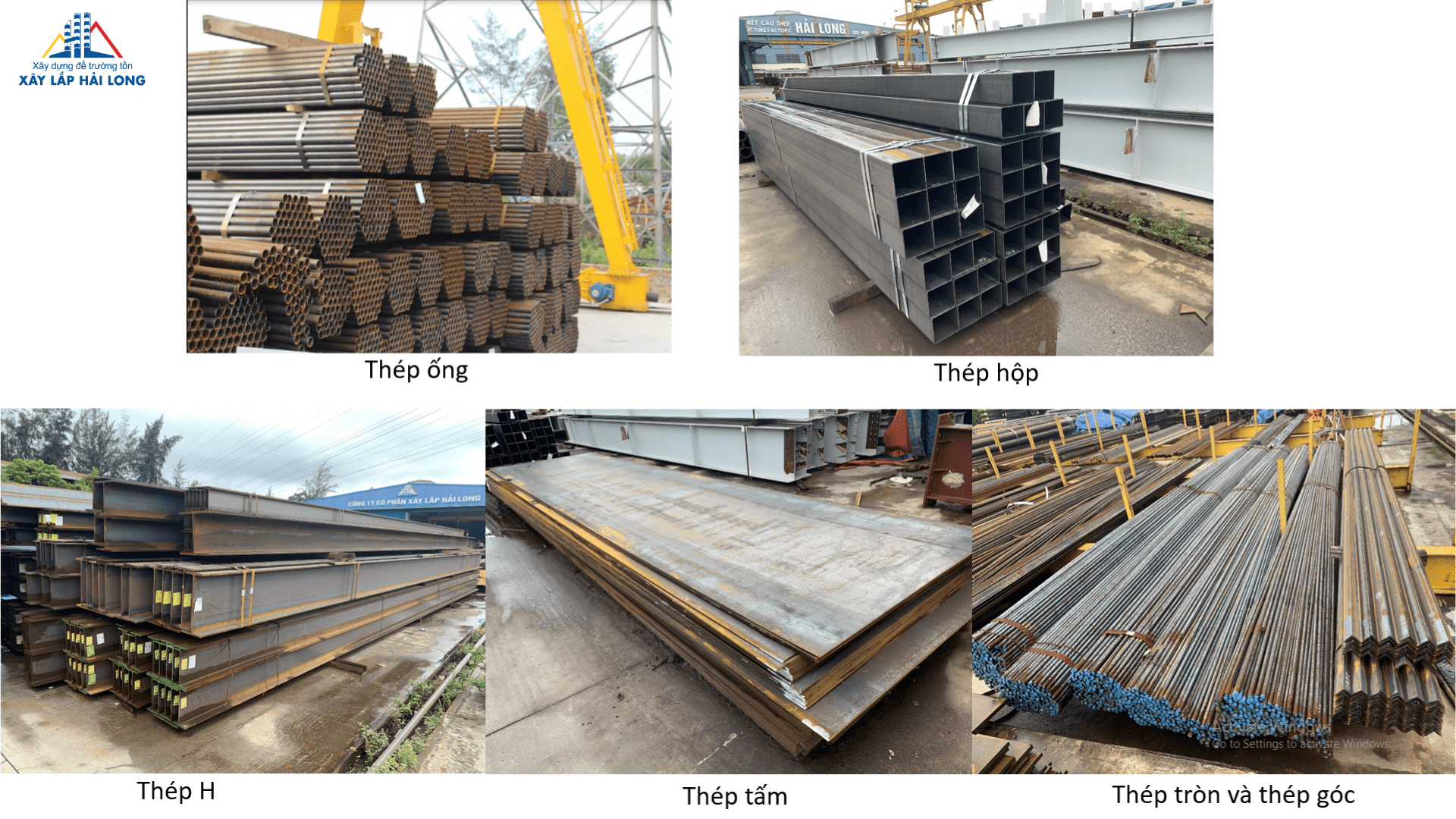
To produce steel structures, the inspection of selected materials is carried out very carefully.
5. Characteristics of steel structure
* Characteristics of dimensions and geometric configuration of steel structure
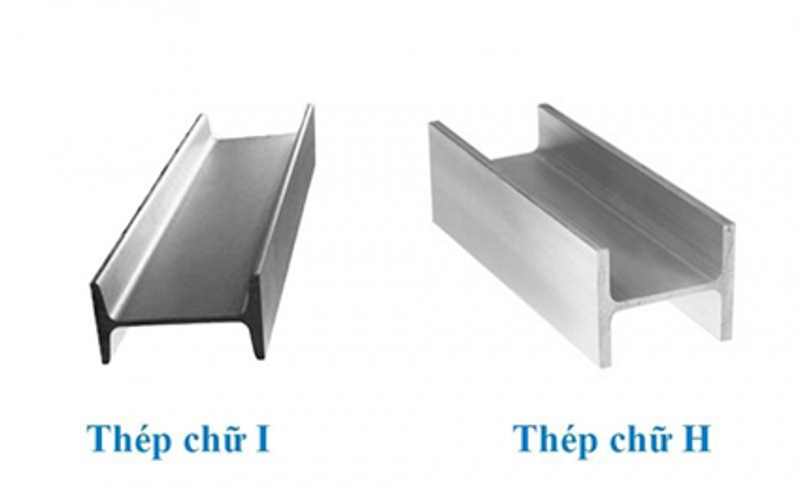
- Between H-beam and I-beam: I-beam and H-beam are two types of steel with quite similar designs. H-beam is a product widely used in projects such as housing, high-rise architecture, large bridges, and public works. H-beam is very diverse in shape and size, depending on the pressure level, different types of H-beams are used to ensure cost savings, project quality, and safety during construction. I-beam, like H-beam, is a product often used for projects such as housing, high-rise buildings, bridges... but depending on the different impact levels, one chooses to use either I-beam or H-beam.
* Visual identification characteristics
- Good raw materials must have manufacturer identification marks via paint or tags, etc., clear origin, CO/CQ(**), be properly packaged, and have a surface free of oxidation, pitting, and colors other than normal iron oxide.
- Color-coated steel sheets must not have paint scratches, must have proof of plating thickness and paint thickness, and must be verified by measurement and tensile testing methods.
- All materials must be digitally inspected, appraised, and accepted to ensure the reputation and product quality of Hai Long.
(**) CO/CQ: CO stands for Certificate of Origin; CQ stands for Certificate of Quality.
6. Processing and quality control process for Hai Long steel structure products

Cutting and drilling operations
The cutting process will be carried out according to the designated cutting drawings, based on Shop drawings, established and issued by the workshop manager, and performed in the following steps:
- Perform cutting on equipment: Hydraulic shears, thermal cutting, Plasma cutting (CNC and semi-automatic).
- Perform drilling and punching on machines: CNC drilling, radial drilling, combined punching and shearing, CNC plate punching.
- Perform self-inspection and random inspection by the Quality Control department during the cutting process.
- Enter into nominal inventory and hand over semi-finished products to GH1 and GH2 teams after passing inspection.
- Enter surplus materials and scrap into inventory (For surplus materials, if they can be joined and used immediately, workshop technical staff will record them in the list and update the Production department; if they need to be stored or exchanged for full-sized sheets, a request must be made, and after approval, the surplus material is entered and a request for full-sized material exchange is issued).
The Production department directs the warehouse to establish a list of surplus materials for immediate reuse whenever possible, avoiding long-term storage that causes waste.
Basic assembly and welding
- Rough assembly: This is the basic shaping stage using equipment and manual labor, aimed at basic shaping through clamping, joining, and positioning by tack welding; Assembly equipment: Tack welding machine; Horizontal welding machine assembly. Parts, plates, and components forming the semi-finished product are prepared by the cutting team, beveled, and then assembled and tack-welded.
- Rough welding: Performed on automatic and semi-automatic welding equipment with products from the assembly stage, fully welding the seams transferred from the rough assembly stage, and performing flange straightening before moving to fine assembly.
Flange straightening, fine assembly, and final welding
- Flange straightening: For I or H-beam cross-sections, after basic (rough) welding is completed, they are put into a flange straightening machine to press them flat and eliminate deformation caused by welding (pressing to eliminate flange curling).
- Fine assembly: Mainly performed manually, deploying tack welding to the coordinates specified in the fabrication drawings, using rulers and jigs, depending on the skill of the assembly worker.
- Fine welding: Mainly performed manually using semi-automatic equipment, completing all fine assembly welding.
Shot blasting, burr grinding, primer painting, straightening, color painting, and packaging
- Shot blasting: This is the stage of cleaning the oxidation layer, impurities, and dust adhering to the surface of the semi-finished product, performed in a shot blasting chamber using abrasive media, brushing, and wiping with solvent. After cleaning, the product has a bright surface with a roughness of 30 ÷ 75 µm, meeting S.a 2.0 ÷ S.a 2.5 standards.
- Burr grinding: Performed immediately after cleaning to ensure the semi-finished product is free of burrs and defects.
- Straightening (performed before primer painting): After rough and fine welding, the product may be deformed or curved, so it is necessary to use the heat of a torch to heat the curved area until red, then pour cold water to shrink the steel, making the entire product straight.
- Primer painting: Before primer painting, the surface must be ensured to be free of dust, oxidation, and oil. Paint with primers: Alkyd, Epoxy as required using vacuum or high-pressure painting equipment; the wet paint layer is measured and controlled using a wet film thickness gauge.
- Packing, warehousing: Packing for convenience in shipping and unloading, enhancing product protection, shortening loading and unloading time, and strengthening brand image and recognition.
- Shipping: Goods are shipped according to the warehouse release order.
* Requirements set by Hai Long in the steel structure production process
- The production process only begins after the documentation is signed by the factory manager (the documentation includes the list of components to be produced, along with technical specifications, thickness, etc.)
- Production orders are only issued after all materials are available and design drawings are approved.
- Product quality control. Input materials must have clear certification and origin, in accordance with standards.
- Check machinery and equipment before use to ensure they are stable enough to maximize the production process.
- Check bolts, paint surfaces, etc., based on JIS standards and design contracts through measurement, visual inspection, CO, CQ, and inspection -> materials are only used after QC approval.
- Fabrication inspection: operations are subject to random inspection, but throughout the process (in special cases, 100% of products are inspected). Inspection methods: visual, measuring tape, height gauge, micrometer, caliper, magnetic particle testing, ultrasonic testing; in special cases, X-ray welding inspection is used. Hai Long independently inspects and has full equipment and tools to perform the above methods. The QC team is highly qualified and certified in welding, ultrasonic, magnetic, and penetrant testing; the QC department is fully equipped with devices and materials to conduct comprehensive inspections of steel structure products.
- The team of engineers and workers is well-trained in their expertise and has many years of experience in the field of steel structure production. QC staff must work with high responsibility, inspect products thoroughly before packing and shipping, and promptly detect errors.
______________________________________
Hai Long Construction JSC – General contractor for construction, fabrication, and erection of steel structures
Hai Long is proud of the quality of products and services we have provided to customers for over 2 decades. Currently, we have a modern factory with an area of 46,000m2 and a capacity of 15,000 tons/year.
Hai Long Steel Structure Factory
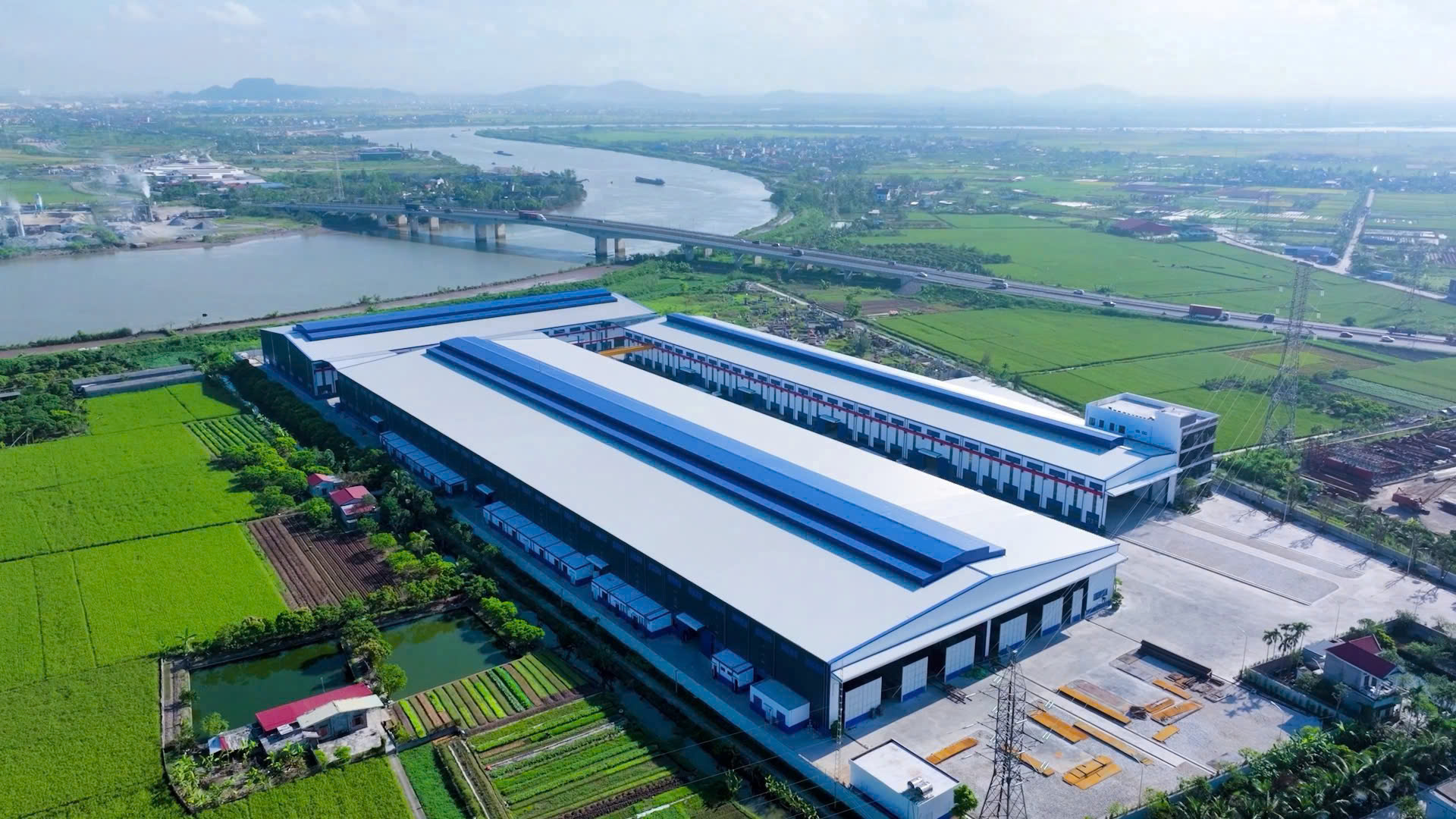
With a team of experienced, well-trained engineers proficient in technical support tools, along with modern production machinery continuously invested in, our factory has met production schedules of up to 15,000 tons/year with quality satisfying the high standards set by customers. Furthermore, the Hai Long factory also possesses a professional internal self-inspection process in all stages of the production process, ensuring absolute peace of mind for investors regarding our products.