

The construction contractor will propose reasonable construction methods and strive to concentrate all resources to execute the project with the fastest progress and best quality, ensuring the project is put into operation as soon as possible.
CONSTRUCTION METHODS FOR CONSTRUCTION PROJECTS
The construction contractor will propose reasonable construction methods and strive to concentrate all resources to execute the project with the fastest progress and best quality, ensuring the project is put into operation as soon as possible.
CONSTRUCTION METHODS TO ENSURE OCCUPATIONAL SAFETY AND FIRE PREVENTION
A. CONSTRUCTION SEQUENCE & KEY TECHNICAL SOLUTIONS
I/ Construction sequence and construction methods for the project.
To meet the investor's need to put the project into operation as soon as possible for high economic efficiency in project exploitation, our contractor will strive to concentrate all resources to execute the work with the fastest progress and best quality.
Based on the design workload, project characteristics, construction schedule, and survey of the construction area as well as the investor's requirements, our contractor anticipates the following construction sequence:
Step 1: Proceed with site preparation.
Step 2: Proceed with system construction.
Step 3: Install the system.
Step 4: Align, connect, and test the system.
Step 5: Provide user training and technology transfer, project warranty, and complete related legal procedures and documentation.
II/ Key technical solutions for construction methods.
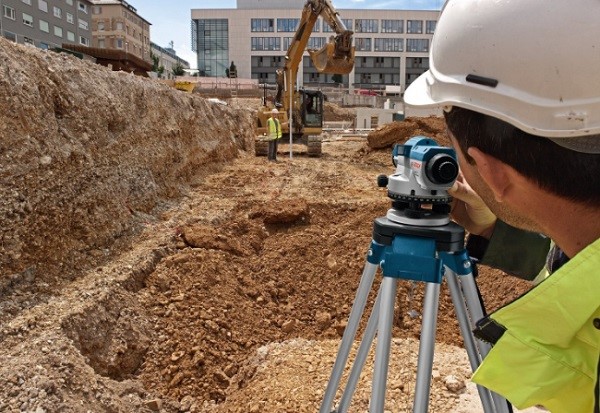
1. Project positioning.
During construction, the Contractor will regularly assign a technical officer to inspect the site to verify the positions on the design drawings against the actual site for project items as well as the overall project throughout the construction process, recording fully in the daily construction log as a basis for accurate construction, inspection, and acceptance, ensuring project quality.
2. Technical construction methods.
1. All technical staff and workers participating in construction are trained at specialized vocational schools and hold professional certificates in accordance with current state standards.
2. Before sending workers to the construction site, the contractor organizes retraining, testing, and labor classification for each individual and specific group. Provide knowledge and safety equipment. Especially for general laborers (short-term hires), the contractor will pay closer attention to management and construction guidance.
3. The contractor is responsible for fully fulfilling obligations: Taxes, social insurance, environmental sanitation, etc., and other costs arising from the construction organization process (compensation, remediation of consequences caused by construction).
4. The Contractor shall proactively and promptly propose to the Investor regarding information (technical information & other information) necessary for the preparation & implementation of construction.
5. Construction teams & related parties (Investor, design consultant, construction supervisor) shall regularly communicate to unify technical plans, construction schedules, and resolve obstacles... Minimize overlapping construction and demolition – which affects the quality and progress of the project.
6. After officially receiving the notice of winning the bid – The Contractor shall urgently deploy construction designs & transfer construction documents to the Investor and design consultant for signing and approval to serve as a basis for construction orientation (any discrepancies compared to the construction documents must be directly decided by the Investor and design consultant, accompanied by detailed confirmation in the construction log).
7. Upon completion of the entire project, based on the project acceptance minutes, as-built documents, construction logs, minutes of arising work, etc., the Contractor shall perform the following stages: Monitoring, adjustment, trial run, final settlement, handover, warranty, and maintenance – In accordance with the terms stated in the economic contract and current laws.
3. Power supply and fire protection equipment solutions for construction.
To ensure smooth construction, it is necessary to guarantee continuous power supply and ready-to-use fire protection equipment – Based on the above purpose:
1. Construction power supply is obtained from 2 sources:
+ Power supply from the hall, 3-phase electrical system from the main distribution board.
+ Power supply from backup generators (diesel engine generators), power generated by the machine – 3-phase electricity.
2. All construction electrical cabinets (fixed cabinets, mobile cabinets) must have moisture resistance (IP 54) to ensure safe operation even in damp conditions at the site (if any), cabinet shells must be grounded with 4.0mm2 bare copper wire – all 3P & 2P sockets supplying power to power tools must be connected after earth leakage circuit breakers.
3. From the central cabinet position, power cables + grounding wires are enclosed in PVC pipes running exposed along the wall to the load position. In cases where cables must be routed underground through traffic axes, cable enclosure is performed using steel pipes to ensure resistance to mechanical forces.
4. Construction power supply is implemented as follows:
Main trunk cables will be routed from the main cabinet to the connection points.
5. To ensure safety and avoid electrical incidents – causing damage to people and equipment, the organization of electrical construction at the site needs to note:
– All workers and technical staff are fully equipped with specialized tools and protective gear according to the characteristics of the assigned work.
– All electrical workers must undergo a training course on electrical safety (according to industry standards) and have a confirmation record.
– Technical staff (depending on the level) are the direct inspectors and are responsible for technical and safety aspects.
4. Construction methods for items:
To ensure progress, quality, and construction efficiency, the Contractor will complete the technical and legal aspects as mentioned above to promptly provide them to the parties for careful study before officially deploying construction.

The Contractor shall proactively prepare to mobilize at the construction site with characteristics suitable for the requirements set out in the bidding documents as well as changes proposed by the Investor and changes proposed by the Contractor that have been approved by the Investor and functional units, with some notable points as follows:
+ Material types are imported to the site according to the needs of each construction stage designated by the construction team leader; do not import materials in bulk, which causes difficulties in construction and equipment preservation.
+ All types of materials used for construction are specialized materials, so they will be carefully preserved by the Contractor, avoiding the effects of water, heat, moisture, chemicals, bacteria, insects & mechanical impact... therefore, although stored in a temporary warehouse, the minimum climatic conditions must be achieved: (Temperature: 10 – 40 degrees Celsius. Average humidity: 60%).
+ All materials brought to the warehouse at the site are checked for design, labels, symbols, origin, manufacturing date... in accordance with the content recorded in the bid documents. In addition to checking the quantity, the warehouse keeper and technical staff are also responsible for taking 1 sample from each shipment to the project management board to serve as a reference sample throughout the construction period. In case materials do not meet quality standards or have discrepancies in specifications, types... a record must be made to notify the parties to have timely replacement measures, avoiding impact on construction progress and project quality.
B. DETAILED CONSTRUCTION METHODS
This is a complex technical system with specific functions serving seminars, conferences, performances, and presentations. Therefore, during the installation process, the Contractor is required to have construction plans and arrange a team of engineers, technicians, and skilled workers reasonably – managing quality at each installation stage strictly and seriously. To achieve the above requirements, we plan to carry out construction as follows:
Stage 1: Preparation for construction.
At the construction site:
Establish a contractor expert team with skilled engineers along with domestic and international specialists to re-survey the current status of the project to make reasonable proposals and changes during the construction process. The warehouse keeper and related departments carry out the arrangement of warehouses and yards to prepare for material mobilization for construction.
Propose necessary handling plans and changes to the Investor and related units.
Contact departments and functional units to carry out power and water supply for project construction.
At the construction unit:
Carry out the mobilization of raw materials and equipment for construction. Check, install, and test the system, check the quality of equipment to have replacement plans before construction, thereby avoiding impact on progress and construction quality.
Prepare documents and legal procedures for construction and project implementation.
Arrange and assign tasks directly to members participating in construction and project service.
Stage 2: System construction.
At the construction site: This stage focuses on many high-level workers from level 3 to level 7 in electricity, electronics, and main engineers in electronics specializing in audio-visual with extensive experience to carry out the installation of all equipment including:
Install temporary power supply system for construction.
Lay speaker cables and signal cables for the system. Mark and test the electrical cable and signal cable system, test the power supply for the sound system. Perform related tasks and documents for input material and equipment acceptance.
Stage 3: System installation.
To ensure construction proceeds smoothly while maintaining quality and schedule, this phase involves the contractor mobilizing a large number of highly qualified personnel to the site, including engineers, domestic and international experts, and skilled technicians to support construction.
Measure and label speaker cables.
Install amplifier systems and other audio equipment into the control cabinet.
Install standalone electronic devices.
Install mounting brackets.
Install audio equipment.
Connect control lines from the equipment cabinet to the systems.
Program system controls.
Phase 4: Calibration, inspection, and commissioning.
Calibrate, inspect, and commission each device.
Calibrate the acoustic system and both integrated and standalone electronic devices.
Inspect system wiring and connections.
Commission the system.
Phase 5: Training and technology transfer.
Conduct training and technology transfer for technicians and specialists of the investor and end-user.
Instruct the investor's and end-user's technical staff and specialists on methods and procedures for utilizing system functions and maximizing efficiency.
During this phase, to ensure the system is operated most effectively while avoiding unnecessary damage and incidents, the contractor will conduct a training course on equipment and operation methods directly at the construction site, allowing technicians and operators to practice and discuss directly on the equipment. During these sessions, we will assign experts and contractor technicians, and invite external consultants to address any questions from the trainees.
C. FIRE PREVENTION AND PROTECTION MEASURES DURING CONSTRUCTION
Fire prevention and fighting (FPF) measures:
– Do not overload electrical capacity.
– Do not bring explosives or flammable materials into the construction area.
– Strictly comply with fire safety regulations and rules.
– Regularly inspect and supervise compliance with fire safety regulations.
Methods and measures for organizing fire safety during construction:
To be proactive in fire prevention and fighting, contributing to maintaining security, order, and social safety during construction, the construction unit proposes the following specific organizational measures:
– Establish a Fire Safety Command Board, with the Site Manager responsible to the Director and the law for safety conditions in their assigned construction area.
– Establish a professional Fire Safety Team selected from construction workers; this force will be organized for training and basic fire safety professional instruction.
– Regarding fire safety equipment during construction: 03 CO2 fire extinguishers, 03 multipurpose fire extinguishers, and 5 sets of fire safety regulations and instructions.
– Implement material and equipment storage protocols in accordance with fire safety regulations. Electrical systems on-site, from power sources to frequently used areas, are regularly inspected; if there is any suspicion of unsafe wiring, immediate repairs are required.
– Ensure site access routes remain clear, with personnel managing traffic and scheduling vehicle entry/exit to prevent overlapping times and congestion.
Fire extinguishers are placed in locations prone to fire and explosion, ensuring they are visible and easily accessible. All staff participating in the construction will be instructed on how to use this equipment (certificates will be issued after training).
– Install telephones and keep necessary emergency numbers such as ambulance, police, and fire department.
Fire safety regulations for construction work.
– Comply with technical regulations and procedures to ensure electrical safety and prevent short circuits that could cause fires.
– Do not connect electricity arbitrarily; if wires, plugs, etc., are damaged during use, report them to the site management board for immediate resolution.
– Strictly prohibit boiling water with improvised electrical devices, smoking, or cooking in the construction area.
– Flammable materials must be managed carefully with clear delegation of responsibility and specific regulations.
– The Fire Safety Command Board shall regularly inspect safety and check the equipped fire safety tools and equipment.
– In the event of a fire, everyone must uphold their sense of responsibility to save lives and property. Maintain awareness of protecting the scene to assist investigative authorities in determining the cause of the fire.
– Individuals and groups with outstanding achievements in fire safety will be rewarded; if a fire occurs, those responsible will be held accountable before the law.
The site management board is responsible for disseminating these regulations to every employee on the entire construction site.
D. OCCUPATIONAL SAFETY MEASURES
General regulations:
To ensure the safety of personnel, machinery, and equipment, the construction unit shall strictly comply with all current state regulations, technical safety codes, and labor protection standards.
Specific measures:
– Strictly adhere to the periodic inspection schedule for labor protection and occupational safety.
– Develop detailed safety measures for each task; these measures must be approved by superiors and disseminated/trained to the personnel directly involved in construction.
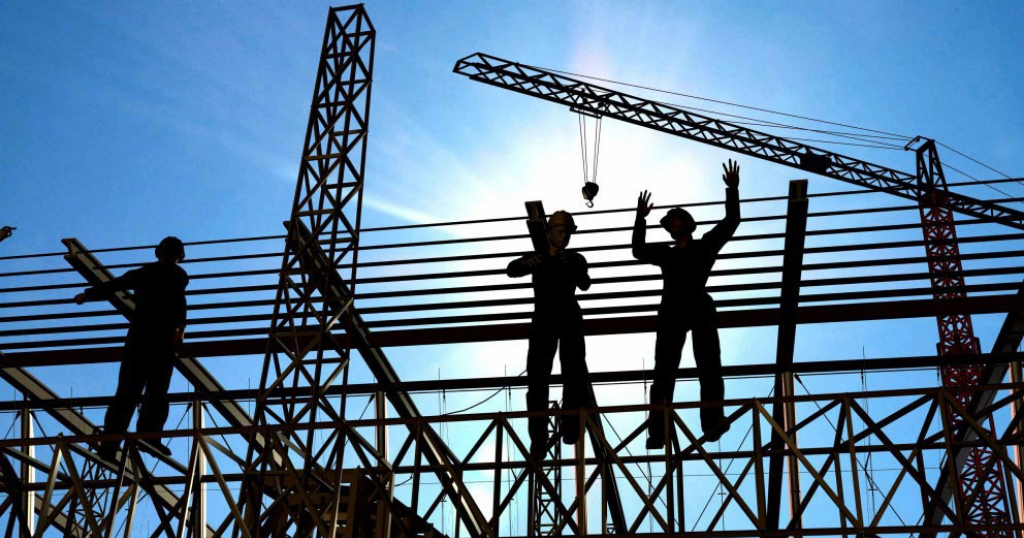
– When working at heights, safety railings and safety nets must be installed; adequate lighting must be provided for night work.
– All machinery and equipment used must be inspected, possess complete technical documentation, and be granted operating permits in accordance with the Ministry of Labor's regulations.
– During construction, all personnel must be equipped with proper personal protective equipment (PPE) such as: safety shoes, safety harnesses, protective clothing, hard hats, etc.
– While working on-site, it is strictly forbidden for anyone to consume alcohol, beer, smoke, or use any stimulants that may impair mental alertness.
– When working at heights, especially in locations without safety nets, it is mandatory to wear a safety harness; the quality of the harness must be checked, and it must be secured to a reliable anchor point.
– Scaffolding and working platforms must be inspected and accepted before being put into use.
– When working at heights, it is forbidden to throw objects from above to the ground or vice versa. Safety nets must be installed to shield the high-altitude work area.
– Absolutely do not assign workers to the same location at different heights – Use the correct type of labor and avoid overlapping tasks.
– A medical officer shall be on duty at the construction site. Organize health check-ups for workers before they are deployed to the project.
– For each construction task, our Contractor will implement specific occupational safety measures: For high-altitude work, the Contractor will use a Minh Khai scaffolding system installed around the perimeter. The scaffolding system will be shielded externally with nets and tarpaulins to prevent falling objects, and instructional signage will be posted. During construction, workers will be equipped with safety harnesses and other necessary devices. All workers must undergo safety training before starting work, which is mandatory for those working at heights. Additionally, the Contractor will establish a network of safety officers at the site; these safety officers are workers directly involved in production within their respective teams. The safety officer system is responsible for monitoring and reminding personnel about safety during construction.
Duties and responsibilities regarding occupational safety.
Responsibilities of the Site Manager:
– Responsible for occupational safety at the construction site.
– Serve as the Chairman of the Occupational Safety Committee.
– Assign tasks to foremen and occupational safety supervisors.
– Arrange for the inspection of machinery and equipment at the site as required by relevant parties.
– Organize safety patrols and inspections, and take timely action when necessary.
Responsibilities of the Security/Safety Officer:
– Provide advice to the management board on long-term safety procedures.
– Develop and oversee the company's safety program.
– Conduct safety inspections to evaluate compliance with safety standards and implement safety standards set by the policy-making management board; propose corrective measures to the management board.
– Participate in occupational safety training courses.
– Draft and update safety standards.
– Urge everyone to comply with occupational safety standards.
Responsibilities of the Occupational Safety Supervisor:
– Positioned on-site to observe and identify unsafe behaviors or working conditions.
– Prepare daily inspection reports and follow up on incidents.
– In the absence of the safety officer, may assume the duties of the person in charge.
– Perform other duties as specified by the company's occupational safety regulations.
Responsibilities of the Construction Supervisor:
– Promote the implementation of occupational safety at the construction site.
– Correct unsafe conditions and activities.
– Participate in safety inspections and monitor the handling and correction of work issues.
Worker responsibilities:
– Comply with established procedures and labor safety regulations, and immediately report any unsafe working conditions, equipment, or behaviors to the site supervisor.
– Report all accidents or dangerous incidents to the site supervisor.
– Participate in all labor safety activities.
– Maintain equipment and tools to ensure they are always in good, safe working condition.
– Operate machinery and equipment only when they are functioning safely.
– Participate in all labor safety training sessions.
E. ENVIRONMENTAL SANITATION MEASURES
– Arrange for workers to spend 15 to 30 minutes before the end of each shift to clean up the construction site daily.
– When transporting dry, loose, or dusty materials, ensure they are covered or properly moistened to prevent pollution during transit.
– Do not litter or dispose of waste indiscriminately; all waste must be cleared to the designated site area.
– When performing tasks that generate noise, the Contractor will implement mitigation measures or select appropriate working hours to avoid disturbing the surrounding environment. The most effective noise control measures involve eliminating or minimizing the noise source. Noise control measures for the project include:
+ Construction machinery and equipment must meet noise control requirements, using machines with appropriate capacity and low noise levels.
+ Increase the use of environmentally friendly materials to avoid polluting the construction area.