

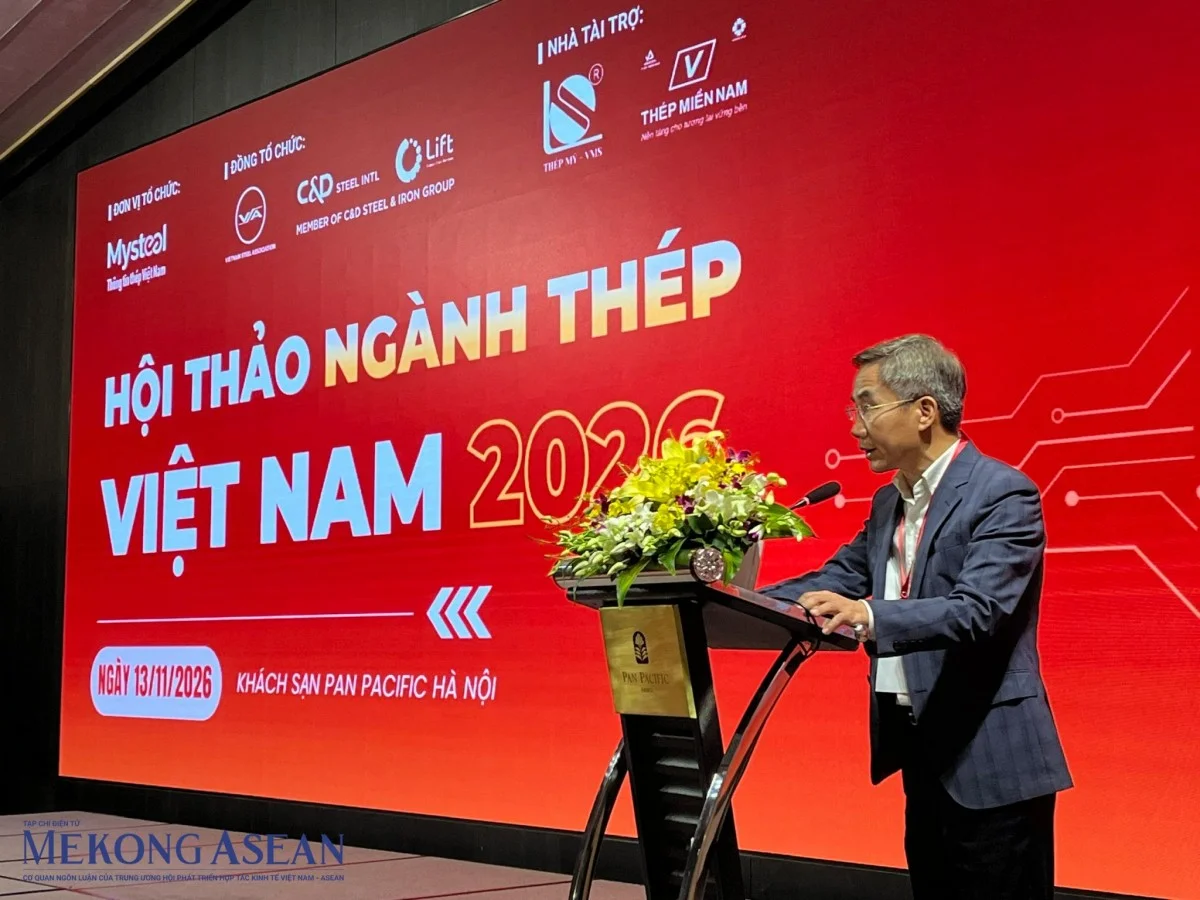
Excess capacity, fluctuating input costs, and increasingly strict emission standards are forcing Vietnam's steel industry to change its way of competing. At the Vietnam Steel Industry Conference 2026 on November 13 in Hanoi, associations, businesses, and regulators emphasized the requirement to shift from increasing output to improving productivity, quality, and efficiency across the entire value chain.
New metrics: energy consumption, quality, and value-added
Mr. Nghiem Xuan Da, Chairman of the Vietnam Steel Association (VSA), stated that the steel industry needs to shift its focus from the number of tons produced to operational efficiency. Key indicators businesses need to monitor more closely include energy consumption levels, raw material usage efficiency, logistics costs, technological level, and product quality.
According to Mr. Da, price advantages need to be supplemented by technological capabilities and value-added. Environmental requirements are also gradually becoming part of competitiveness: reducing energy consumption and controlling emissions is not only for compliance but also to meet market demands.
Competition must be viewed across the entire chain
Mr. Le Phung Thang, Vice Chairman of the Vietnam Association of Mechanical Industry (VAMI), suggested that steel industry development policies should consider the interests of both steel-using businesses, not just manufacturers. When domestic steel structure companies win orders, domestic steel demand increases accordingly; conversely, uncompetitive input steel prices make it difficult for Vietnamese contractors to win bids, affecting the upstream production sector as well.
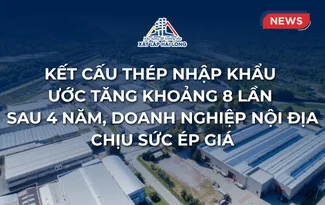
VAMI estimates that the volume of imported steel structure increased from over 30,000 tons in 2022 to nearly 250,000 tons in 2026; this is data aggregated by the association, not official statistics. Mr. Thang also noted that trade defense measures should only be applied when investigations prove dumping, damage, and causal relationships, while also assessing the impact on both sides of the chain.
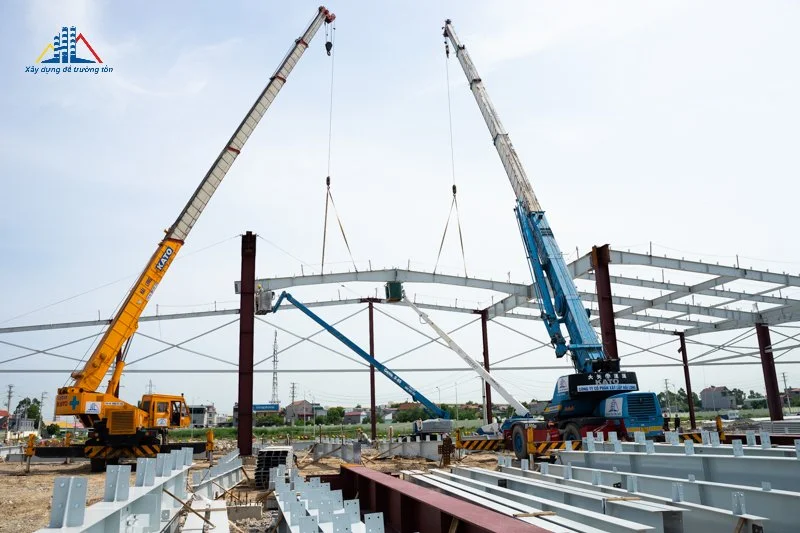
For downstream businesses, the requirements go beyond processing prices. Design capability, technology, productivity, quality, logistics, and erection, along with the ability to participate deeply in projects and general contractor activities, are seen as the direction for steel structure companies to increase value.
Manufacturers under pressure from multiple sides
Mr. Tran Ngoc An, Sales Director of Hoa Phat Dung Quat Steel JSC, stated that the steel industry is facing excess capacity while demand remains weak, creating pressure on both price and output. Prices for iron ore, scrap steel, coking coal, energy, and logistics costs are constantly fluctuating. Geopolitical conflicts, quotas, and technical barriers also make exporting more difficult, while emission reduction requirements force businesses to consider the costs of technological transition.
To cope, Hoa Phat Dung Quat is focusing on controlling energy and logistics costs, diversifying supply sources and markets, and increasing product value. The company is also applying automation and artificial intelligence in production management and utilizing heat and waste gas from the steelmaking process.
Ministry of Industry and Trade prepares roadmap and steel industry database
Mr. Chu Duc Anh, representative of the Industry Agency (Ministry of Industry and Trade), said that the agency plans to develop a roadmap for the steel industry, defining the direction for technological transition, industry scale, and product structure for each phase.
In this process, the Agency will evaluate actual capacity along the technology chain, from raw materials and steelmaking to deep processing; aggregate data on capacity, technology, output, consumption, and import-export turnover by product group; and build supply-demand scenarios. The Industry Agency plans to establish a periodically updated steel industry database and requests associations and businesses to share information on market demand, investment plans, and obstacles.
Assessment
The general message of the seminar is that the competitiveness of the steel industry must be improved simultaneously at every link, from steelmaking to steel fabrication and usage. For contractors and steel structure manufacturers, this means the criteria evaluated by investors will extend beyond price: fabrication quality, schedule, material traceability, and the project's emission levels.
Nguồn: Mekong ASEAN – “Ngành thép Việt Nam trước yêu cầu chuyển từ sản lượng sang chất lượng”, Trung Anh, 14/11/2026.