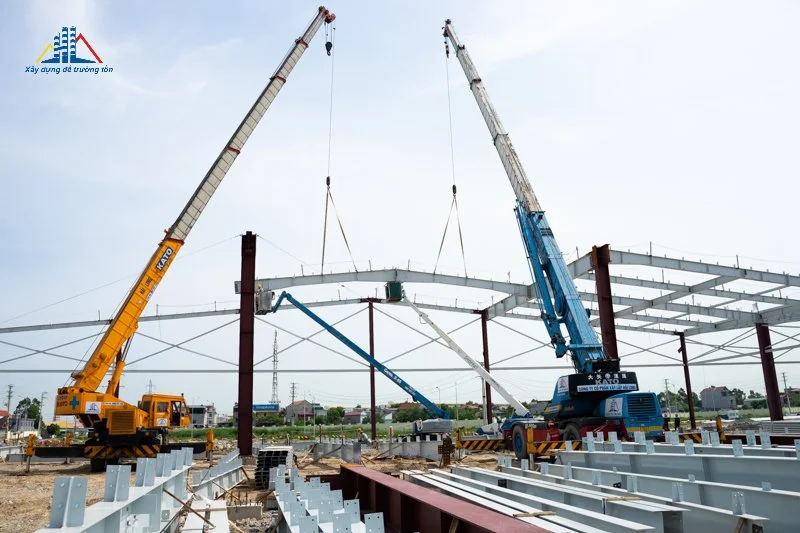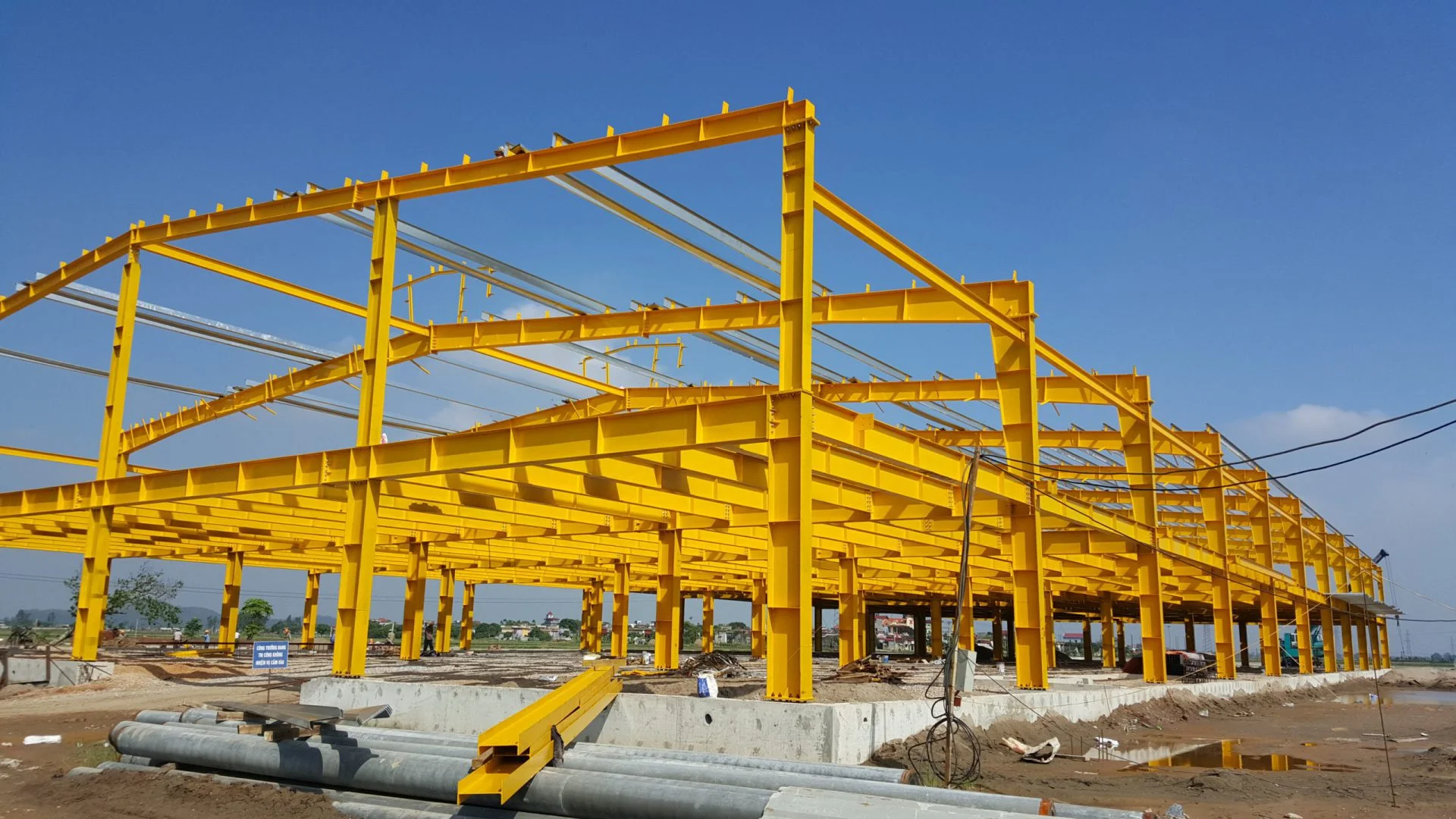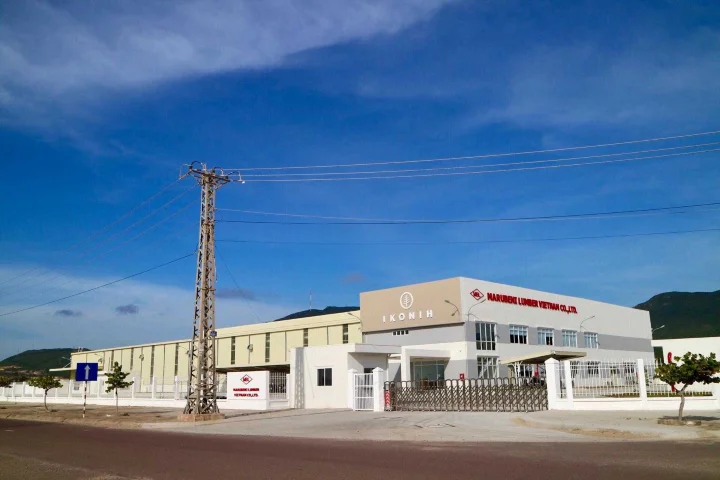


If we compare the steel structure frame to the skeleton of a building, the steel column is the backbone, serving as the foundation for stability and safety. Especially in industrial factory buildings, where production activities and heavy machinery are present, the factory steel column is a structural component that demands absolute technical precision.
This article will delve into the role, detailed construction, and common classifications of steel columns, providing foundational knowledge for students, engineers, and investors.
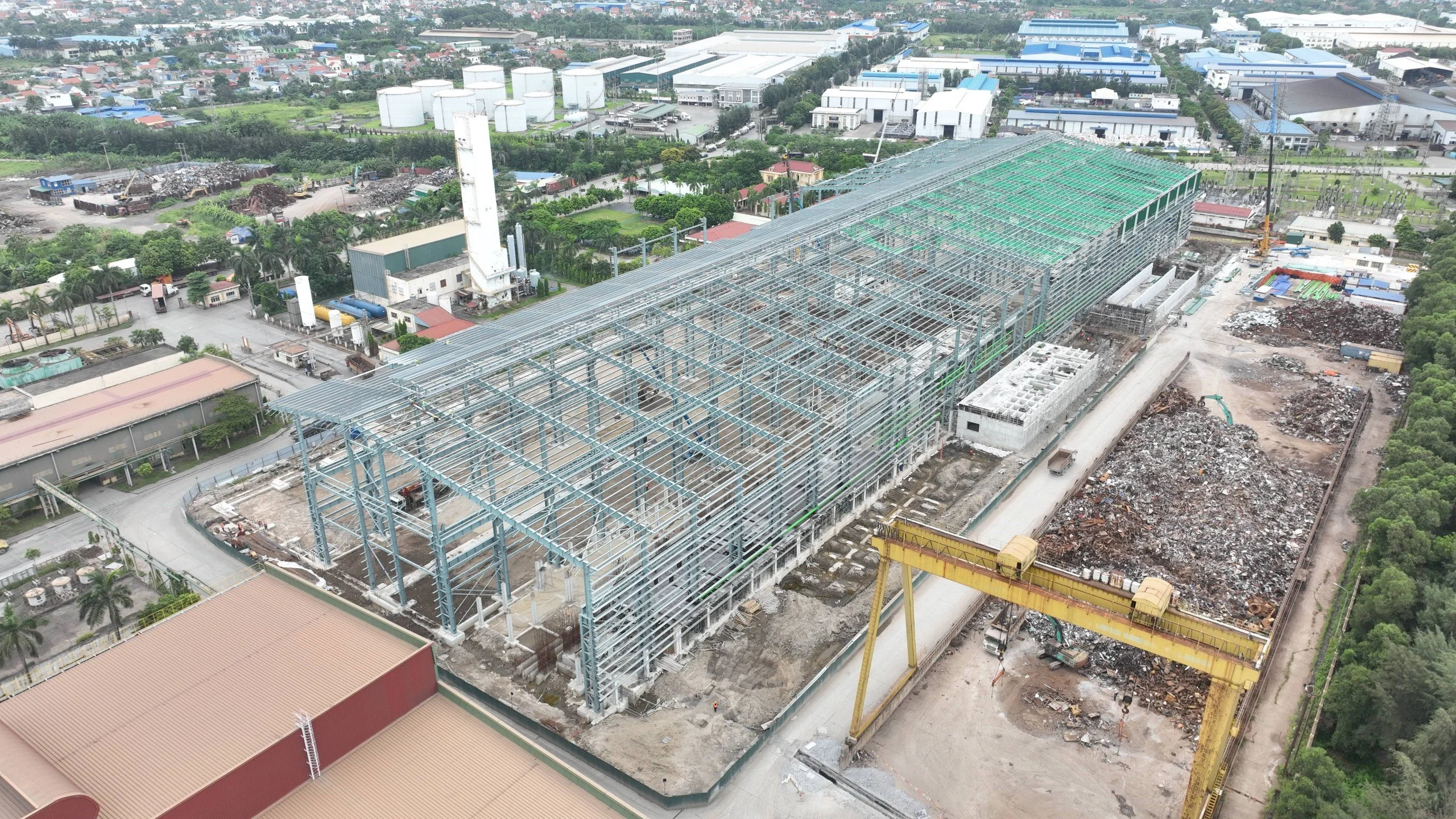
1. What is the role of a steel column in a building?
A steel column is a load-bearing structural component designed vertically, serving as the primary support for the entire building. The core tasks of a steel column include:
- Load bearing: Receiving the entire load from upper structures such as roofs, beams, trusses, floors, and other incidental loads (wind loads, roof live loads, crane loads).
- Load transfer: Safely transferring the entire received load to the foundation system.
- Ensuring stability: Together with the foundation and roof, the steel column forms a unified frame, ensuring the balance and rigidity of the building, resisting tilting or collapse.
2. Detailed construction of a typical steel column
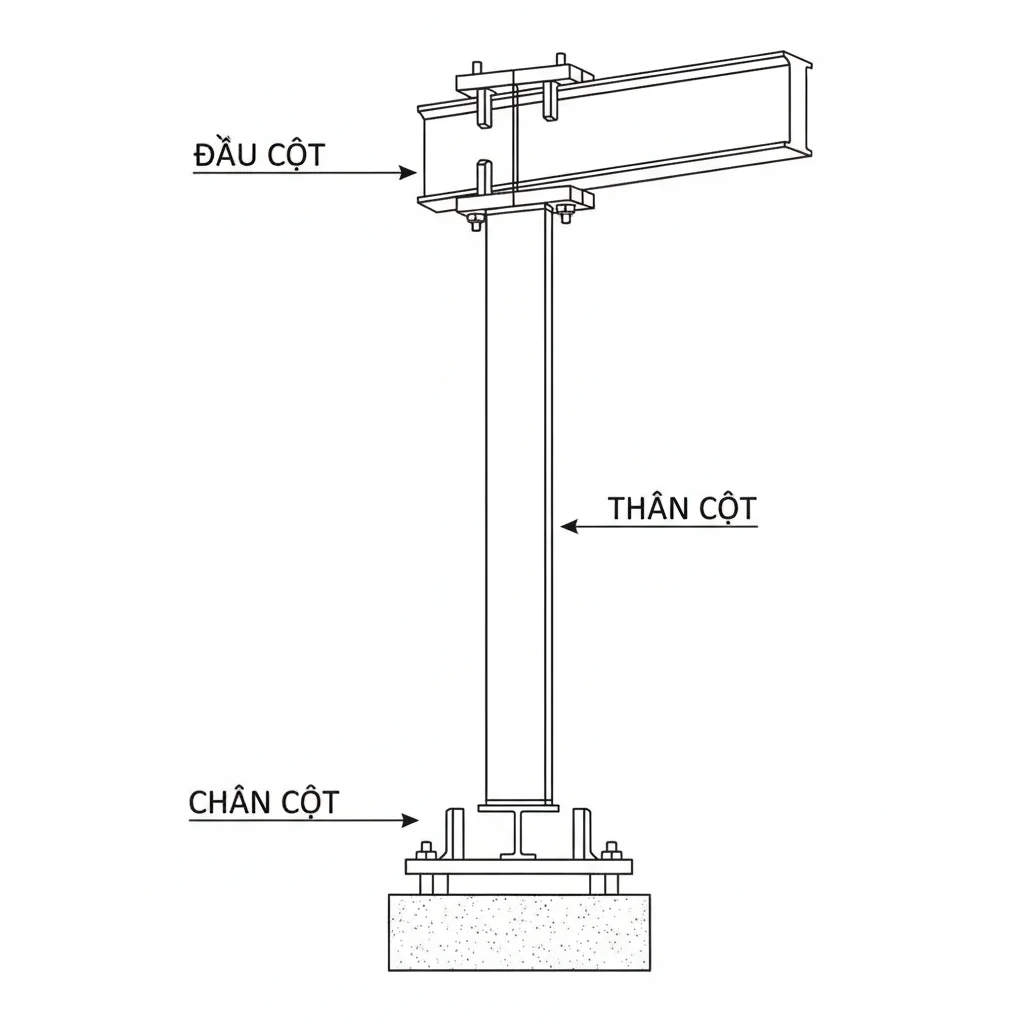
A complete steel column, regardless of its shape or size, consists of 3 main parts:
- Column head: The top part of the column, responsible for supporting structures such as beams and trusses. This is the connection point between the column and the roof system, helping to distribute loads from above down to the column body.
- Column body: The primary load-bearing part, extending throughout the height of the column. The column body receives and transfers loads from the column head to the column base.
- Column base: The bottom part, connecting the column directly to the foundation system via anchor bolts. The column base plays the role of evenly distributing loads from the column body to the foundation.
3. Classification of steel columns in industrial buildings
Steel columns are diverse in form, depending on the load-bearing requirements and characteristics of each project. Steel columns can be classified according to the following criteria:
Classification by column cross-section
- Solid cross-section column: A column made from a solid steel block, usually I-shaped, H-shaped, or a built-up column welded from steel plates. This type of column is very sturdy and popular.
- Lattice cross-section column: Formed from 2, 3, or 4 steel branches (U, I, L shapes, or pipes) connected together by a bracing system (lacing bars or batten plates). Lattice columns are often used when high rigidity is required but the load-bearing demand is not excessively high.
Classification by cross-section variation
- Constant cross-section column: A column with a uniform cross-section throughout its length. This type is easy to design and fabricate, often used for factory buildings without cranes or with cranes of small lifting capacity (under 15-20 tons).
- Variable cross-section column (Stepped column): A column with a changing cross-section, usually with a larger lower body than the upper body. This type of column is used when the factory has a high-capacity crane, helping to optimize load-bearing capacity and save materials.
Classification by load-bearing diagram
- Concentrically loaded compression column: The vertical load acts coincident with the center of gravity of the column section. This case is rare in practice.
- Eccentrically loaded compression column: The load acts off the center of gravity of the section, causing both compression and bending moments on the column. This is the most common case in construction projects.
Choosing the type of column depends on a thorough analysis of factors such as: building load, whether a crane is used, factory span, and architectural requirements. An optimal steel column design not only ensures absolute safety but also helps save material costs for the investor.
WHY CHOOSE HAI LONG CONSTRUCTION AS YOUR STEEL STRUCTURE MANUFACTURING & ERECTION PARTNER
With over 25 years of experience in the field of manufacturing & erecting steel structures, Hai Long Construction is proud to be a leading reputable contractor, providing customers with comprehensive construction solutions that meet all needs and requirements.
- A team of experienced engineers, architects, and experts, knowledgeable in the design and construction of factory buildings and warehouses according to international standards.
- Diverse construction capabilities, meeting all project scales and requirements, from simple to complex factory buildings.
- Possessing a modern system of machinery and equipment, ensuring fast, accurate, and safe construction.
- Professional construction process, strictly managed.
Are you looking for a reputable and professional steel structure manufacturing and erection contractor? Contact Hai Long Construction for free consultation and quotation:
- HAI LONG CONSTRUCTION JSC – MEMBER OF TAIYO GROUP
- Address: Taiyo Building, 97 Bach Dang, Ha Ly Ward, Hong Bang District, Hai Phong City, Vietnam.
- Hotline: 084 6625 888
- Email: info@hailongjsc.vn