

With foreign general contractors, the capability profile of a steel structure supplier is checked even before the quotation. Lacking approved welding procedures (WPS/PQR) or valid welder certificates can lead to a factory being disqualified during the pre-qualification round, regardless of how competitive the price is.
With steel structures, most of the quality lies in the welds, which cannot be assessed by eye once the components are painted and installed. Korean, Japanese, or European general contractors therefore do not buy “promises of quality”; they buy a traceable system, from the raw steel plate to every single weld and the person who performed it. This article is for the procurement and QA/QC departments of investors and general contractors: what each type of document proves, and how to verify it.
Why do FDI general contractors thoroughly pre-qualify steel structure suppliers?
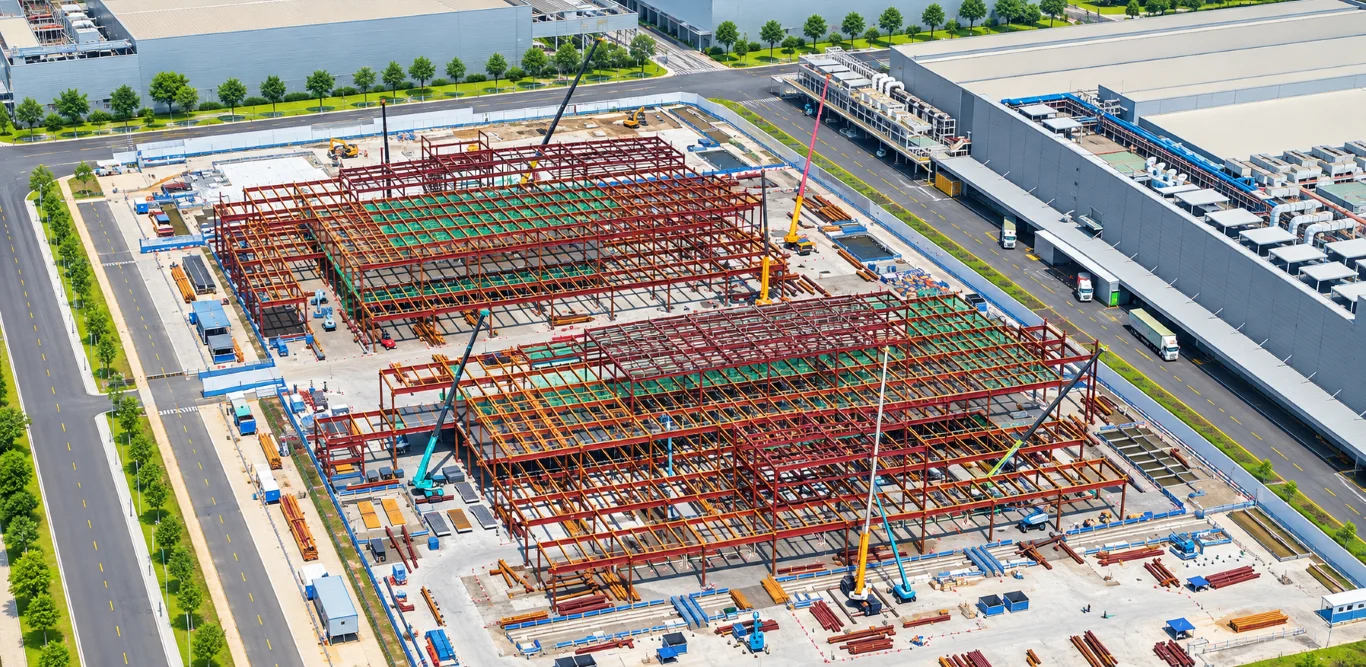
FDI general contractors pre-qualify carefully because they are responsible to the project owner for the quality of the entire supply chain, and a batch of defective components can delay the whole project. Electronics and semiconductor factories often have very tight schedules; discovering welding defects when the frame is already erected means having to dismantle, repair, and re-inspect while MEP contractors are waiting.
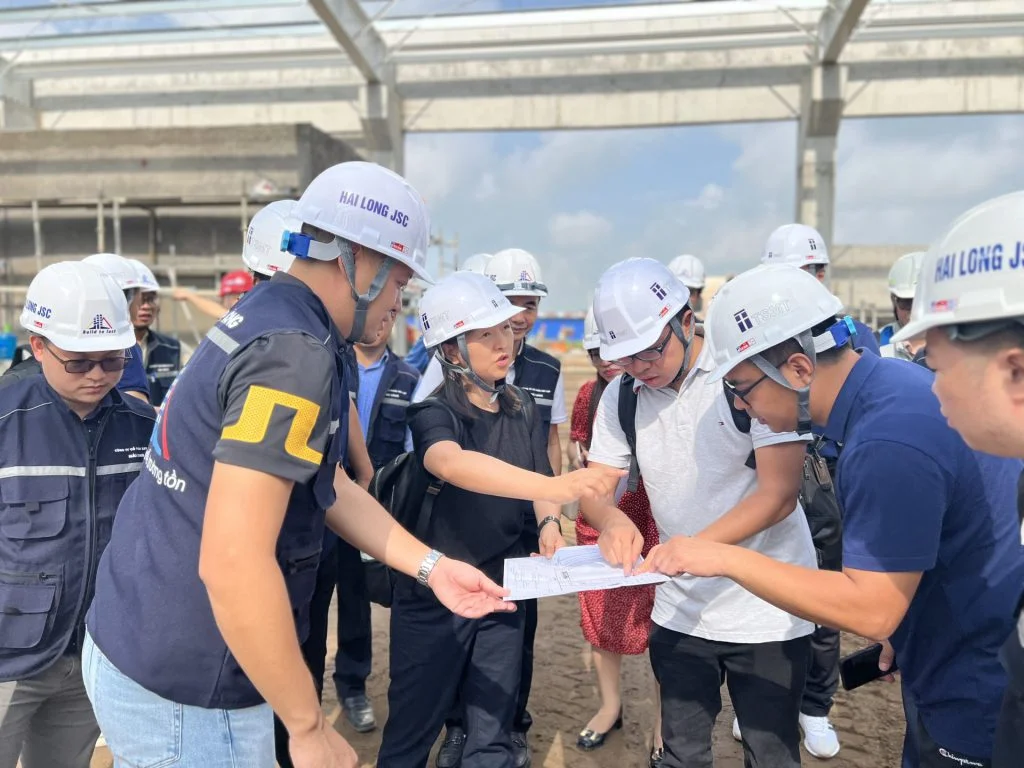
Therefore, the vendor qualification process usually consists of three layers: reviewing management system documents, reviewing welding technical documents, and visiting the factory to verify documents against reality. A supplier that prepares all three layers from the start will significantly shorten the time to be approved into the vendor list.
What do ISO 9001, ISO 14001, and ISO 45001 prove?
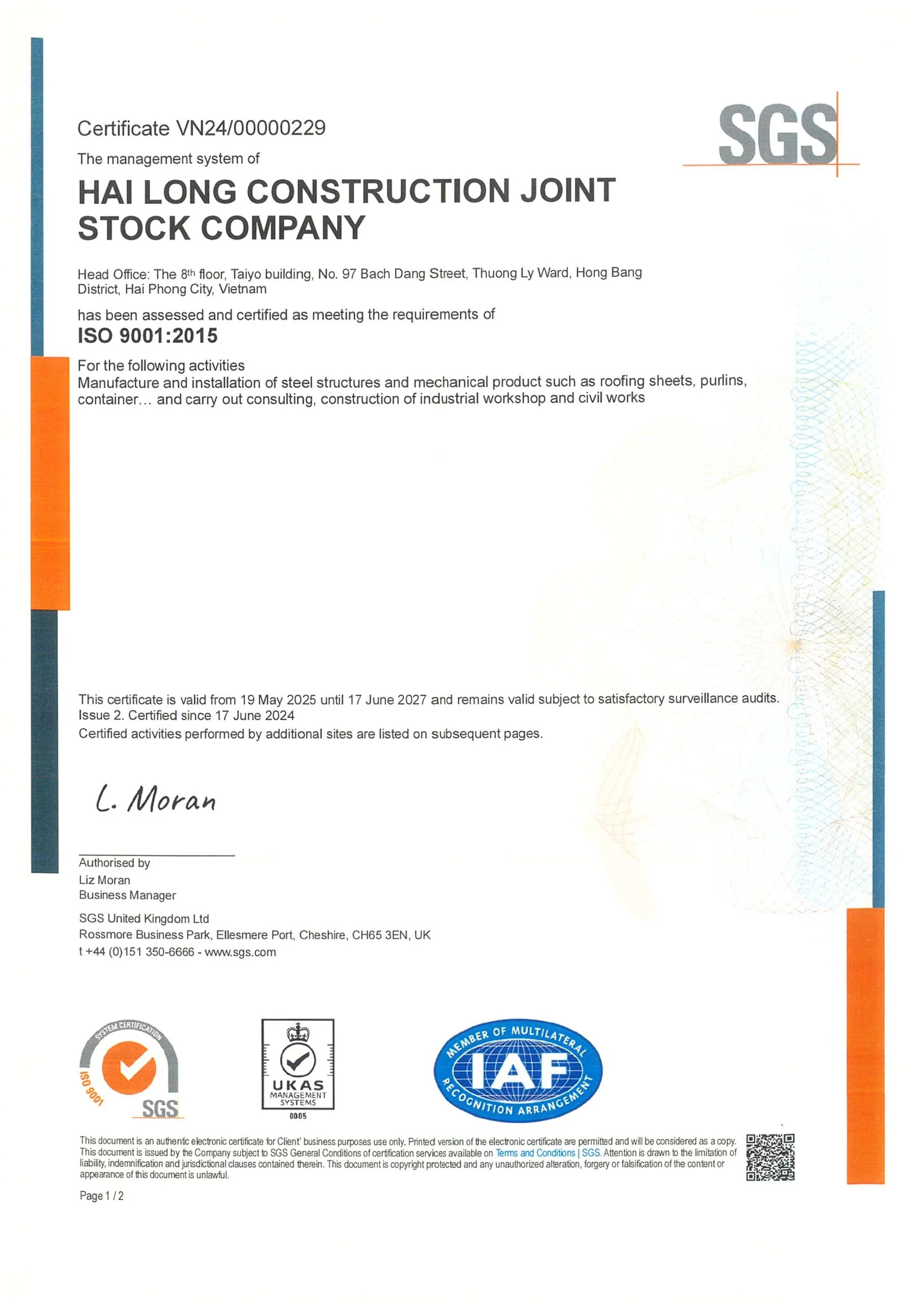
The three ISO certificates prove that the factory operates according to an independently audited management system: ISO 9001 for quality, ISO 14001 for environment, and ISO 45001 for occupational health and safety. They are "entry tickets," but they do not answer the most important question: whether the welds meet technical requirements.
For FDI projects, ISO 14001 and ISO 45001 are increasingly considered as important as ISO 9001, because the project owner must report ESG for the entire supply chain. When checking, look at the name of the issuing body, whether the scope of certification clearly states "steel structure manufacturing," and the validity period.
What are WPS, PQR, and welder certificates?
WPS, PQR, and welder certificates are the trio of documents proving that welds are made according to a tested procedure by a qualified person. This is the part of the file that the general contractor's QA reads most carefully.
- WPS (Welding Procedure Specification): the "recipe" for a type of weld: material, welding method, electrode/wire, position, current, and preheat temperature.
- PQR (Procedure Qualification Record): the results of test welds according to the WPS, followed by tensile testing, bending, and non-destructive testing. The PQR is evidence that the WPS actually produces welds that meet requirements.
- Welder Performance Qualification (WPQ): confirms that each welder has passed the test in a specific position, method, and thickness range. Certificates have an expiration date and need to be maintained.
A professional note: according to AWS D1.1, some welding procedures are "prequalified," so a PQR is not mandatory, provided that the standard's limits are strictly followed. Therefore, when reading the file, QA should not just count the number of PQRs but check which WPSs are prequalified and which have been tested.
Checklist for steel structure supplier pre-qualification documents
The table below summarizes the documents that the procurement department can use immediately when evaluating a steel structure supplier.
| Document | What it proves | How to check |
|---|---|---|
| ISO 9001 / 14001 / 45001 certificates | Management system independently audited | Issuing body, scope, validity |
| List of WPS + PQR | Welding procedures tested for each type of weld | Does the WPS cover the project's material, thickness, and position? |
| List of welders + certificates | Welders have been tested | Randomly cross-check with people working in the workshop |
| Material mill certificates | Input steel has the correct grade and mechanical properties | Cross-check batch numbers on steel with certificates |
| Non-Destructive Testing (NDT) personnel certificates | Ultrasonic and magnetic particle inspectors are qualified (usually Level II according to ISO 9712 or ASNT) | Level, method, validity |
| Inspection and Test Plan (ITP) and traceability records | Each component can be traced to material, welder, and inspection results | Select any component and request a backward trace of the records |
| Painting records | Surface cleanliness and paint film thickness meet requirements | Measurement reports for thickness and cleanliness after sandblasting |
| List of similar projects | Experience with similar scale and requirements | Volume, investor, client verification |
How non-destructive testing is performed (ultrasonic, magnetic, penetrant, X-ray), you can see more in the article 05 quality control methods for steel structures.
How does Hai Long prepare its capability profile for FDI general contractors?
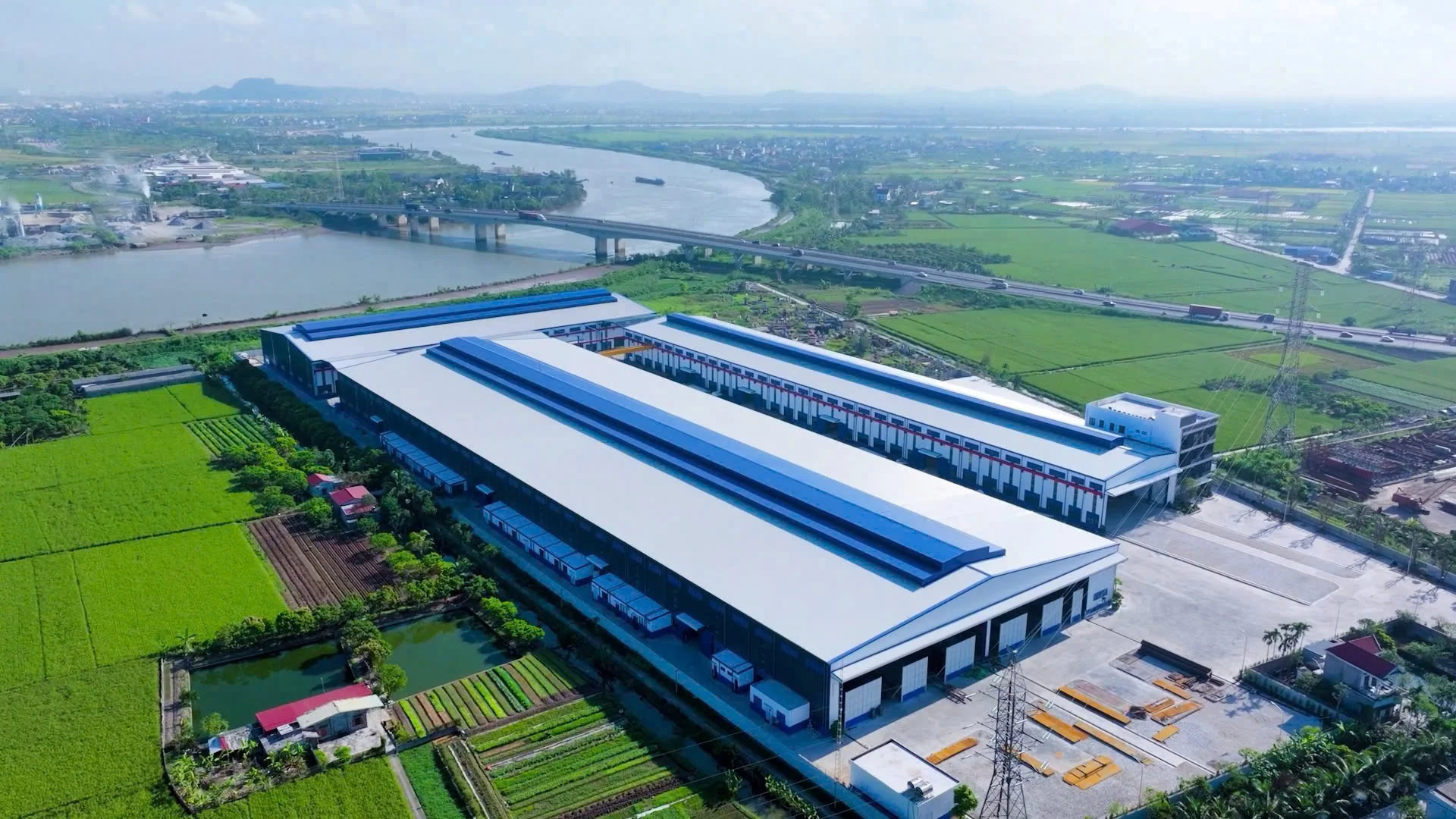
The Hai Long steel structure factory in Quyet Thang commune, Hai Phong operates under three ISO systems: ISO 9001, ISO 14001, and ISO 45001, with robotic welding lines, shot blasting, and automatic painting/drying, with a capacity of 35,000 tons/year. Regarding welding technology, Hai Long manufactures according to [applicable welding standard – QA to fill] with approved WPS/PQR and [number] certified welders issued by [issuing organization].
This profile has been verified through FDI projects with strict requirements:
- 14,500 tons of steel structure for the LG Innotek project in Hai Phong
- 4,000 tons for the Amkor Technology factory in Bac Ninh
- 4,000 tons for Samsung's first semiconductor chip testing factory in Vietnam. In November 2026, Hai Long received a certificate of appreciation from Samsung C&T for this 4,000-ton scope of work. General contractors and investors can schedule an on-site audit at the factory to compare the profile with actual production.
See more about Hai Long Steel Structure Factory.
Frequently Asked Questions
What ISO certifications does the Hai Long steel structure factory have?
The Hai Long steel structure factory in Quyet Thang commune, Hai Phong operates under three management systems: ISO 9001 (quality), ISO 14001 (environment), and ISO 45001 (occupational health and safety). In the general contractor sector, Hai Long's design consulting center has over 30 engineers and holds Grade I design and appraisal capability certificates.
What is the difference between WPS and PQR?
WPS (Welding Procedure Specification) is a document that specifies how to perform a type of weld: material, method, welding rod, position, and electrical parameters. PQR (Procedure Qualification Record) is a report recording the results of sample welding according to that WPS, including tensile, bending, and non-destructive testing. In short, WPS is the “recipe,” and PQR is the proof that the recipe produces a compliant weld.
Can foreign general contractors audit the factory before signing a contract?
Yes. General contractors and investors can schedule an audit of the Hai Long steel structure factory in Quyet Thang commune, Hai Phong via hotline (+84) 846 625 888 or email info@hailongjsc.vn.
Schedule a factory audit
- Receive the capability profile or schedule a visit to the factory to directly compare the technical profile with the production line.
- Hotline: (+84) 846 625 888 ·
- Email: info@hailongjsc.vn