

In previous articles, we explored “What is a steel structure?” and the types of steel used in construction. However, to apply them in practice, individual steel components need to be connected into a complete load-bearing system. The way these components are organized and connected creates different types of steel structures, each with its own working principle, advantages, and scope of application.
Understanding these structural systems is extremely important, helping architects and investors choose solutions that not only meet technical requirements but also optimize aesthetics and costs for the project.
Why is it necessary to classify steel structures?
Classifying steel structures based on diagrams and load-bearing principles helps us answer the core question: “Given the requirements for span, load, and architectural shape of the project, which structural system is the most effective?”. Each structural system is a different solution to the load-bearing problem, and the right choice will determine the success of the entire project.
1. Frame Structures
Construction & Working Principle
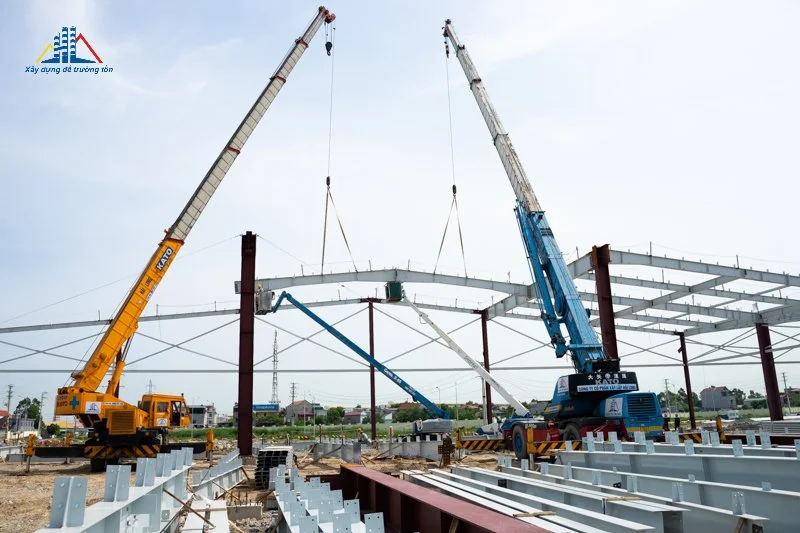
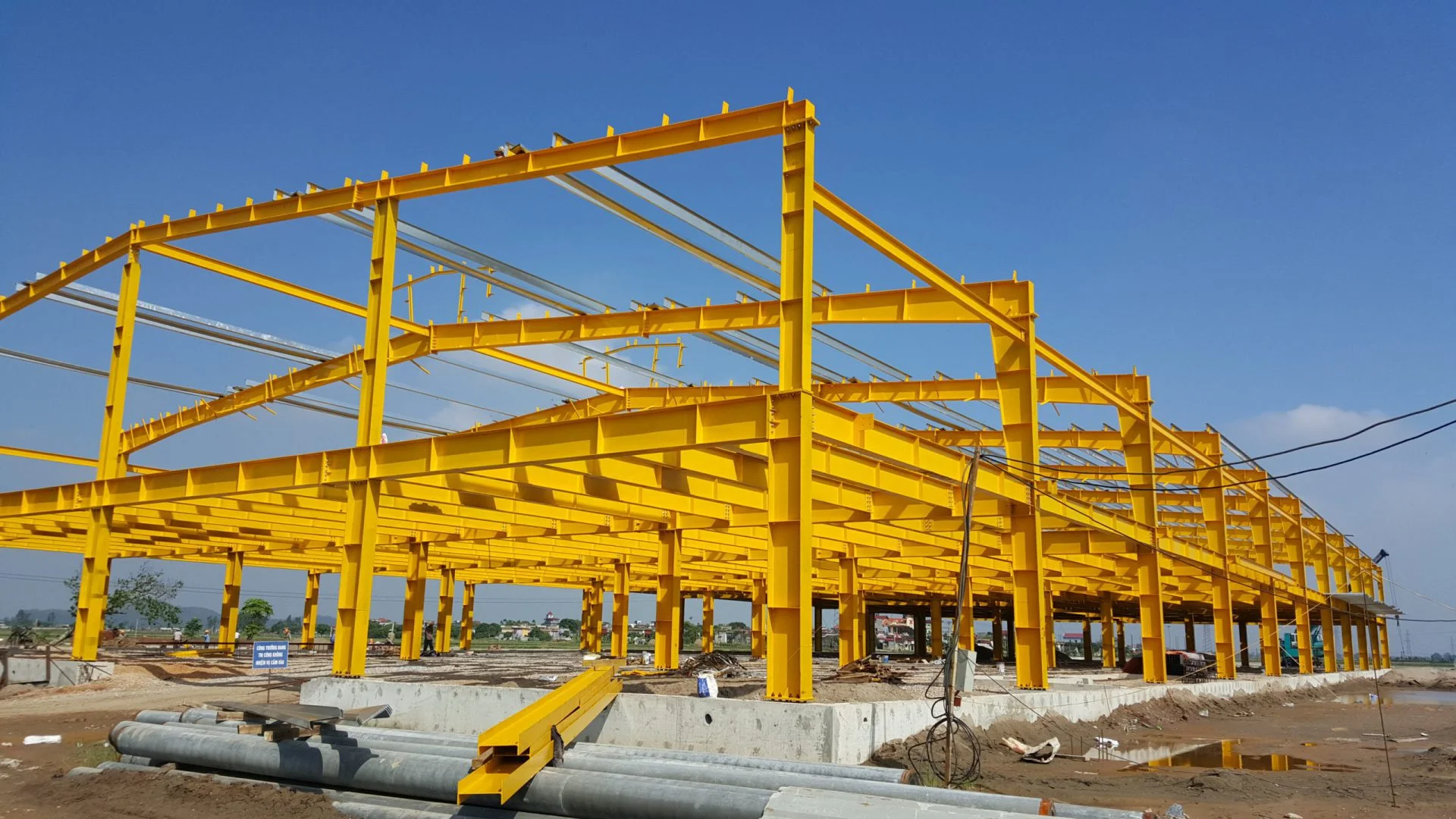
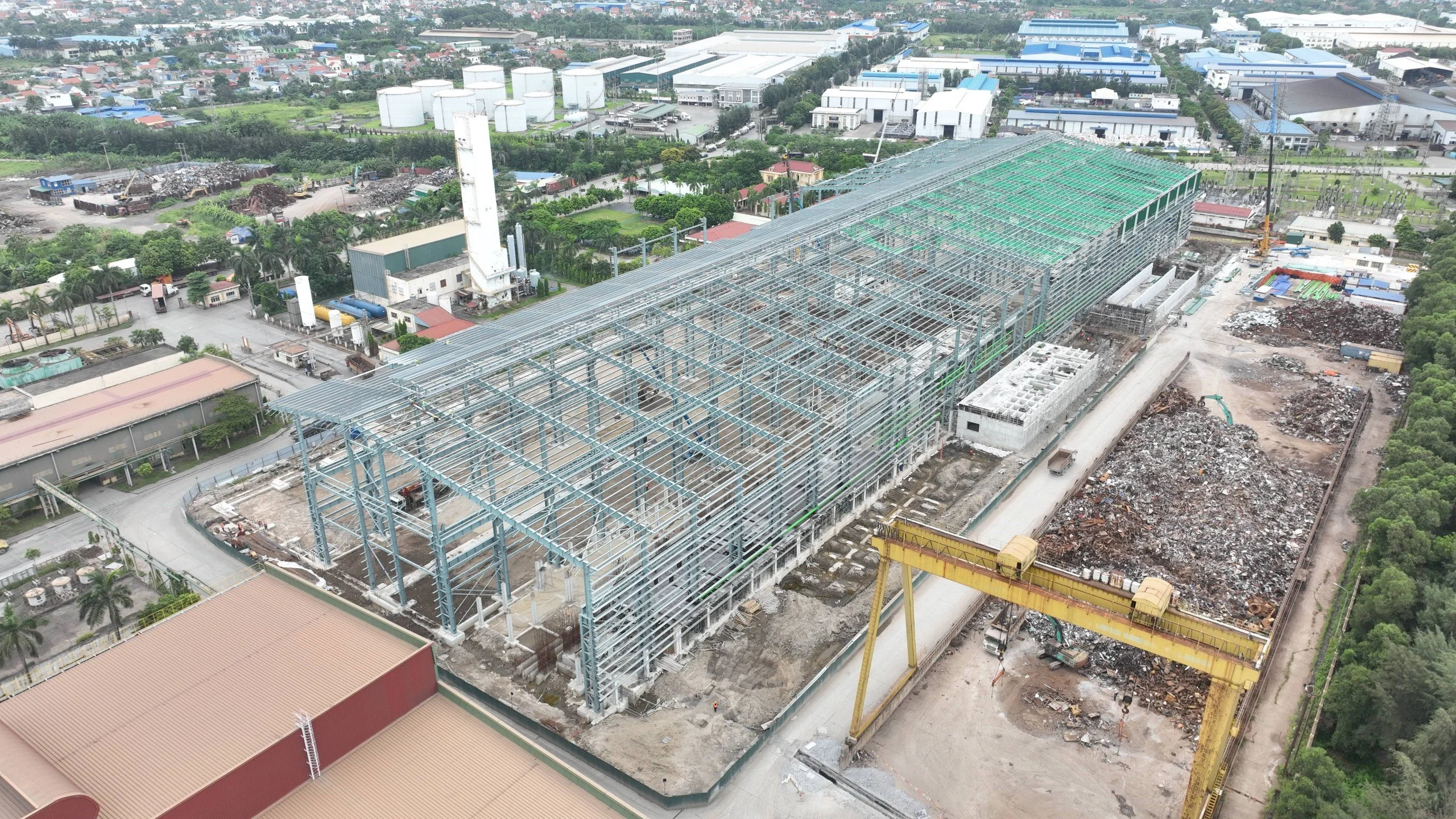
This is the most common type of steel structure, formed from column members (vertical) and beam members (horizontal) rigidly connected at the joints. This structural system primarily bears loads through the bending, shear, and compression of the beam and column components.
Advantages and applications
- Advantages: Creates flexible, unobstructed usable space; easy to construct and manufacture; suitable for projects with standard rectangular shapes.
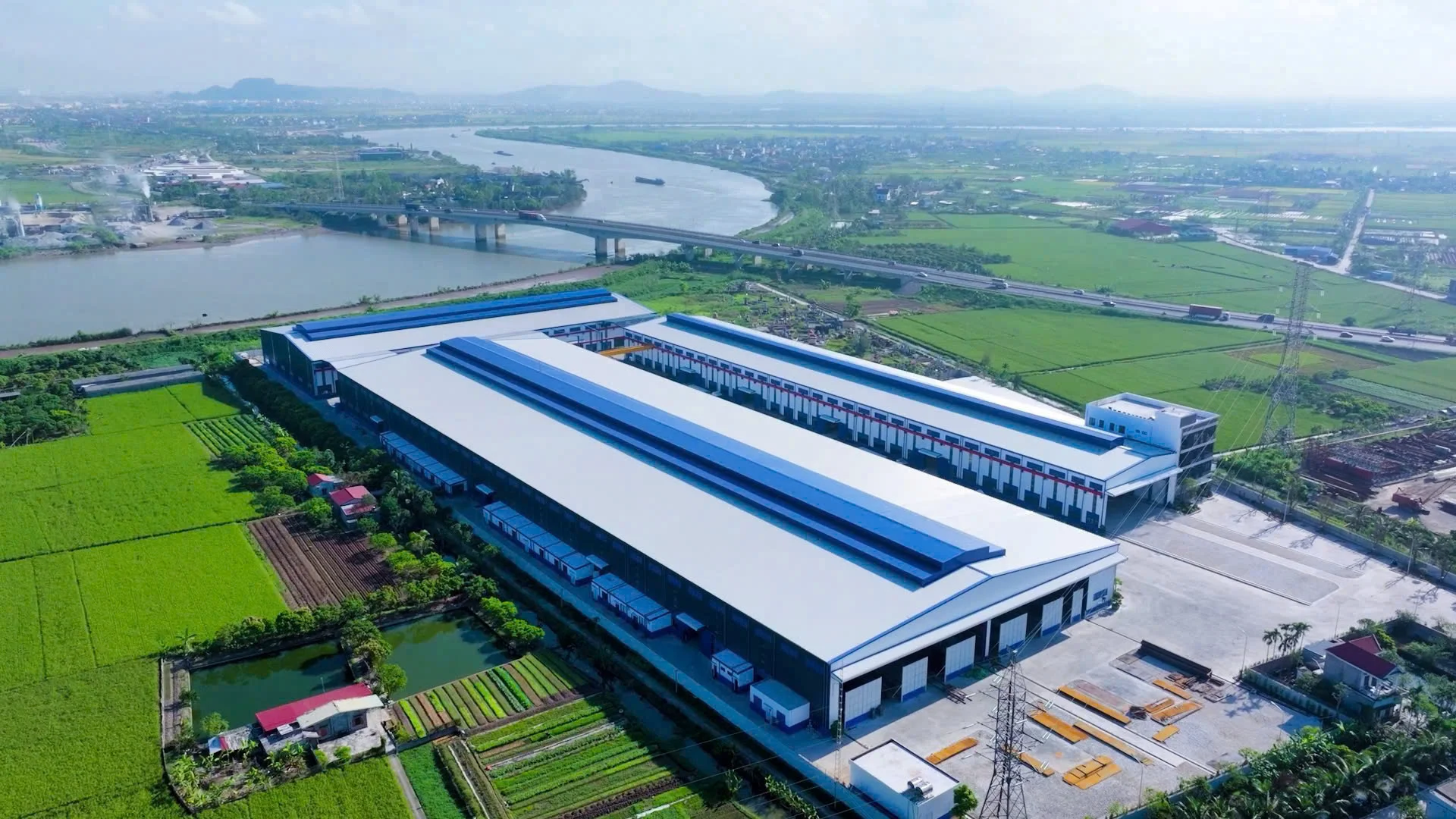
- Application: Extremely popular in the construction of steel structure factory buildings, warehouses, office buildings, high-rise apartments, and commercial centers. Most industrial and civil works we see every day use this structural system.
2. Truss Structures
Construction & Working Principle
Truss structures consist of straight steel members connected at joints (nodes) to form stable triangles. Under load, truss members primarily only experience axial tension or compression, helping to maximize the working capacity of the steel material.
Advantages and applications
- Advantages: Extremely efficient in terms of material, lightweight but capable of covering very large spans; high rigidity.
- Application: An ideal solution for projects requiring large spans such as sports arena roofs, stadiums, exhibition centers, airport terminals, and railway or road bridges.
3. Arch Structures
Construction & Working Principle
An arch structure is a curved structural system that carries loads primarily through compression along the curve of the arch. The entire load is transferred to the foundations at both ends of the arch.
Advantages and applications
- Advantages: Exceptional span capability, creating column-free interior spaces; provides unique aesthetic and architectural value.
- Applications: Commonly used in iconic structures such as steel arch bridges, aircraft hangars, exhibition centers, or sports arenas with special designs.
4. Suspension & Cable-Stayed Structures
Construction & Working Principle
This is a structural system that uses high-strength tension cables as the primary load-bearing components.
- Cable-Stayed Structure: Cables are tensioned from one or more tall towers to support bridge decks or roofs.
- Suspension Structure: Uses two main parallel cables, sagging between two large towers to suspend vertical cables that support the entire structure below.
Advantages and applications
- Advantages: The most efficient structural system for spanning extremely large distances (thousands of meters); creates lightweight, elegant, and iconic structures.
- Applications: Primarily used for famous sea-crossing and river-crossing bridges worldwide. Also applied to the roofs of massive stadiums.
Quick comparison table of steel structure types
| Structure Type | Primary Load-Bearing Principle | Span Capability | Typical Applications |
| Frame | Bending, Compression | Medium to Large | Factory buildings, High-rise buildings, Offices |
| Truss | Tension, Compression | Large to Very Large | Stadium roofs, Bridges, Terminals |
| Arch | Compression | Large to Very Large | Arch bridges, Aircraft hangars |
| Suspension | Tension | Extremely Large | Cable-stayed bridges, Suspension bridges |
WHY CHOOSE HAI LONG CONSTRUCTION AS YOUR STEEL STRUCTURE MANUFACTURING AND ERECTION CONTRACTOR
With over 25 years of experience in the field of manufacturing & erecting steel structures, Hai Long Construction is proud to be a leading reputable contractor, providing customers with comprehensive construction solutions that meet all needs and requirements.
- A team of experienced engineers, architects, and experts, knowledgeable in the design and construction of factory buildings and warehouses according to international standards.
- Diverse construction capabilities, meeting all project scales and requirements, from simple to complex factory buildings.
- Possessing a modern system of machinery and equipment, ensuring fast, accurate, and safe construction.
- Professional construction process, strictly managed.
Are you looking for a reputable and professional steel structure manufacturing and erection contractor? Contact Hai Long Construction for free consultation and quotation:
- HAI LONG CONSTRUCTION JSC – MEMBER OF TAIYO GROUP
- Address: Taiyo Building, 97 Bach Dang, Ha Ly Ward, Hong Bang District, Hai Phong City, Vietnam.
- Hotline: 084 6625 888
- Email: info@hailongjsc.vn