

From July 1, 2026, construction investment costs are managed under Decree 206/2026/ND-CP, replacing Decree 10/2021/ND-CP. For factory building projects, the most notable change is that the estimate is determined according to the level of detail of the existing design, and investors are more proactive in choosing price sources and balancing cost items.
This is not just a matter for the estimation department. Every year, factory building investors usually start planning capital for the following year in the final months of the year, and an estimate prepared under the old framework, or misreading the cost structure, can cause the budget to fall short before construction even begins. This article covers the points of Decree 206 that directly affect factory building estimates, from the perspective of a general contractor that has prepared and executed estimates on construction sites.
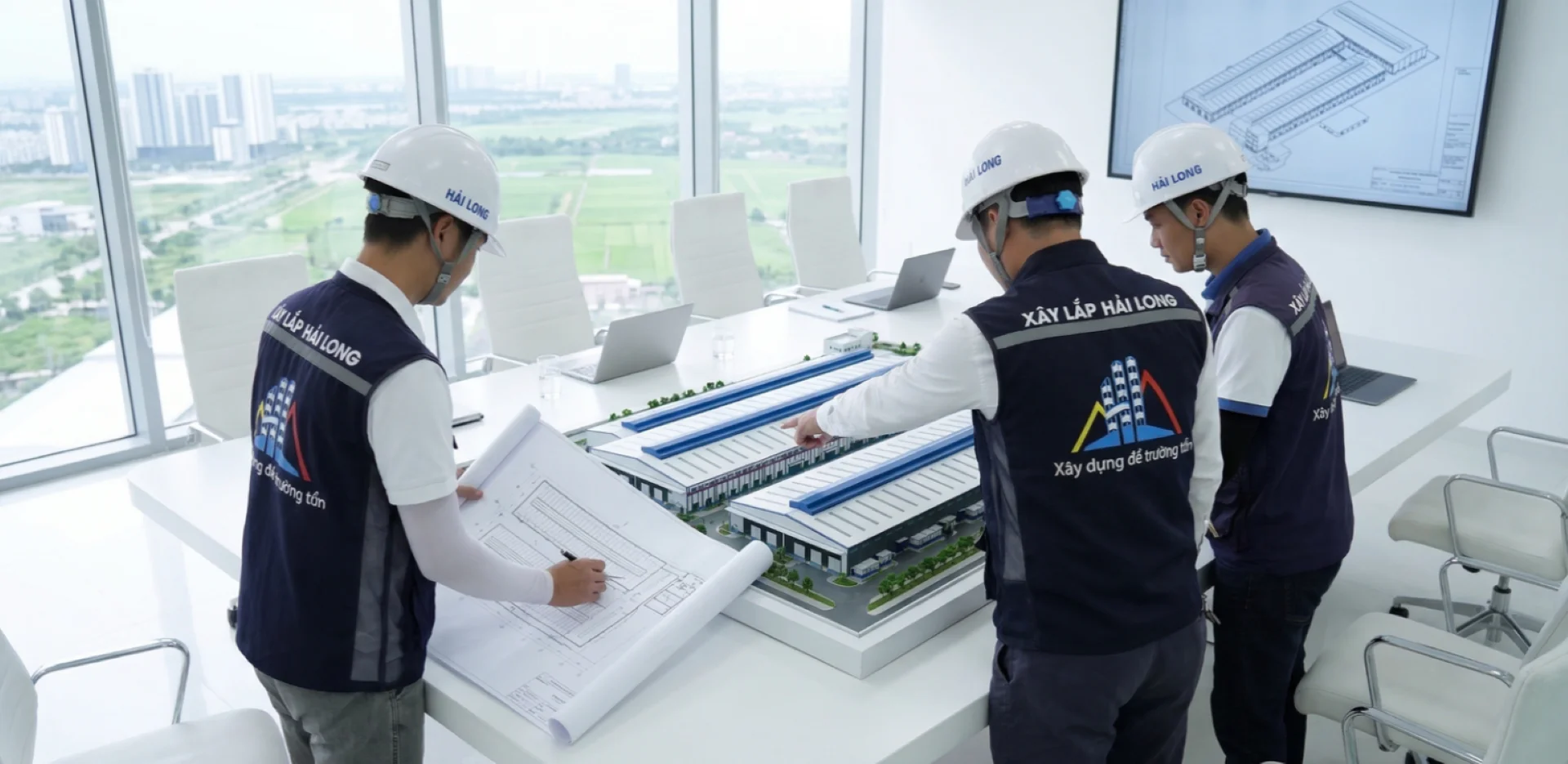
What does Decree 206/2026 change compared to Decree 10/2021?
Decree 206/2026/ND-CP was issued on June 15, 2026, effective from July 1, 2026, and replaces Decree 10/2021/ND-CP. The Decree provides guidance on Construction Law No. 135/2025/QH15, accompanied by Circulars 36/2026/TT-BXD and 37/2026/TT-BXD of the Ministry of Construction issued on June 26, 2026.
According to the Bidding Newspaper, there are three changes that factory building investors should be aware of:
- Investors are more proactive. Investors can transfer funds between cost items, including contingency costs, without having to adjust the total investment, provided that the objectives and scale are not changed, the total approved investment is not exceeded, and the capital structure is not altered.
- Broader price sources. Prices for materials, labor, and machinery can be taken from the national database, local price announcements, supplier quotations, and prices of similar projects. Imported equipment prices can be referenced from international sources.
- More flexible norms. When there are no norms or the norms are not suitable for the technology or construction methods, costs are determined based on the technology and methods expected to be applied. For large-scale projects or new technologies, data on costs of similar projects abroad can be referenced after conversion to the Vietnamese price level.
What costs are included in a factory building estimate?
A factory building estimate includes construction costs, equipment costs, project management costs, construction investment consultancy costs, other costs, and contingency costs. Among these, construction costs are the largest component and are divided into direct costs (materials, labor, construction machinery), indirect costs, pre-tax income, and value-added tax.
A point to note under Article 12 of Decree 206: direct costs are determined based on quantities calculated from the design. If the design implemented after project approval is FEED or technical design, direct costs are calculated based on the price of the work group, component, or structural unit; whereas when construction drawings are available, costs are calculated in detail for each construction task. In other words, the more detailed the design, the more accurate the estimate, and an estimate prepared when the design is still at a preliminary stage always requires an appropriate contingency amount.
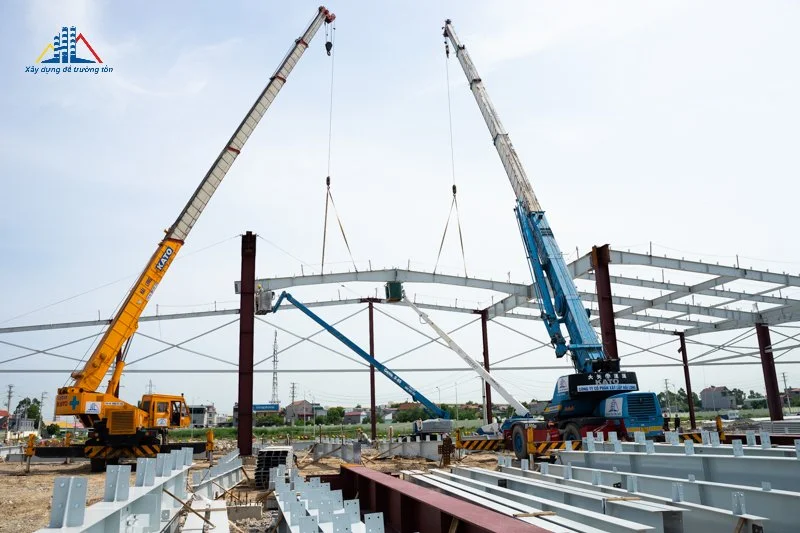
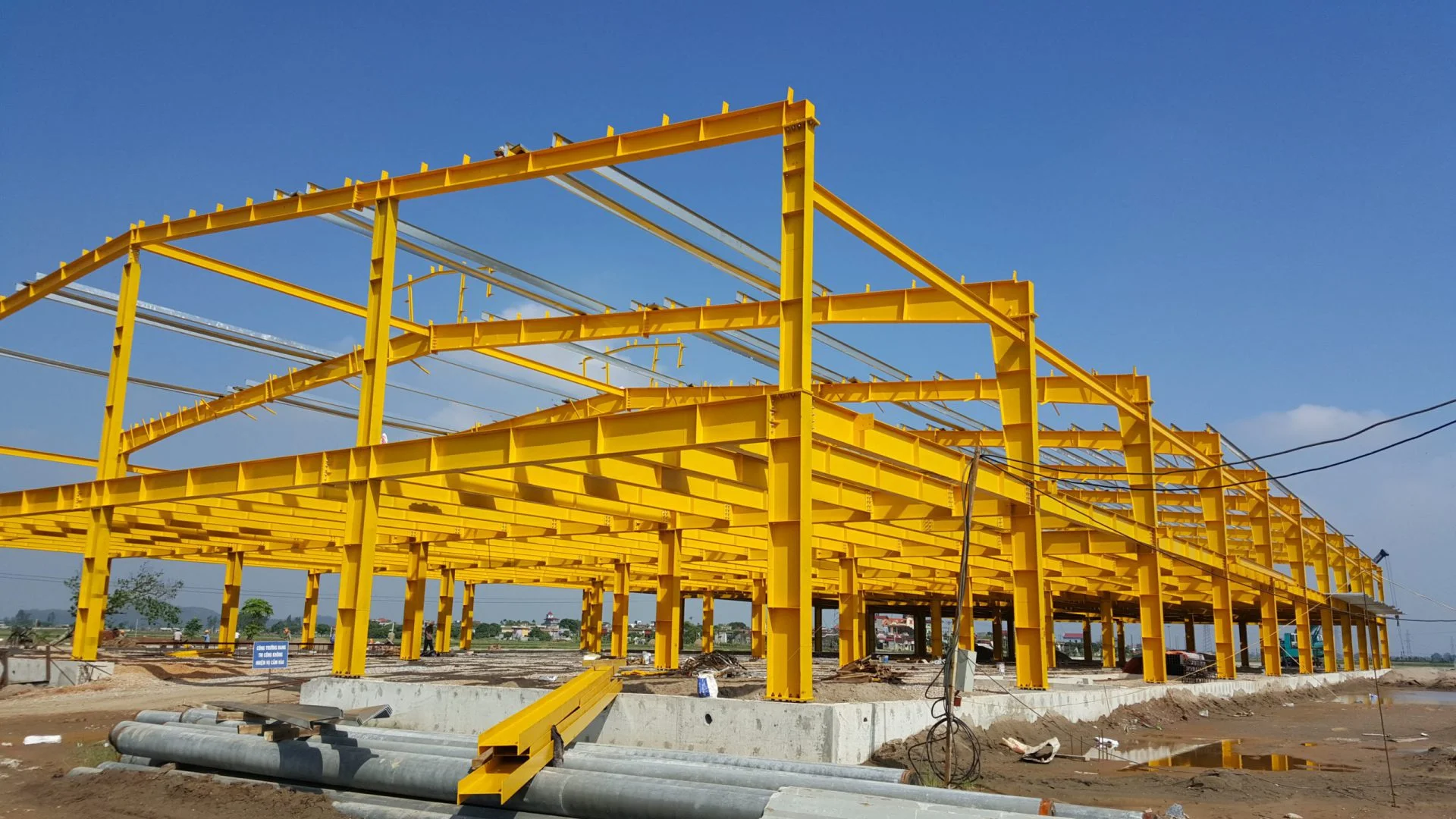
For steel structure factory buildings, the construction cost structure usually revolves around the four major groups below.
| Cost group | Main content | Factors causing the most change | |
|---|---|---|---|
| Foundation – floor | Piles, pile caps, tie beams, concrete floor | Geology, floor load, overhead crane | |
| Steel structure | Frame, purlins, bracing, protective paint | Span, height, wind load, steel price | |
| Cladding | Metal roofing, walls, doors, gutters | Type of metal sheet, insulation, natural lighting | |
| M&E & Fire protection | Electricity, water supply and drainage, ventilation, fire protection | Functionality, fire resistance rating, equipment requirements |
Where is the price basis in the cost estimate derived from?
According to Decree 206, prices in cost estimates can be derived from local price announcements, the national construction database, supplier quotes, or prices from similar projects; in the absence of data, the investor may hire a valuation firm. Labor unit prices and machinery rental rates are surveyed and announced periodically every year or sooner if necessary.
In practice, localities are still issuing transitional guidelines: The Departments of Construction of Hanoi and Nghe An have both issued guidance documents since July 2026. Therefore, when preparing a cost estimate for a factory building in Hai Phong, Bac Ninh, or Hung Yen, it is necessary to check the latest price announcements and guidance documents of that specific province, rather than reusing the unit price set from a previous project.
Specifically for steel structures – a category subject to significant material price fluctuations – it is recommended to clearly separate steel prices based on the quotation date and price adjustment conditions in the contract. In early November 2026, domestic construction steel prices fluctuated around 13,840–15,150 VND/kg, while global iron ore prices just hit a one-month peak, indicating that volatility remains.
Why can two factory building quotes differ significantly?
Two factory building quotes often differ not because one party is more “expensive,” but because they do not calculate the same scope. An investor can only compare prices when two estimates have the same volume, the same standards, and the same assumptions.
From experience in reviewing bid documents, there are four points that often lead investors to make incorrect comparisons:
- Different scope. One party includes fire protection, site leveling, and external infrastructure; the other does not.
- Different design levels. A quote prepared from a preliminary design and a quote prepared from construction drawings have very different levels of reliability.
- Different steel price timing. A difference of a few weeks can significantly change the price of the steel frame.
- Contingency and price adjustment conditions. A “cheap” quote without contingency will usually lead to cost overruns during construction.
The safest way is to request contractors to submit quotes based on the same bill of quantities and to read the assumptions of each party. For details on factors affecting costs, investors can see more in the article Factory construction costs 2026.
How does Hai Long prepare factory building cost estimates?
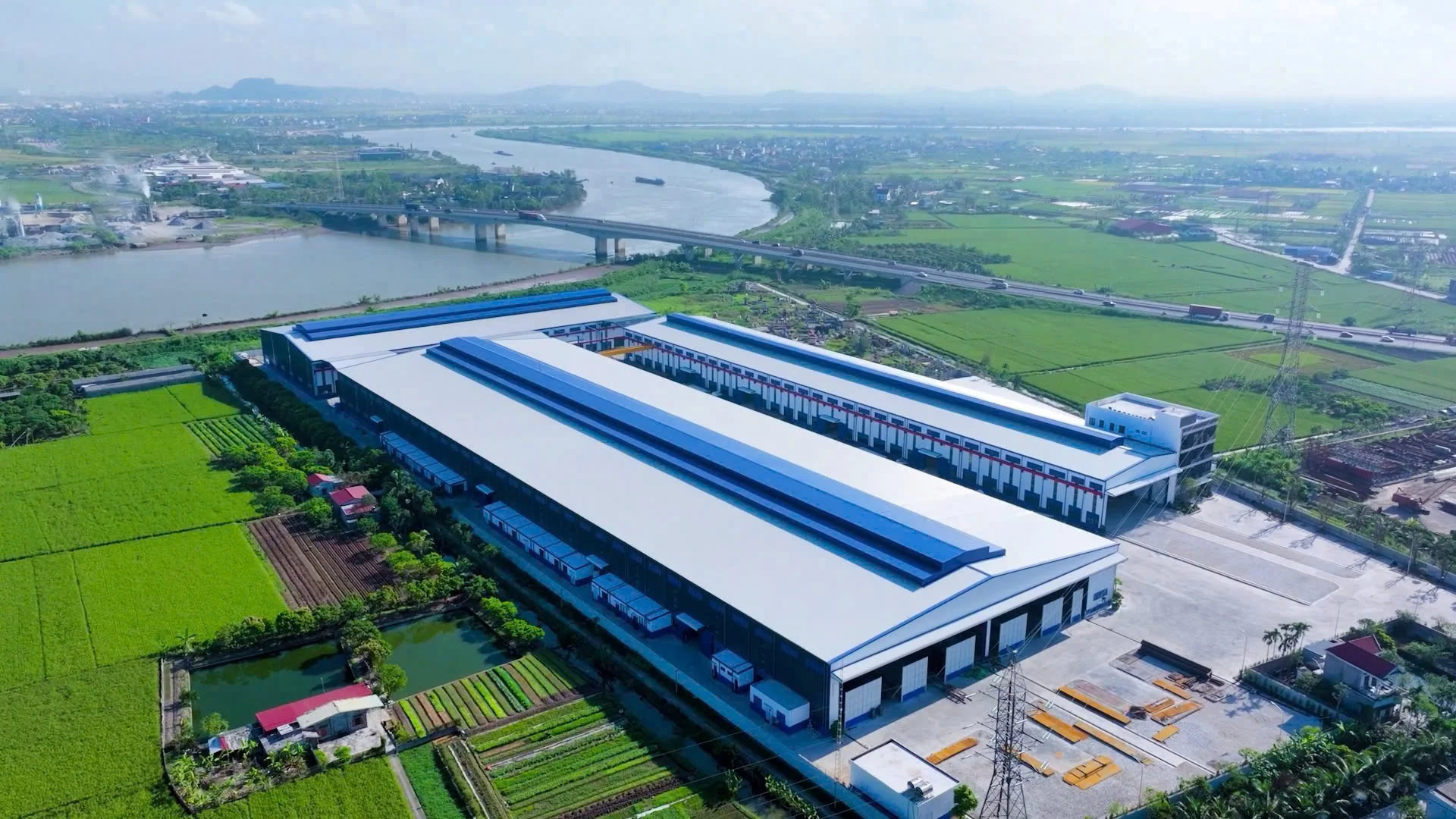
Hai Long Construction prepares cost estimates from two of its own data sources: A design consulting center with over 30 engineers (Grade I design and verification certificates) calculating volumes from designs, and the Hai Long Steel Structure Factory in Quyet Thang commune, Hai Phong, with a capacity of 35,000 tons/year, providing steel structure prices close to actual production costs. By self-producing steel structures, Hai Long proactively manages the costs and schedules that account for a large proportion of a factory building.
Frequently Asked Questions
When does Decree 206/2026 take effect?
Decree 206/2026/ND-CP on construction investment cost management was issued on June 15, 2026, and took effect on July 1, 2026, replacing Decree 10/2021/ND-CP. The Decree is accompanied by Circulars 36/2026/TT-BXD and 37/2026/TT-BXD of the Ministry of Construction. Localities such as Hanoi and Nghe An have issued guidance documents for application since July 2026.
What does a factory construction cost estimate include?
A factory construction cost estimate includes construction costs, equipment costs, project management costs, consulting costs, other costs, and contingency costs. Construction costs include direct costs (materials, labor, construction machinery), indirect costs, pre-tax income, and value-added tax. For steel structure factory buildings, the largest groups are usually foundations, steel structures, building envelopes, and M&E – fire protection.
Do private factory projects have to apply Decree 206?
Decree 206/2026 is mandatory for projects using state capital. For private or FDI projects, investors often use this decree as a reference framework to prepare, verify, and compare cost estimates, while agreeing on calculation methods with contractors in the contract.
Does Hai Long provide free preliminary cost estimates?
Yes. Hai Long Construction provides free preliminary cost estimates for factory projects when investors send the area, location, and functionality. The estimate is prepared from the design volumes of the Hai Long Design Consulting Center and steel structure prices from the 35,000-ton/year factory in Hai Phong.
Contact: (+84) 846 625 888 or info@hailongjsc.vn.
Receive a preliminary cost estimate for your factory
Send the area, location, and functionality of the factory for the Hai Long team to prepare a preliminary estimate according to the Decree 206/2026 framework.
- Hotline: (+84) 846 625 888 – (+84) 976 860 686
- Email: info@hailongjsc.vn
Source: Bidding Newspaper – “Decree 206/2026/ND-CP on construction investment cost management” (2026); Law Library – Costs in construction estimates from July 1, 2026 (June 19, 2026); Law Library – Labor unit prices and machine shift prices in Nghe An (July 29, 2026); Law Library – Official Dispatch 14502/SXD-KTXD Hanoi; steel prices: Index.vn (Nov 6, 2026).