

In the first quarter of 2026, total registered foreign direct investment (FDI) into Vietnam reached 15.2 billion USD, an increase of 42.9% compared to the same period last year, while realized capital reached the highest level for a first quarter in the 2022–2026 period. Besides the sharp increase in scale, capital flows are increasingly leaning towards high-tech sectors and focusing on northern provinces.
Q1/2026: registered capital increased by 42.9%, realized capital highest in the 2022–2026 period
As of March 31, 2026, total registered FDI into Vietnam reached 15.2 billion USD, up 42.9% year-on-year. The main driver came from newly licensed projects: 904 projects were licensed with a total capital of 10.23 billion USD, an increase of 6.4% in the number of projects and 2.4 times in value. Capital contribution and share purchase also increased sharply, reaching 2.66 billion USD through 703 transactions, 2.3 times higher than the same period in 2025. Conversely, adjusted capital decreased by 55.1%, with 251 capital increase projects and a total value of 2.30 billion USD.
In parallel with registered capital, disbursement progress also recorded positive results. Realized FDI in the first quarter is estimated at 5.41 billion USD, an increase of 9.1% over the same period and the highest level for a first quarter in the 2022–2026 period.
On the other side, in the first three months of the year, Vietnamese enterprises invested a total of 619.9 million USD abroad, including both new and adjusted capital, 2.6 times higher than the same period. This figure includes 48 newly licensed projects with 597.2 million USD and 4 capital adjustment transactions with 22.8 million USD. Among the 28 countries receiving investment, Laos led with 176.7 million USD (28.5%), followed by Kyrgyzstan with 149.9 million USD and the United Kingdom with 82.8 million USD.
Processing and manufacturing account for over 70% of registered capital
By sector, the processing and manufacturing industry continued to attract the most capital in the first quarter with 8.85 billion USD including new and adjusted capital, accounting for 70.6% of total capital; new capital into this sector alone reached 7.07 billion USD, equivalent to 69%. Electricity, gas, and water production and distribution ranked second with 2.28 billion USD, accounting for 18.2%, while the remaining sectors reached 1.4 billion USD, accounting for 11.2%.
The disbursement structure shows a similar trend. Out of 5.41 billion USD in realized capital, the processing and manufacturing industry accounted for 4.48 billion USD, equivalent to 82.8%, followed by real estate with 389.5 million USD and energy with 196.1 million USD.
Singapore and South Korea lead, VSIP network continues to expand
In Q1/2026, 52 countries and territories had newly licensed projects in Vietnam. Singapore led with 5.32 billion USD, accounting for 52% of new capital; South Korea ranked second with 3.68 billion USD, accounting for 35.9%; the following positions belonged to China with 417.5 million USD and Hong Kong with 256.8 million USD.
The position of Singaporean investors continues to be consolidated through the Vietnam – Singapore Industrial Park (VSIP) network. During a phone call with Prime Minister Le Minh Hung on April 16, Singaporean Prime Minister Lawrence Wong stated that Singapore will increase the total number of VSIP industrial parks in Vietnam to 30 this year, on the occasion of the 30th anniversary of the project's presence in Vietnam. For Vietnam's part, Prime Minister Le Minh Hung requested Singapore to support the expansion and upgrading of the new-generation VSIP network associated with high-tech transfer. Present in Vietnam since 1996, VSIP currently has over 22 industrial parks in 15 provinces and cities and is focusing on developing smart, sustainable industrial parks, aiming to attract green, high-tech FDI flows.
Capital flows shift to high-tech, the North maintains a key role
Besides scale, the structure of capital flows has also changed significantly. Data from the Foreign Investment Agency shows that registered FDI maintains positive growth, with the continuous appearance of projects worth hundreds of millions of USD from multinational corporations. Instead of labor-intensive processing industries, new projects focus on electronic component, semiconductor, and telecommunications equipment manufacturing; machinery manufacturing, precision engineering, and electric vehicles; renewable energy and green infrastructure.
In the northern region, Hai Phong, Bac Ninh, Quang Ninh, and Bac Giang continue to be among the leaders in the country in attracting FDI thanks to a synchronous transport network, abundant clean industrial land, and flexible incentive policies. To welcome high-quality capital flows, these localities are upgrading inter-regional transport infrastructure and promoting the planning of circular and ecological industrial parks to meet the environmental, social, and governance (ESG) commitments of international investors.
New requirements for infrastructure and industrial factory buildings
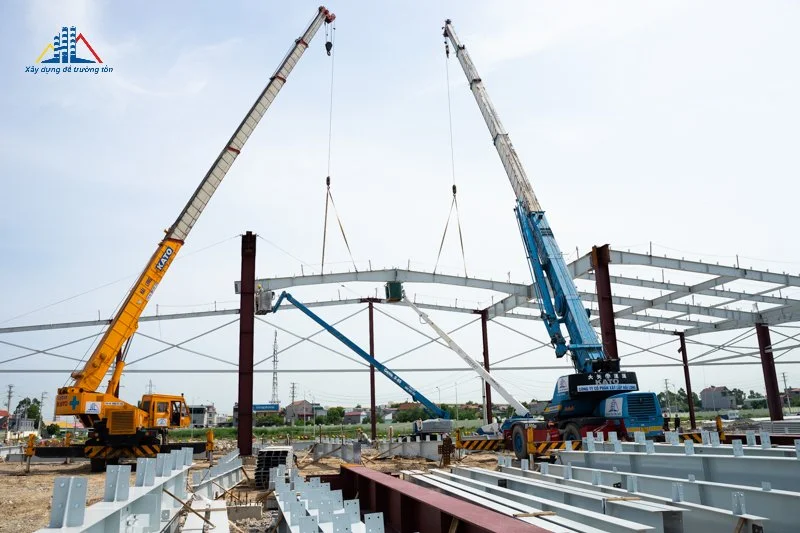
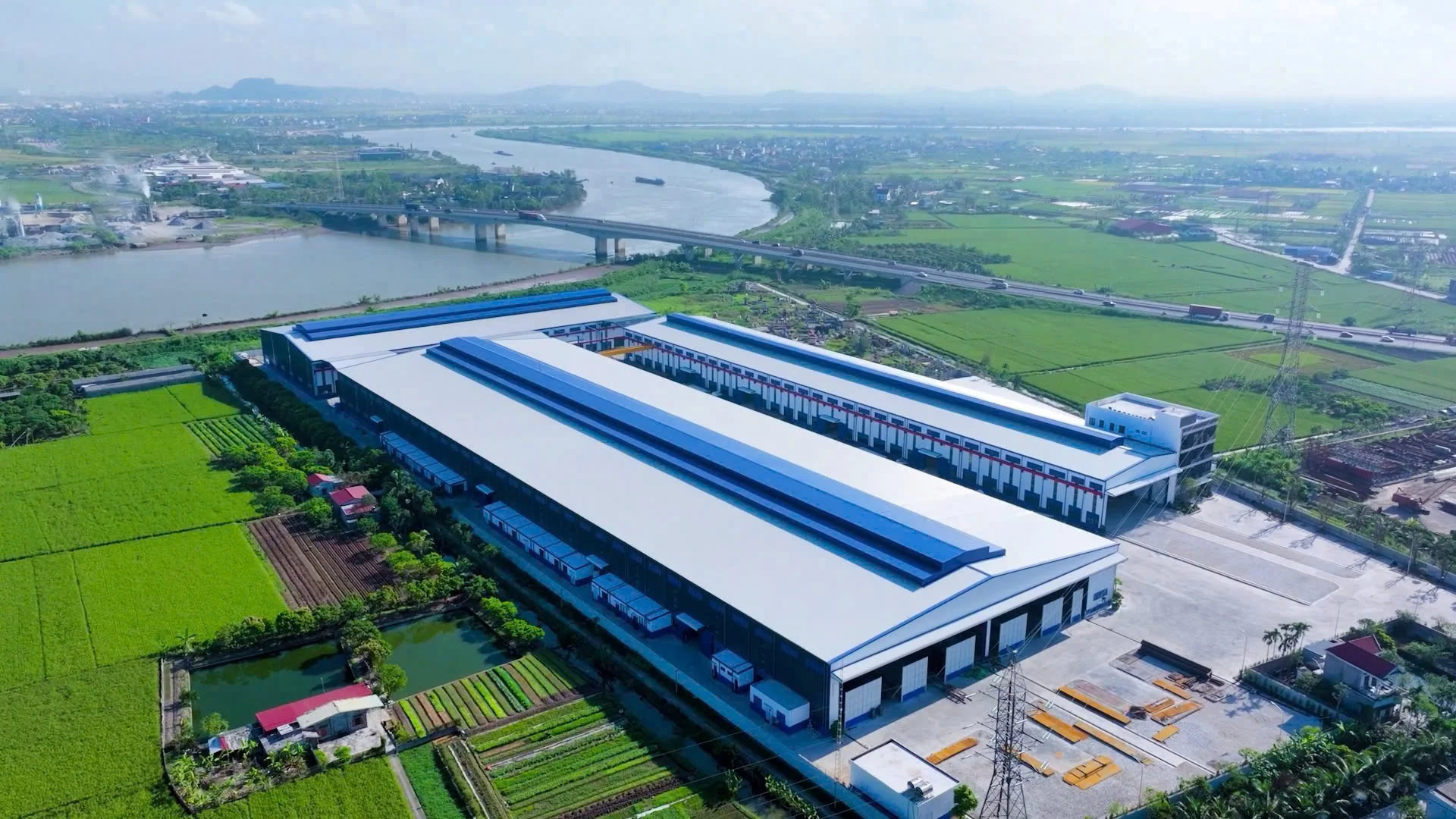
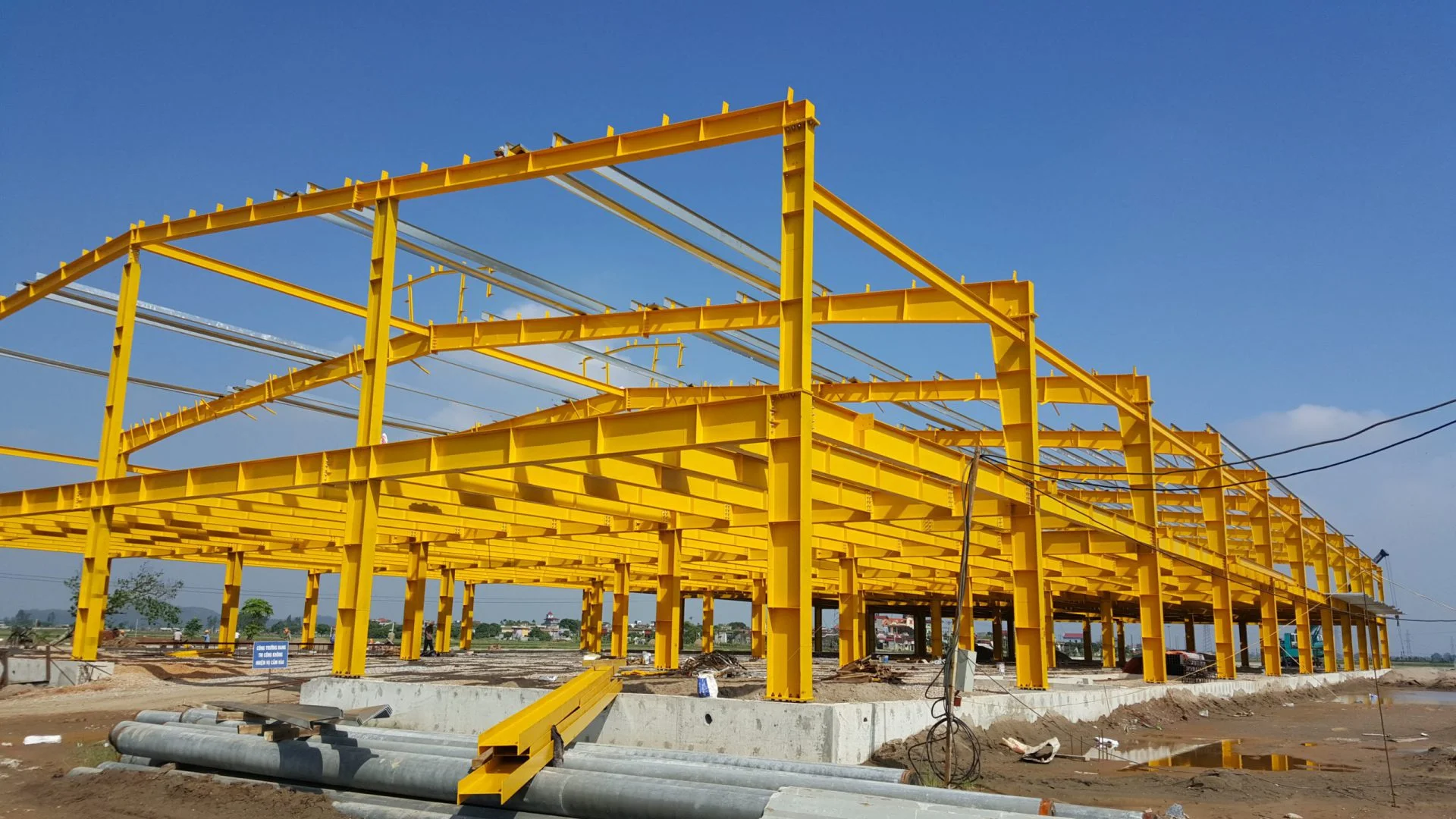
The shift to high-tech entails higher technical requirements for industrial park infrastructure and factory buildings. The demand for technical infrastructure construction such as land leveling, internal roads, water supply and drainage systems, and high-capacity transformer stations increases as soon as a project is licensed. For factory buildings, electronics and semiconductor projects require international-standard clean rooms, complex mechanical and electrical (MEP) systems, high-load floors, large-span steel structures, and smart fire protection systems. Many developers are also aiming for green building certifications such as LEED, LOTUS, or EDGE, thereby setting requirements for environmentally friendly materials and energy-optimized operational solutions. At the same time, the formation of large-scale factory complexes leads to the need for synchronous investment in logistics warehouses, worker housing, and accompanying service areas.
Source: VnEconomy, VnExpress, Foreign Investment Agency.