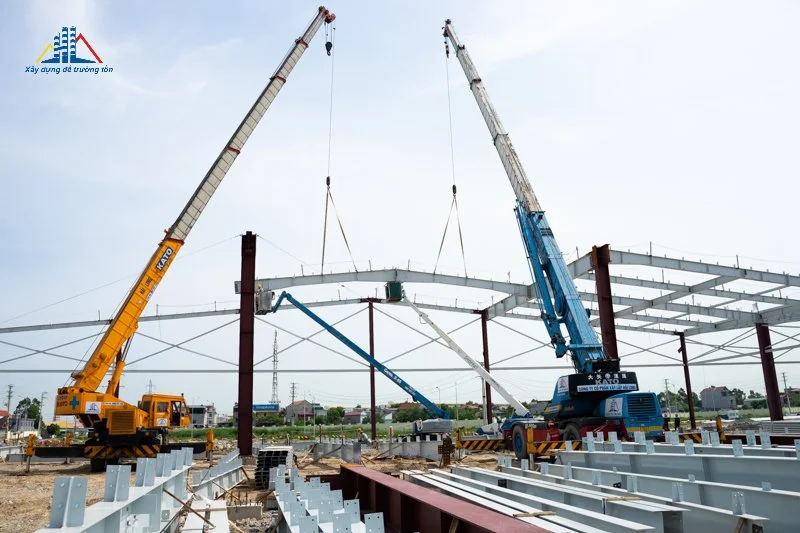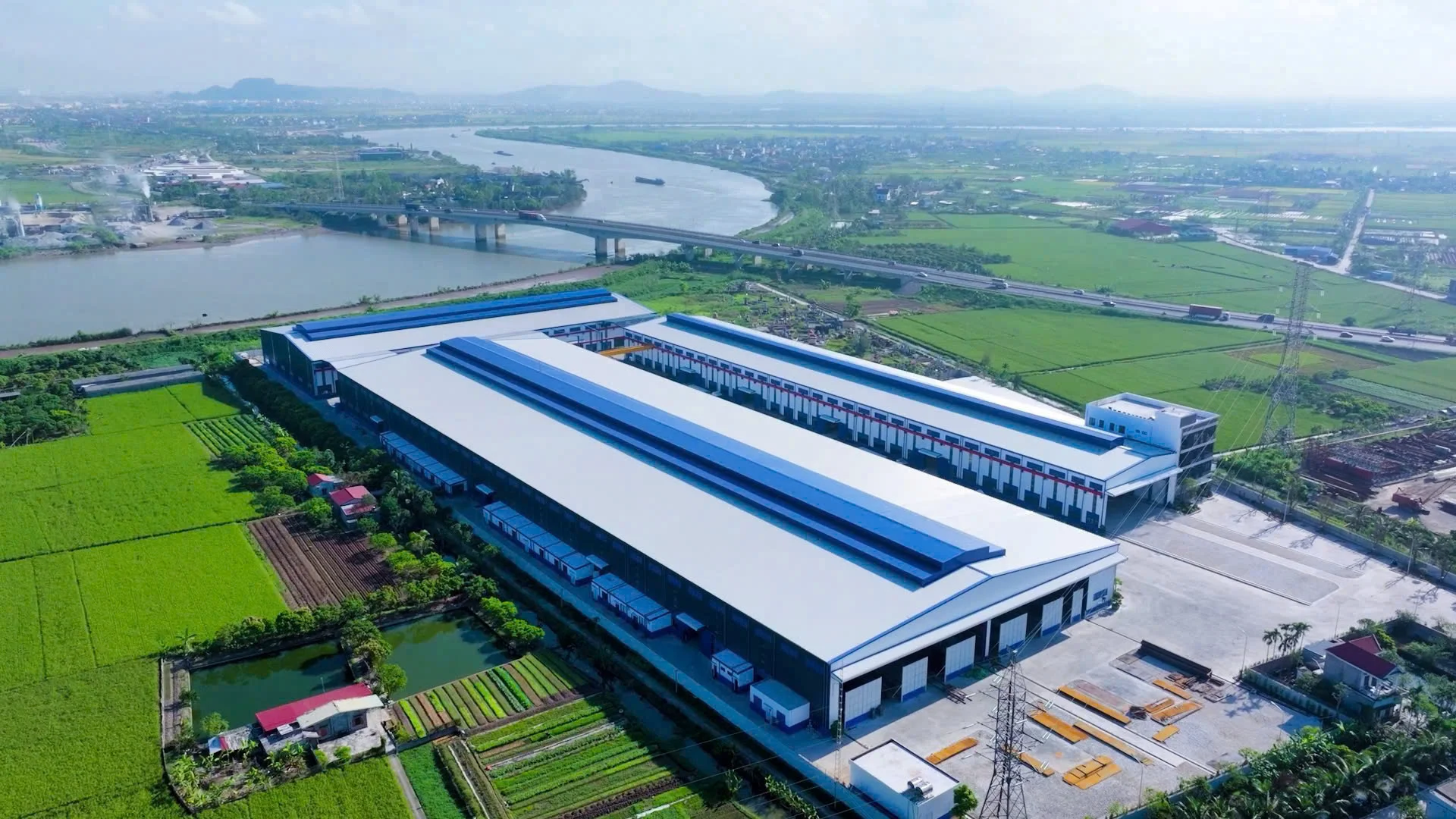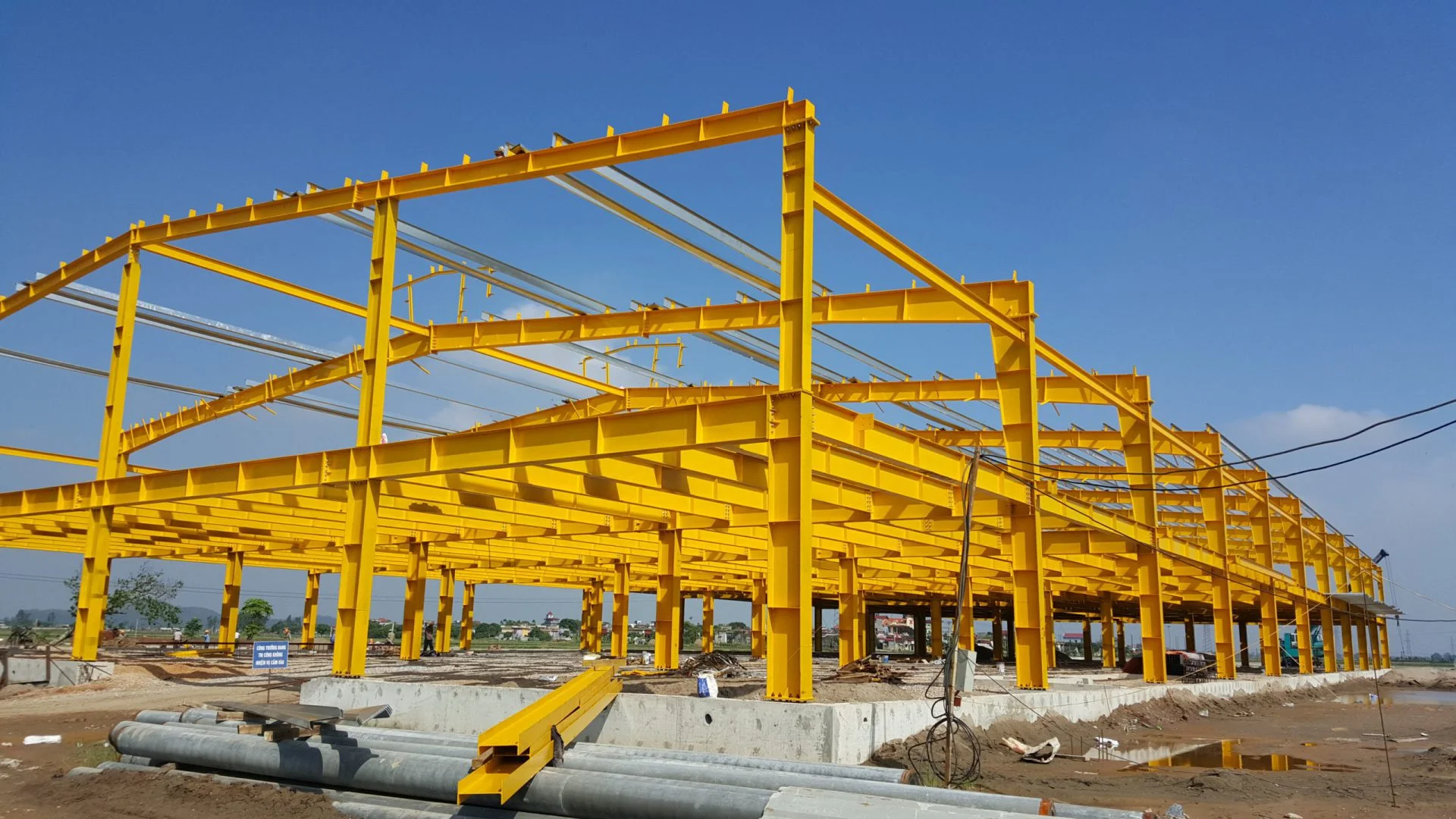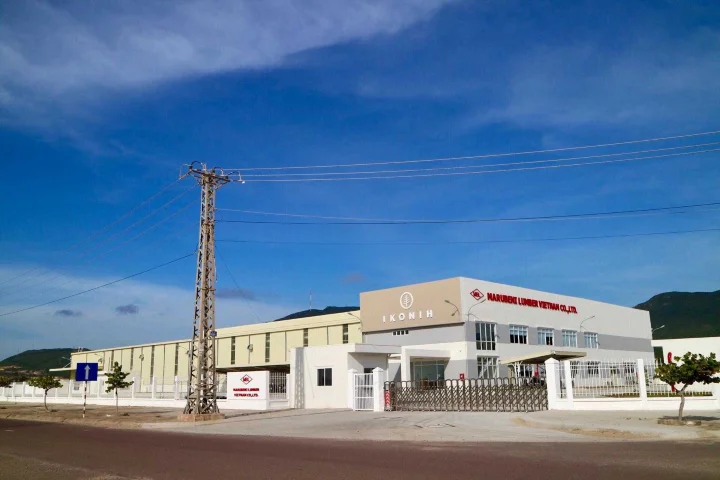


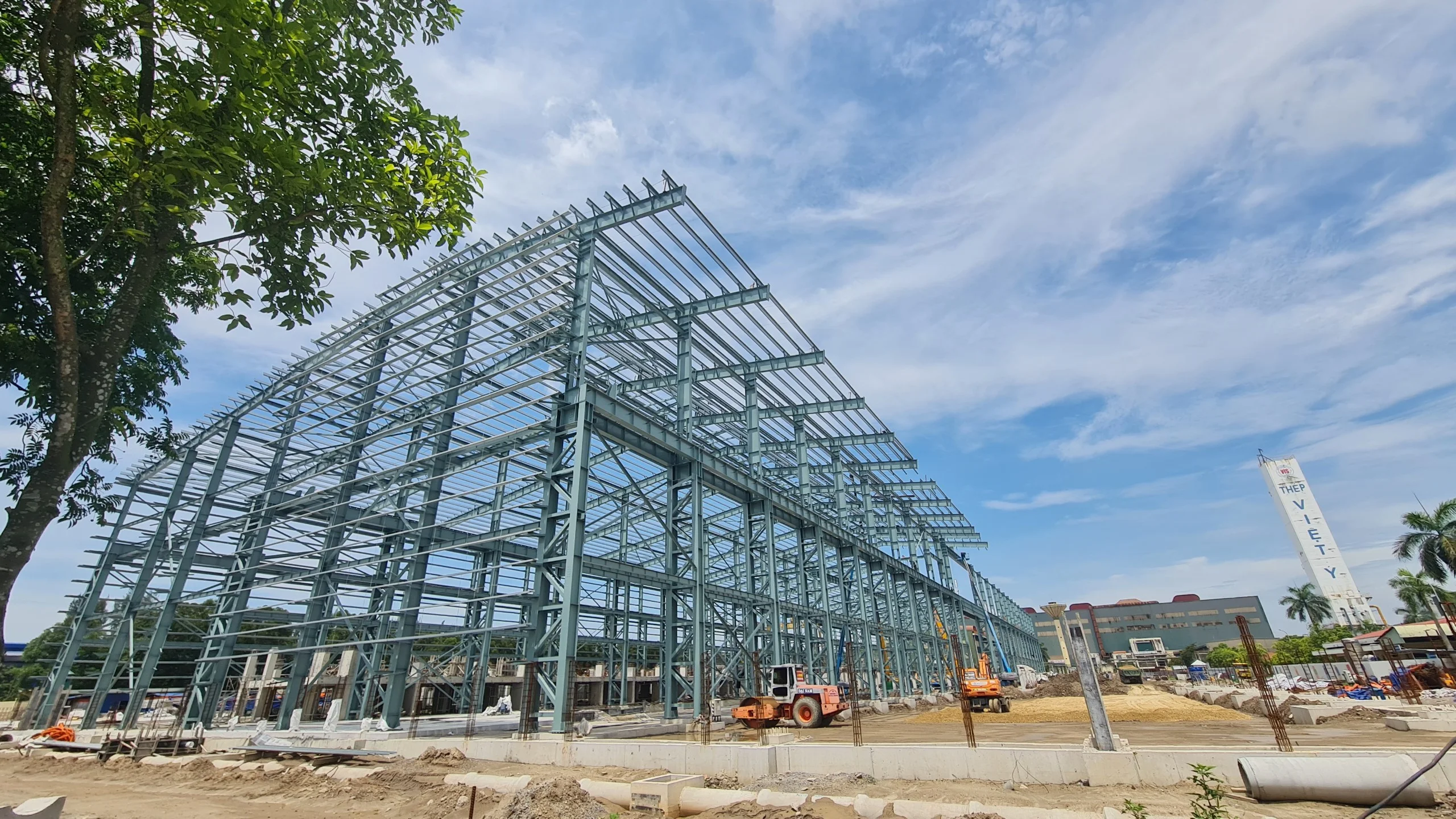
In the context of modern industrialization, the demand for facilities with large usable spaces, unobstructed by intermediate support columns, is constantly increasing. To meet this requirement, the long-span steel structure solution has become a superior technical choice. By definition, this is a steel structural system designed to span distances of 30 meters or more, potentially reaching 60 – 100 meters, commonly applied in specialized projects such as large-scale factory buildings, sports arenas, exhibition centers, and airport terminals.
The core challenge of these structures lies in managing the complex relationship between self-weight, load-bearing capacity, and deformation over a large span without intermediate supports. Any error in design or construction can lead to serious consequences due to the scale of the project. Therefore, strict adherence to national technical standards is not just a recommendation but a mandatory requirement to ensure structural safety, durability, serviceability, and economic efficiency throughout the project's lifecycle. In Vietnam, the TCVN standard system, especially TCVN 555 and TCVN 2737, serves as the fundamental technical legal framework providing a common language and rules for engineers to solve this complex problem.
Design Foundation: TCVN 5575:2024 Standard
TCVN 5575 is the standard specifying basic requirements for the design and calculation of steel structures in civil and industrial projects. The foundation of this standard is the limit state design method, a modern design philosophy to ensure that steel structures do not exceed safety and serviceability thresholds under all the most unfavorable load combinations.
Limit states are generally divided into two main groups:
- Ultimate Limit States (Group 1): These are states related to the failure or major damage of the structure, including strength failure (material yielding), global or local instability (buckling of members), and brittle fracture.
- Serviceability Limit States (Group 2): These are states where the structure no longer meets normal usage conditions, affecting operational functions, equipment, or user comfort, including excessive deformation, deflection, and vibration.
One of the most important updates in the TCVN 5575:2024 version compared to the 2012 version is the introduction of the “member classification” concept. Accordingly, members are divided into three classes based on the stress-strain state of the calculated cross-section:
- Class 1: Elastic state.
- Class 2: Elasto-plastic state.
- Class 3: Plastic state (formation of plastic hinges).
This classification is a major step forward, helping Vietnamese standards align more closely with advanced international standards such as Eurocode 3. It allows engineers to perform design calculations more optimally, especially for flexural members under static load conditions, by accounting for the development of plastic deformation to save material while still ensuring absolute safety.
In addition, the standard clearly specifies material requirements, encourages the use of domestically produced steel, and provides corresponding standards for welding materials and bolted connections, creating a synchronized reference system for the entire process from design to fabrication.
Controlling Serviceability Limit States: Deflection Limits according to TCVN 2737:2023
For long-span steel structures, due to their slender and lighter nature compared to concrete, the serviceability limit state—specifically deflection—is often the governing factor in design. Excessive deflection not only causes aesthetic issues but can also damage non-structural components such as partition walls, glass doors, or affect the operation of sensitive equipment like cranes.
An important update to note is that since TCVN 2737:2023 “Loads and Actions” was issued, the regulations on deflection limits for all types of structures (including steel and reinforced concrete) have been unified and centralized in Appendix G of this standard. This replaces Table 1 in the previous TCVN 5575:2012, creating a single reference source, minimizing ambiguity, and ensuring consistency in design practice.
The table below summarizes typical deflection limit values for steel structural members, cited from Appendix G of TCVN 2737:2023.
Table 1: Allowable Deflection Limits for Steel Structural Members (According to TCVN 2737:2023 – Appendix G)
Note: is the span of the member. The above values are for reference; specific application must follow the detailed requirements in Appendix G.