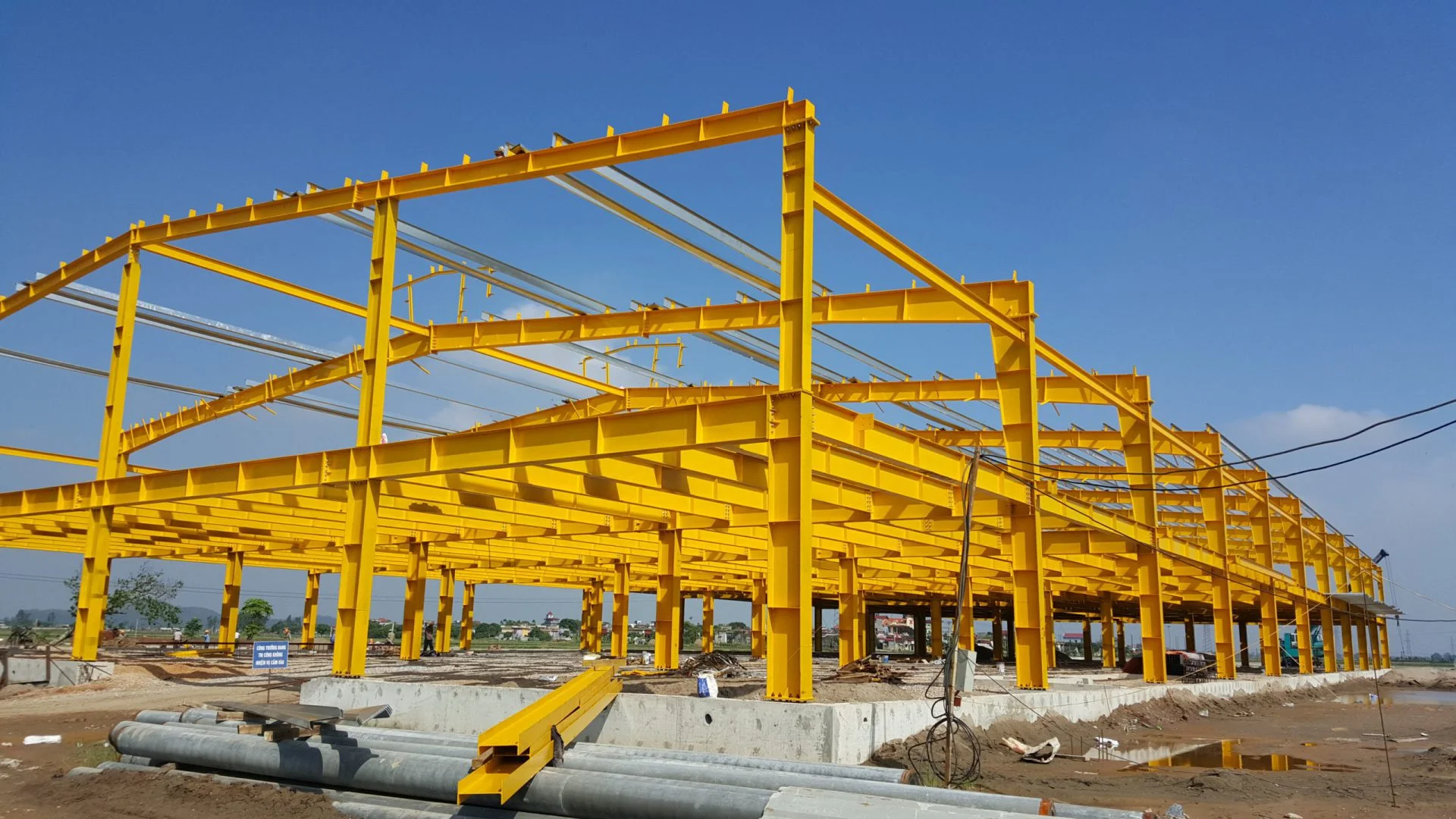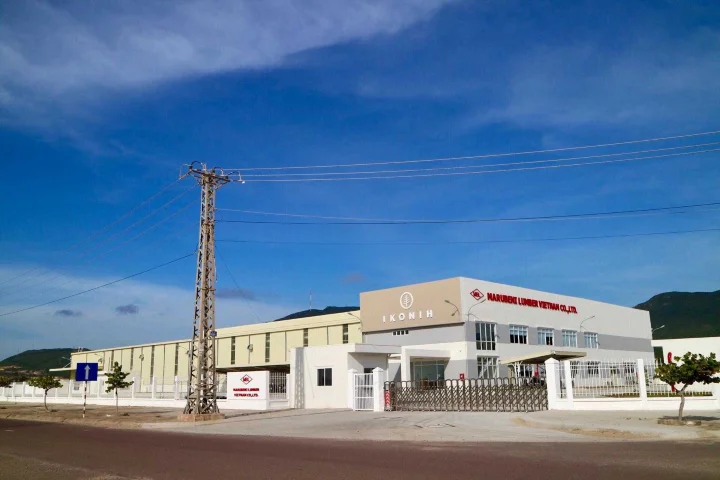


Steel structures serve as the primary load-bearing framework for many modern industrial and civil projects due to their superior mechanical strength, design flexibility, and fast construction time. However, when operating in harsh environments, from corrosive marine climates to high temperatures, they impose very high requirements on design, material selection, and protective measures.
This article provides an in-depth analysis of technical challenges and effective application solutions in the design and construction of steel structures in difficult environments, helping investors and technical teams make informed decisions.
1. Key challenges for steel structures in harsh environments
🔹 High temperatures and material deformation
In high-temperature environments, steel tends to expand and lose its load-bearing capacity, directly affecting structural stability and project safety.
Technical solutions:
Select heat-resistant alloy steel with stable mechanical properties at high temperatures.
Apply specialized fire-resistant paint/coatings such as intumescent coatings to increase fire resistance duration.
Design thermal expansion joints to reduce stress caused by expansion.
🔹 Corrosive environments: Marine, chemical, acid rain
Steel structures are susceptible to chemical and electrochemical corrosion when exposed to high humidity, marine salt air, or environments containing corrosive substances like acids and alkalis.
Effective anti-corrosion measures:
Hot-dip galvanizing: Creates a durable protective layer against oxidation.
Epoxy or polyurethane coating: Chemical resistance, protecting surfaces in industrial environments.
Using stainless steel or high-grade alloy steel: Increases corrosion resistance in extremely harsh environments.
Periodic maintenance: Inspecting and treating corrosion as soon as it appears helps extend the structural lifespan.
Note: The selection of materials and coating systems depends on the corrosivity of the environment, the project location, and economic sustainability requirements.
🔹 Seismic activity and dynamic loads
In areas with high earthquake risk, steel structures must be designed to withstand and dissipate vibration energy without failing.
Technical solutions:
Design special load-bearing frames such as moment-resisting frames and braced frames with dampers.
Use foundation isolation systems and damping devices to limit forces transmitted from the ground.
Select materials and structural details with high ductility to reduce the risk of sudden fracture.
🔹 Extreme weather: storms, floods, freezing
Strong winds, heavy rain, and temperature fluctuations cause significant aerodynamic forces and increase the risk of corrosion, especially in coastal or high-altitude cold regions.
Adaptive design strategy:
Optimize the aerodynamic shape of the structure to reduce wind load impact.
Arrange cross-bracing systems and wind walls to increase structural rigidity.
Select weather-resistant materials such as high-strength alloy steel and specialized coating systems.
🔹 Material fatigue phenomenon
Under repetitive loading over time (e.g., wind, vibrations), steel can experience material fatigue, leading to cracks and reduced durability.
Solution:
Use high-quality steel with high fatigue strength.
Optimize design to reduce stress concentration at details such as welds and bolt holes.
Establish a monitoring and periodic inspection system for early detection and resolution.
2. The role of design and materials in harsh environments
📌 Steel quality is the foundation
Selecting steel that meets criteria such as tensile strength, ductility, good weldability, and corrosion resistance is a mandatory requirement for long-term structural stability.
📌 Construction quality management process
Beyond design and material selection, the fabrication – welding – surface protection process must follow strict standards to ensure no technical weaknesses lead to premature failure during operation.
Steel structures in harsh environments represent a multi-dimensional engineering challenge, requiring a harmonious combination of design, material selection, protective measures, and construction control. Applying advanced engineering solutions not only enhances structural lifespan but also minimizes maintenance costs and long-term operational risks.
With extensive experience in the design, fabrication, and erection of steel structures in demanding environmental conditions, Hai Long Steel Structure is ready to accompany customers in every project, from industrial factory buildings to high-tech infrastructure works.