

How is the steel structure production process carried out? Steel structures are increasingly widely applied due to their superior advantages in durability, flexibility, and rapid construction in civil and industrial projects. Join Hai Long Steel Structure to explore the 10 detailed steps for standard steel structure production below.
1. Overview of Steel Structures
1.1 / What is a steel structure?
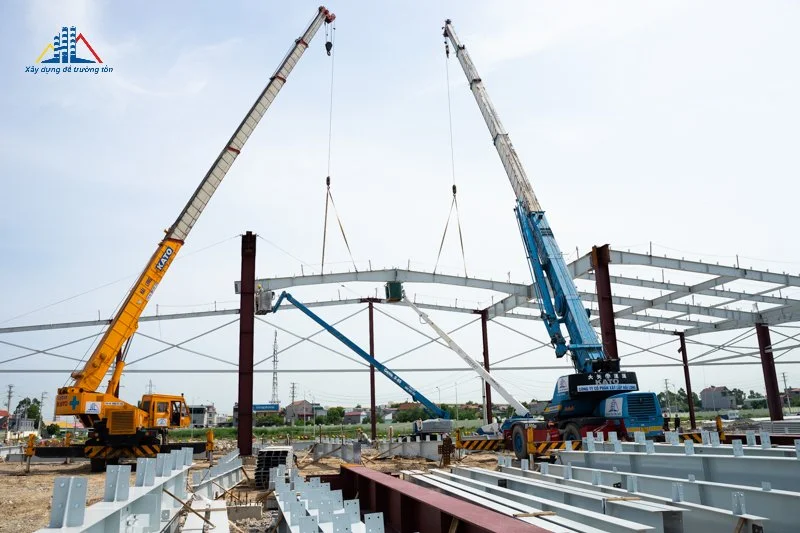
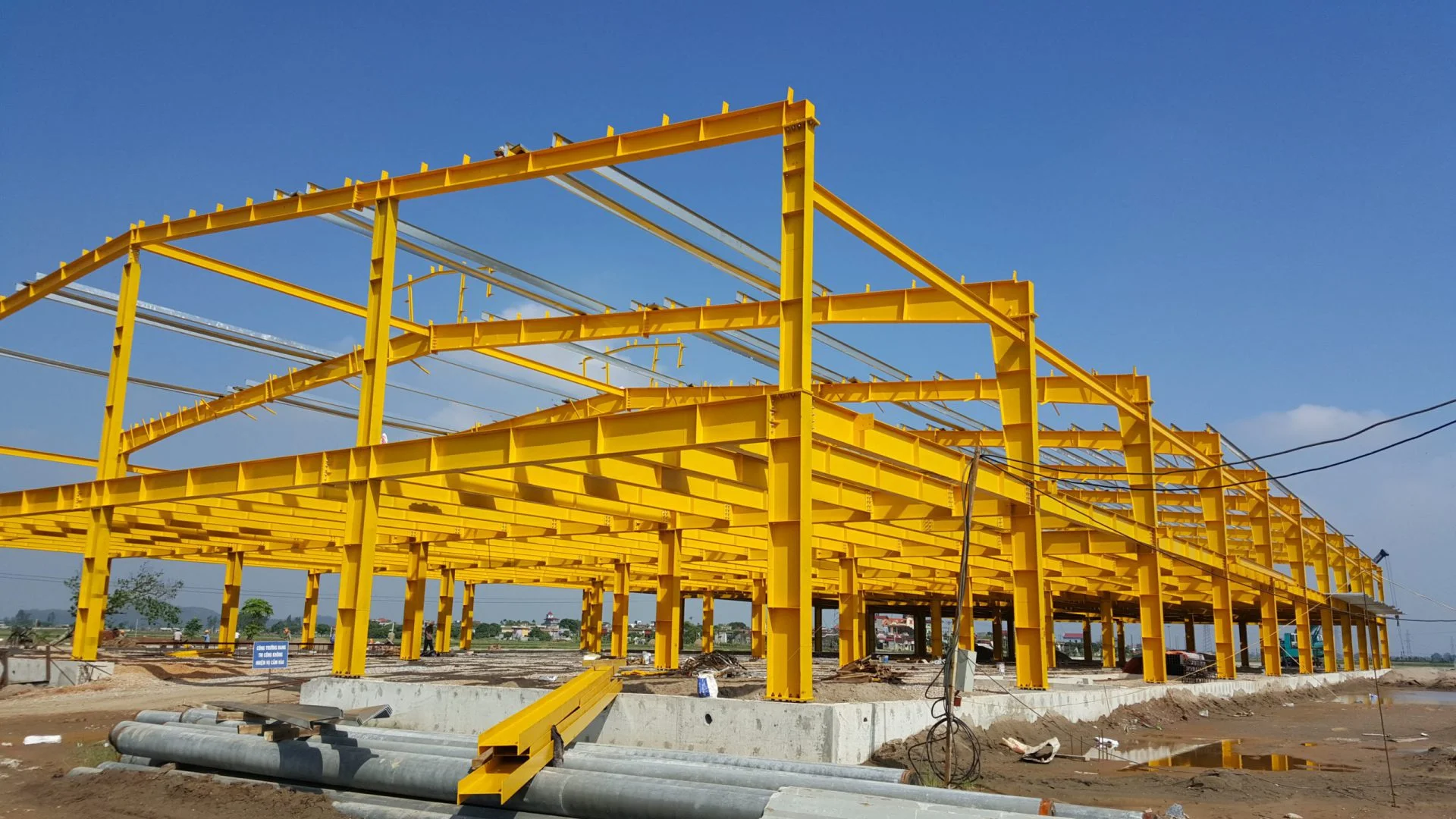
Steel structure is the primary load-bearing system of construction projects, designed and composed mainly of steel components such as columns, beams, trusses, bracing, and connections using bolts or welding. This type of structure is increasingly widely applied in industrial and civil construction due to its outstanding advantages in durability, high load-bearing capacity, light weight, and rapid construction.

See more: Comprehensive knowledge about Steel Structures
1.2 / Common types of steel structures
Frame Structures
- Description: The main load-bearing system is formed by steel columns and beams, connected together into a solid frame.
- Advantages: Good load-bearing capacity, large span capability, easy to expand project scale.
- Applications: Factories, warehouses, manufacturing plants, high-rise buildings, commercial centers.
Truss Structures
- Description: Composed of steel members connected in a triangular grid pattern, allowing for even load distribution.
- Advantages: Lightweight, high load-bearing capacity, and capable of spanning large distances without the need for many support columns.
- Applications: Sports arenas, stadiums, canopies, theaters, and airports.
Arch Structures
- Description: Utilizes curved steel members to form an arch, primarily resisting forces in the horizontal direction.
- Advantages: Creates large open spaces, high aesthetic appeal, and efficient force distribution.
- Applications: Warehouses, factories, sports arenas, and exhibition halls.
Tube Structures
- Description: Uses hollow steel tubes, offering excellent resistance to torsion and high load-bearing capacity.
- Advantages: Lightweight, easy to construct, and good corrosion resistance.
- Applications: Steel building frames, water supply systems, oil and gas, and civil engineering projects.
Profile Steel Structures
Common types:
- H/I-beams: High load-bearing capacity, used for main beams and columns.
- U and C channels: Used for purlins and secondary members.
- L-shaped angle steel: Used for corner reinforcement and secondary connections.
- Z-purlins: Used for roof and wall purlins.
- Steel plates: Used for flooring, roofing, walls, and connection gusset plates.
Composite Structures
- Description: A combination of steel and concrete, leveraging the advantages of both materials.
- Advantages: High load-bearing capacity, increased durability, and cost-effective.
- Applications: Composite flooring, composite beams, and bridges.
1.3 / Advantages of steel structure buildings
Steel structure buildings are increasingly preferred in industrial and civil construction due to their superior advantages over traditional materials like reinforced concrete or wood, including:
- High load-bearing capacity and durability
- Rapid construction, saving time
- Cost-effectiveness
- Lightweight, easy to transport and install
- Flexibility, easy to expand and repair
- Optimized usable space
- High level of industrialization
- Excellent airtightness, water resistance, and rust protection
- Environmentally friendly
2. 10 Steps for Steel Structure Manufacturing
2.1 / Step 1: Preparation and material gathering
- Select steel and auxiliary materials that meet standards, have clear origins, and possess full quality certificates.
- Inspect material quality before warehousing, discarding any non-compliant materials.
- Classify, gather, and store materials in designated areas to avoid environmental impact.
- Inspect and arrange the material storage site to facilitate transport and production.
- Ensure equipment and machinery are ready for the next production steps.

2.2 / Step 2: Cutting steel according to design
After finalizing the technical drawings, steel plates or structural steel sections are cut to the exact dimensions and shapes specified in the design.
There are two commonly used types of steel:
- Structural steel (pre-cast steel): Comes in standard shapes such as H, U, and C, requiring only the removal of excess material to fit the design.
- Built-up steel: Cut from steel plates or coils, then assembled into components according to project requirements.
The cutting process requires high precision to ensure that components fit together during assembly, preventing errors in subsequent stages.
Commonly used modern cutting technologies include:
- Automatic laser cutting
- Plasma and oxy-gas cutting
- Circular saws and band saws
- Automatic slitting and shearing machines
After cutting, steel plates are inspected for dimensions, and non-compliant parts are removed before moving to the next processing step.

2.3 / Step 3: Forming details
- Details such as corrugated sheets and partitions are pressed to form shapes precisely according to the design.
- The pressing process uses high compressive force on the steel workpiece to alter its original shape.
- After pressing, the dimensions and accuracy of the details are carefully checked against the drawings.
2.4 / Step 4: Welding details into components
- During the assembly of steel details into complete components, specialized automatic welding systems are used to ensure optimal precision and quality.
- Automatic welding creates uniform, aesthetic, and high-strength welds, ensuring solid connections between details while minimizing human error.
- Upon completion of welding, components are thoroughly inspected for weld quality, straightness, and angles to ensure all technical standards are met before proceeding to the next production steps.
2.5 / Step 5: Straightening components
- After welding, components must be straightened using specialized machines. Straightening helps eliminate warping and ensures the flatness and standard angles of the components.
- Subsequently, the flatness and squareness of the components are checked using specialized measuring tools.
2.6 / Step 6: Installing connection details
- Secondary details such as bolts, rivets, and welds are used to assemble and connect the parts of the component.
- Bolts must be tightened to the correct torque using specialized wrenches and screwdrivers.
- Finally, the position and dimensions of secondary details must be carefully checked before welding.
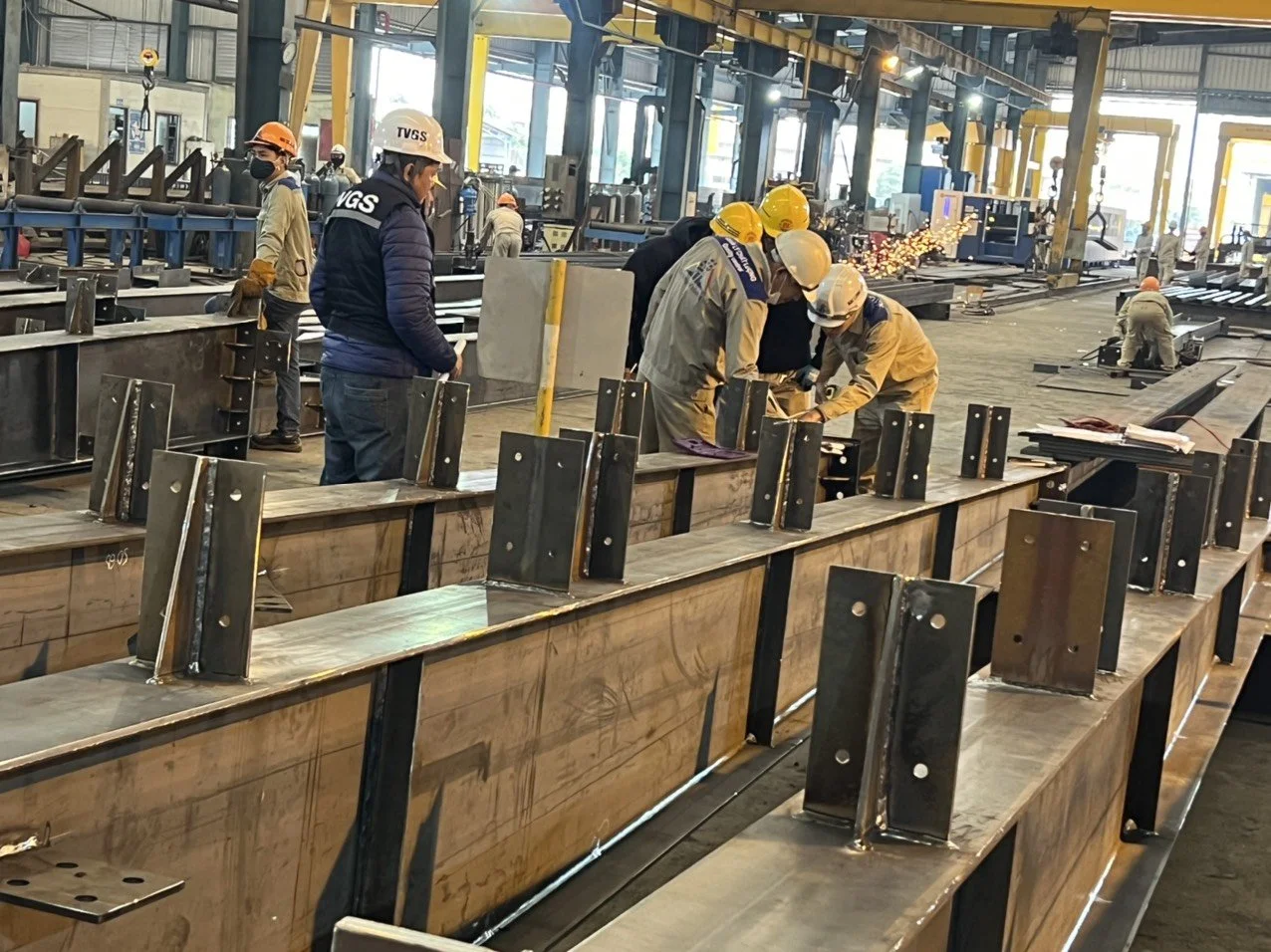
2.7 / Step 7: Final welding
In this step, secondary details such as gusset plates, stiffeners, and reinforcement ribs are welded onto the assembled steel component to complete the product.
The final welding process uses specialized methods to ensure strong, durable, and technically correct welds, while enhancing the load-bearing capacity and stability of the steel component.
After welding, all welds are thoroughly inspected for strength, shape, penetration, and aesthetics. If defects are found, they must be rectified immediately to ensure product quality before moving to the next stages.
This stage requires meticulousness, precision, and high skill, which are decisive factors for the safety and lifespan of the steel structure.
2.8 / Step 8: Surface cleaning
- Use a shot blasting system to clean the entire surface of the component.
- Completely remove dirt, rust, and slag that could affect weld quality and paint adhesion.
- The cleaned surface must be dry, clean, textured, and uniform.
2.9 / Step 9: Protective painting
- Apply 1-2 layers of anti-rust primer as a base for the components.
- Spray finish with specialized PU paint at a standard thickness.
- Painting helps protect components from environmental impacts and extends their lifespan.
2.10 / Step 10: Inspection before packing and shipping
- Inspect all components before packing and storage.
- Steel structures are carefully stored to avoid scratches and heavy impacts.
- Transport to the construction site for installation safely and according to procedure.
3. HAI LONG CONSTRUCTION IS A REPUTABLE STEEL STRUCTURE MANUFACTURER
Choosing the right steel structure fabrication partner is the deciding factor for the success of every construction project. In a market that increasingly demands high quality, schedule adherence, and safety, Hai Long Steel Structure is proud to be a leading brand trusted by many major domestic and international investors:
- A team of experienced engineers, architects, and experts, knowledgeable in the design and construction of factory buildings and warehouses according to international standards.
- Diverse construction capabilities, meeting all project scales and requirements, from simple to complex factory buildings.
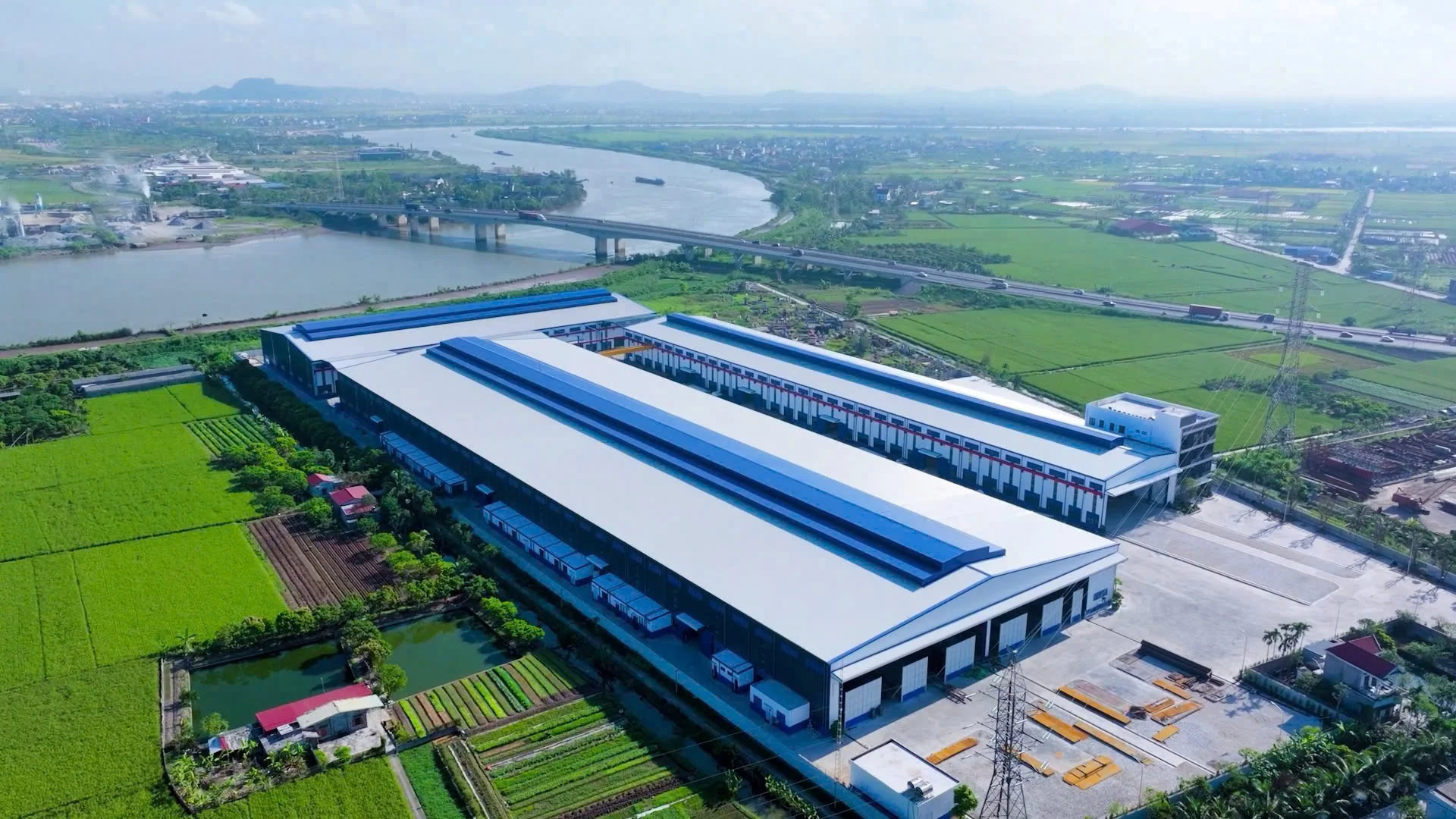
- Equipped with modern machinery and equipment, three steel structure factories with a capacity of nearly 50,000 tons/year ensure fast, accurate, and safe construction.
- Professional construction process, strictly managed.
Are you looking for a reputable and professional steel structure manufacturing and erection contractor? Contact Hai Long Construction for free consultation and quotation:
- HAI LONG CONSTRUCTION JSC – MEMBER OF TAIYO GROUP
- Address: Taiyo Building, 97 Bach Dang, Ha Ly Ward, Hong Bang District, Hai Phong City, Vietnam.
- Hotline: 084 6625 888
- Email: info@hailongjsc.vn