

Steel structures play a pivotal role in the construction industry, especially when facing challenges from harsh environments. From high temperatures and corrosive agents to strong seismic vibrations, steel structures are designed to maintain safety and durability for projects. In this article, we will detail the methods and modern technologies that help increase the resistance of steel structures against harsh elements, while ensuring operational efficiency and extending the project's lifespan.
1. Overview of steel structures
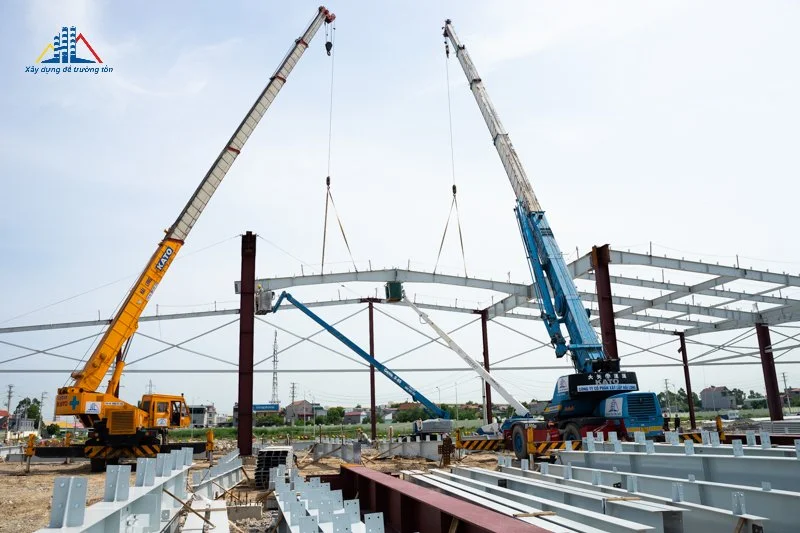
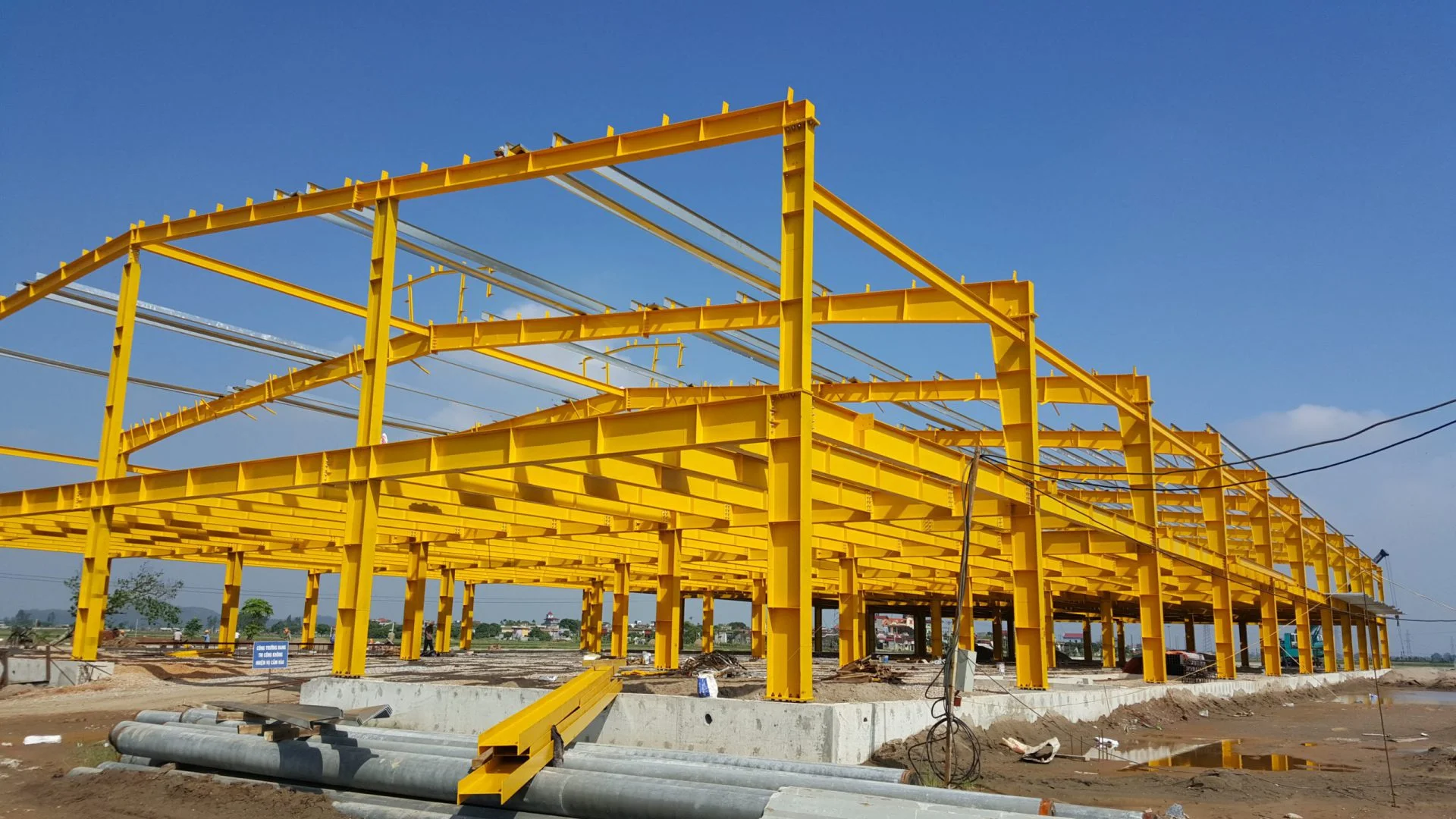
Steel structure is the primary load-bearing frame system in construction projects, fabricated from steel materials and connected by bolts, rivets, or welds. This is a key element ensuring the stability, durability, and long-term safety of the project.
Classification of steel structures
- Light steel structure:
- Characteristics: Uses small cross-section steel shapes and tubes with light weight.
- Application: Suitable for civil projects such as residential houses, small and medium-sized factory buildings.
- Heavy steel structure:
- Characteristics: Uses large cross-section steel shapes and tubes with high load-bearing capacity.
- Application: Serves industrial projects, high-rise buildings, bridges, factories, and large warehouses.
Outstanding advantages of steel structures
- Superior durability and load-bearing capacity:
- Withstands heavy loads and harsh impacts from wind, storms, and earthquakes due to high tensile, compressive, bending, and torsional strength.
- Design flexibility:
- Easily adjustable, expandable, or convertible in function according to actual needs.
- Fast and precise construction:
- Steel components are precisely manufactured at the factory and quickly assembled at the site, significantly reducing construction time.
- High aesthetics:
- Provides a modern look, suitable for various architectural styles, from classic to modern.
- Cost savings:
- Although the initial cost is higher, it significantly saves on maintenance, repair, and operational costs throughout the building's lifecycle.
- Environmentally friendly:
- Steel is fully recyclable, helping to minimize construction waste and protect the environment.
Diverse applications of steel structure
- Civil: Houses, apartments, villas, schools, hospitals.
- Industrial: Factories, factory buildings, warehouses.
- Transport infrastructure: Bridges, roads, stations, tunnels.
- Public works: Stadiums, commercial centers, theaters.
- High-tech projects: Large-scale projects requiring high technical standards and fast construction progress.
Thanks to its diversity and superior advantages, steel structure continues to be the optimal choice in the modern construction industry.
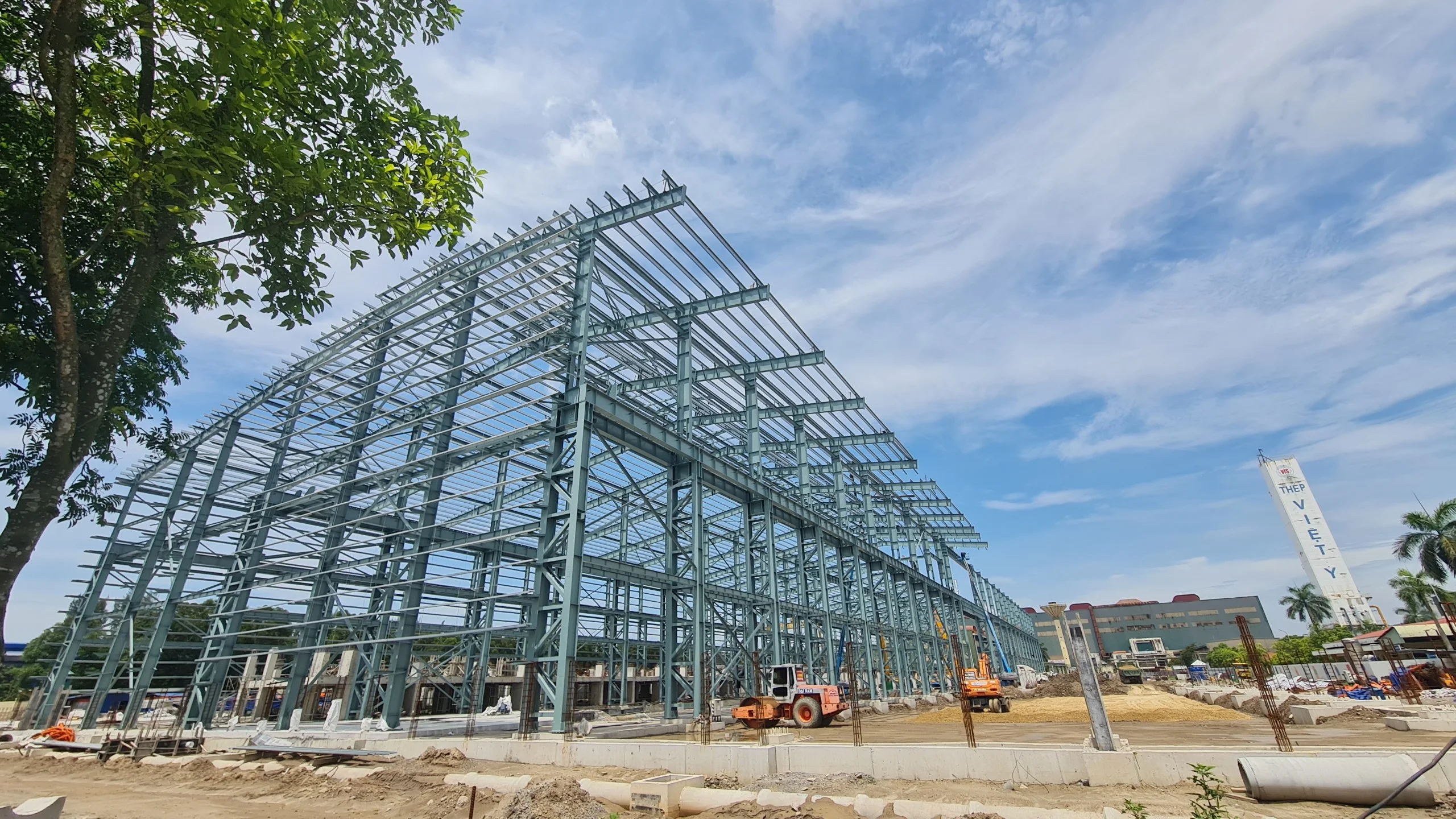
2. Steel structure in harsh environments
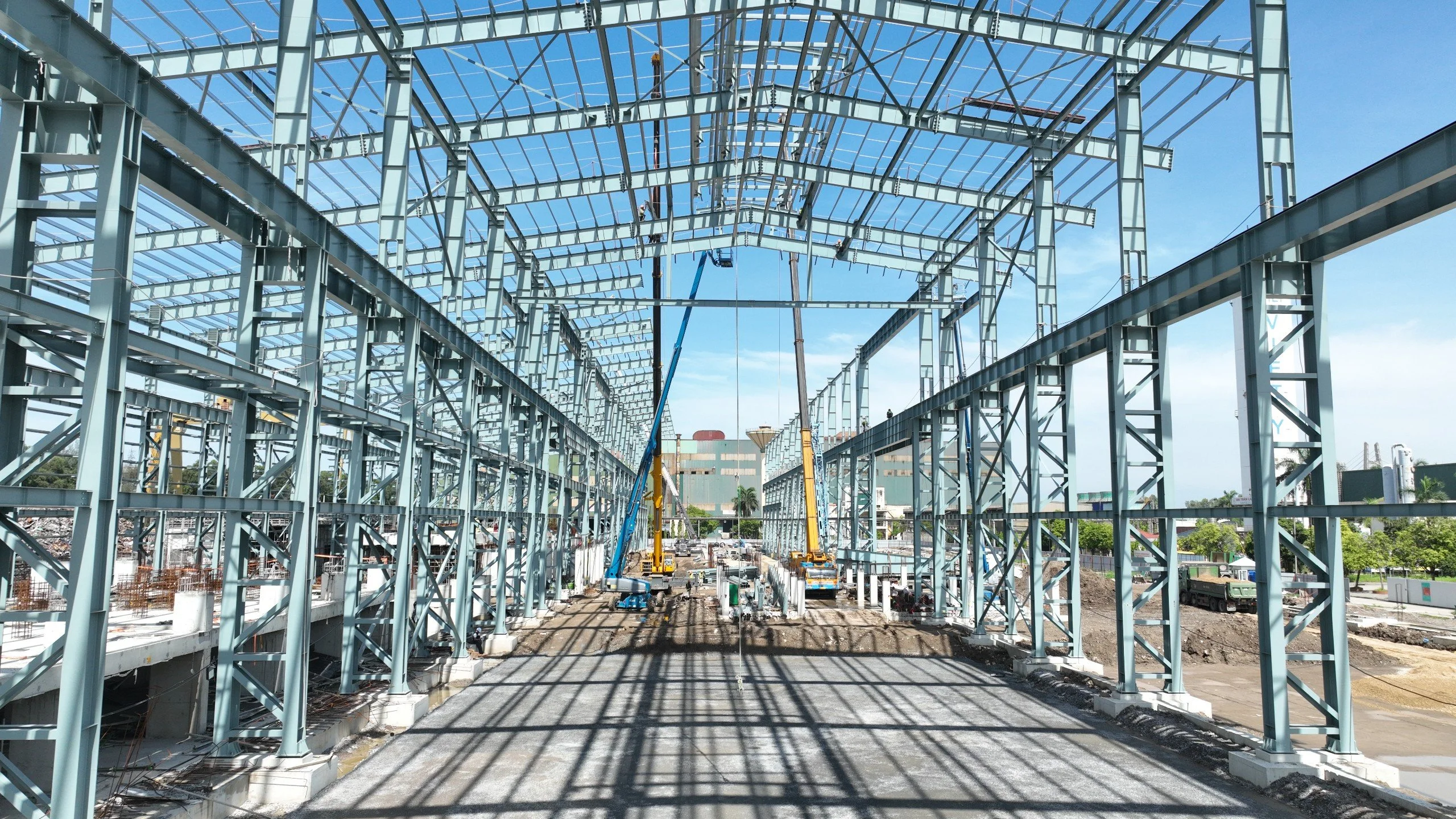
2.2. Corrosive environments and their impact on steel structures
Corrosive environments, such as salt-rich coastal areas, industrial parks with high concentrations of chemicals, acids, alkalis, etc., are major challenges for steel structures. Steel corrosion occurs silently but continuously, reducing thickness, cross-section, load-bearing capacity, and leading to safety risks for the structure. Especially in marine environments, salt and high humidity are powerful corrosive agents, causing steel structures to weaken faster if there are no protective measures.
Methods for protecting steel structures in corrosive environments
- Hot-dip galvanizing
- This is a method of creating a thick and firmly bonded zinc layer on the steel surface through a hot-dip process.
- The zinc layer acts as an "armor" protecting the steel from direct contact with corrosive agents such as salt and chemicals.
- Particularly effective in marine environments and heavy industrial parks.
- Anti-corrosion coating
- Types of epoxy, polyurethane, or zinc-rich paints are applied to prevent the penetration of moisture and chemicals into the steel surface.
- Epoxy paint has high adhesion, withstands acid and alkaline environments, and is suitable for industrial environments.
- Polyurethane paint has good resistance to UV rays, suitable for outdoor steel structures.
- Using stainless steel
- In harsh corrosive environments, stainless steel is the optimal choice thanks to its ability to self-form a protective oxide layer on the surface.
- Types of steel such as Inox 304 or Inox 316 are often used in strong chemical environments and coastal areas.
- Periodic inspection and maintenance
- Regular inspection processes help detect signs of corrosion early.
- Treatment measures such as cleaning, applying additional paint layers, or replacing damaged components help extend the service life of the steel structure.
- In particular, connection areas and welds require attention as they are prone to localized corrosion.
2.3. Seismic activity and seismic design measures for steel structures
Seismic activity originates from the movement of tectonic plates, releasing energy in the form of seismic waves. Phenomena such as earthquakes and tsunamis can cause severe damage, especially in areas with high seismic frequency. In these situations, designing structures to withstand seismic forces and vibrations is a decisive factor for the safety and longevity of the project.
Key characteristics of steel structures in seismic environments
- High ductility
Steel has the ability to undergo significant deformation without sudden fracture, allowing steel structures to effectively absorb and dissipate seismic energy. - Structural restorability
After an earthquake, steel structures can be easily repaired or replaced without the need for complete demolition.
Seismic design solutions for steel structures
- Special moment-resisting frame design
- Moment-resisting frames: Enhance lateral load-bearing capacity, helping the structure resist strong vibrations.
- Eccentrically Braced Frames (EBF): This bracing system uses an eccentric configuration to absorb seismic energy while reducing the overall deformation of the structure.
- Concentrically Braced Frames (CBF): Increase the stiffness and stability of the structure in the event of high-intensity earthquakes.
- Base isolation systems
- Separating the building's foundation from the ground through pads or elastic bearings helps reduce the transmission of vibrations from the ground to the structure.
- This method is particularly effective for structures such as high-rise buildings, bridges, and critical infrastructure.
- Damping structures
- Friction Dampers: Utilize friction force to dissipate seismic energy.
- Hydraulic Dampers: Reduce vibrations by absorbing energy through fluid.
- Damping devices help maintain stability and reduce fatigue in steel components.
- Ductile structural details
- Details such as beams and columns are designed with high deformation capacity while maintaining structural integrity.
- Use high-strength welds and bolted connections to ensure they do not crack or lose connection during seismic events.
2.4. Impact of extreme weather on steel structures
Extreme weather, including storms, heavy rain, high temperatures, or freezing cold, poses many challenges for steel structures. These factors can reduce the durability and lifespan of the project if appropriate protective measures are not in place. Below are the main risks and remedial solutions:
Impacts of extreme weather
- Storms
- Strong winds create uplift, drag, and torsional forces, affecting the stability of the structure.
- Wind-induced resonance can increase oscillations, causing structural damage.
- Heavy rain and high humidity
- Increase the risk of steel corrosion, especially in environments with salt or acid.
- Moisture penetrates structural components, affecting connections and steel surfaces.
- Extreme temperatures
- Heat causes thermal expansion, leading to structural deformation.
- Freezing cold increases the risk of cracking or reduces the load-bearing capacity of the steel.
Protective solutions for steel structures in extreme weather
- Aerodynamic design
- The building shape is optimized to reduce wind resistance.
- Curved or tapered structures help disperse wind energy, reducing the risk of damage.
- Wind reinforcement
- Bracing system: Cross bracing, horizontal bracing, and wind walls are added to increase rigidity and stability.
- Solid foundation: Foundation reinforcement helps the structure stand firm against the impact of strong winds.
- Protective coating
- Anti-corrosion paint helps protect steel surfaces from moisture and corrosive chemicals.
- Waterproofing layer: Prevents rainwater and moisture from penetrating, reducing the risk of corrosion.
- Weather-resistant materials
- Using high-strength alloy steel that can withstand temperature changes and corrosion.
- Corten steel (weathering steel) forms a natural protective rust layer, increasing wear resistance.
- Periodic inspection and maintenance
- Early detection and treatment of issues such as rust and cracks to maintain the durability of the structure.
2.5 Material fatigue phenomenon
Material fatigue is the process of weakening and damage to a material due to repeated cyclic loading over time. This phenomenon occurs when the material is subjected to loads below its strength limit but continuously for a long period, leading to micro-cracks in the material. For steel structures, fatigue can occur at locations with stress concentration such as welds, bolt holes, and cross-section transition points.
In environments subjected to cyclic loading, steel structures can be designed to resist fatigue by using high-strength materials and increasing the fatigue life of the material. Additionally, monitoring systems can be used to detect cracks early and prevent them before they cause major damage.
Designing steel structures in harsh environments requires close coordination between knowledge of materials, engineering, and specific natural conditions. Factors such as high temperatures, corrosive environments, seismic activity, and extreme weather all pose unique challenges, but thanks to the development of technology and research, advanced solutions have helped steel structures meet these requirements.
WHY CHOOSE HAI LONG CONSTRUCTION AS YOUR STEEL STRUCTURE FABRICATION AND ERECTION CONTRACTOR
With over 25 years of experience in the field of factory and warehouse construction, Hai Long Construction is proud to be a leading reputable unit, providing customers with comprehensive construction solutions that meet all needs and requirements.
- A team of experienced engineers, architects, and experts, knowledgeable in the design and construction of factory buildings and warehouses according to international standards.
- Diverse construction capabilities, meeting all project scales and requirements, from simple to complex factory buildings.
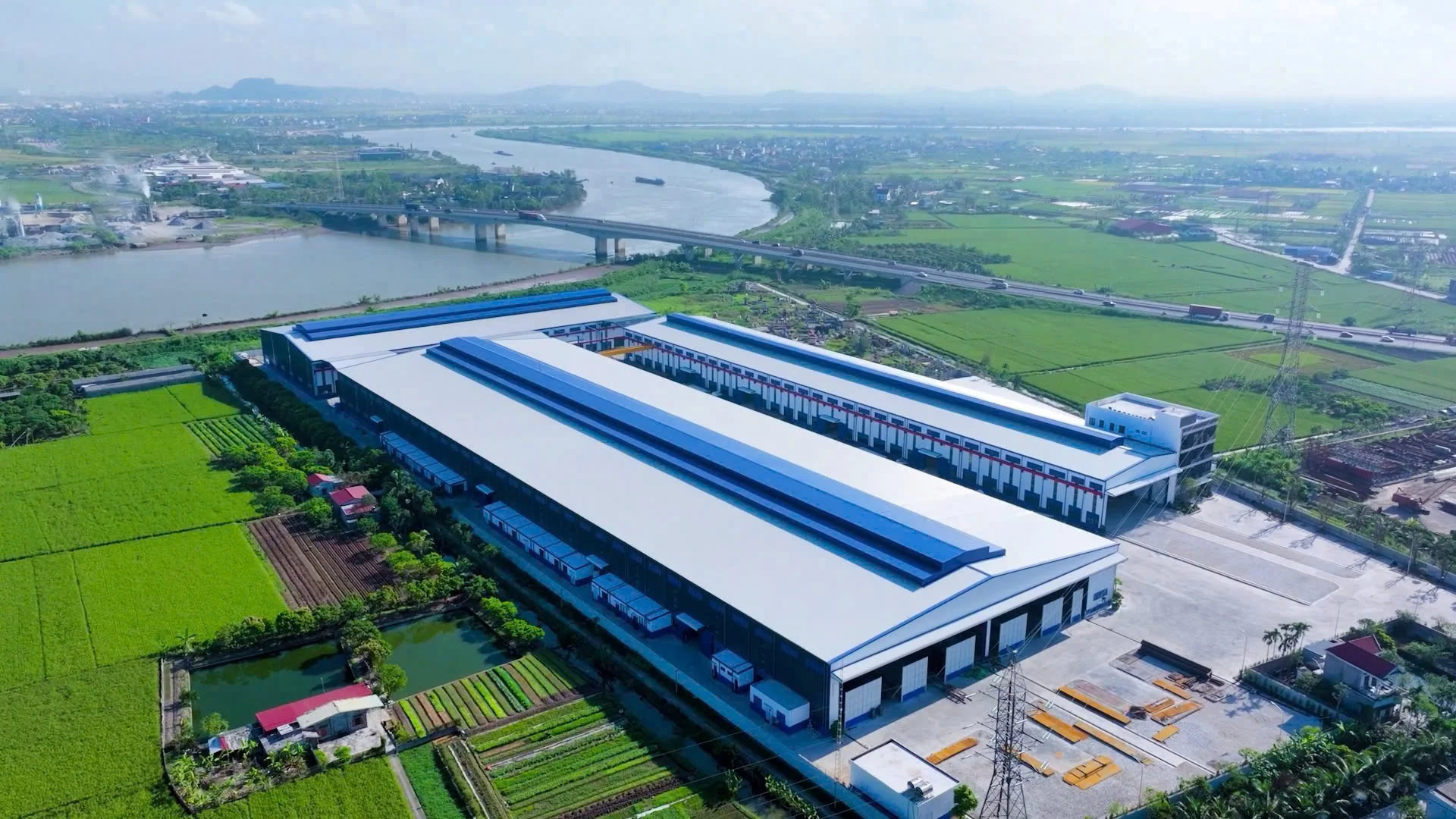
- Equipped with modern machinery and equipment, three steel structure factories with a capacity of nearly 50,000 tons/year ensure fast, accurate, and safe construction.
- Professional construction process, strictly managed.
Are you looking for a reputable and professional factory and warehouse construction contractor? Please contact Hai Long Construction for free consultation and quotation:
- HAI LONG CONSTRUCTION JSC – MEMBER OF TAIYO GROUP
- Address: Taiyo Building, 97 Bach Dang, Ha Ly Ward, Hong Bang District, Hai Phong City, Vietnam.
- Hotline: 084 6625 888
- Email: info@hailongjsc.vn