

1. Overview of modern steel structures
Modern steel structures are gradually affirming their indispensable role in the construction industry, becoming the top choice for large-scale projects due to their superior advantages in durability, load-bearing capacity, and flexibility. With continuous technological development, steel structures are not only the skeleton of many great works but also a symbol of innovation and progress in the modern construction field.
A steel structure is defined as a load-bearing system assembled from steel components such as columns, trusses, beams, bracing, and connections using bolts or welding. With a lighter weight compared to reinforced concrete, rapid construction capability, and ease of quality control, steel structures are increasingly favored in civil and industrial projects.

2. Development trends of modern steel structures
2.1. Advanced and sustainable steel materials
One of the prominent trends in modern steel structures is the development of "green steel" – a key solution for reducing carbon emissions in the construction industry. The steel manufacturing industry is currently the second-largest industrial sector in terms of greenhouse gas emissions, second only to the cement industry, due to its heavy reliance on fossil fuel consumption. Green steel is produced using environmentally friendly methods, minimizing CO2 emissions and utilizing renewable energy during the production process.
In addition, the use of advanced composite materials is also a notable trend. These materials provide a higher strength-to-weight ratio and improved corrosion resistance, allowing for the construction of lighter, more durable, and more environmentally friendly steel structures.
2.2. Smart manufacturing and processing technology
Steel structure processing technology has undergone significant developments, bringing important improvements to production and construction. Modern technologies such as CNC (Computer Numerical Control), automated welding robots, and automation systems are being widely applied, helping to increase precision and efficiency in the cutting, drilling, bending, and welding of steel structural components.
Automation in steel structure production plays a crucial role, offering many benefits from increasing productivity and improving quality to optimizing production costs. Robots and machinery can perform repetitive tasks efficiently, from cutting and welding to processing, helping to minimize human error and increase product consistency.
2.3. BIM application and digital design
BIM (Building Information Modeling) technology and 3D design are increasingly being widely applied in the field of steel structures. BIM allows engineers to create accurate digital models of projects before construction, improving design capabilities, optimizing resources, and minimizing errors during the construction process.
2.4. Smart steel structures and IoT
The trend of integrating IoT (Internet of Things) technology into steel structures is growing, creating "smart" buildings capable of self-monitoring, analyzing, and adjusting. Sensors attached to steel structures can collect data on structural conditions, detect early signs of damage, and provide timely warnings for maintenance and repair.
The application of artificial intelligence (AI) helps design more optimal steel structures, while IoT helps monitor quality and structural durability in real-time. Automating production processes helps minimize errors and increase productivity, while BIM creates an effective collaborative environment, reducing risks and additional costs.
3. Applications of modern steel structures in construction
3.1. High-rise buildings and civil works
Modern steel structures have become the preferred material for constructing high-rise buildings and civil structures. The powerful load-bearing capacity and high durability of steel structures help create impressive buildings with large mass and height. Furthermore, design flexibility and rapid construction capability are also advantages of steel structures in building projects that require high complexity.
3.2. Bridges and infrastructure works
Steel structures play a vital role in the construction of bridges and tunnels. With the ability to withstand large loads and high durability, steel structures are used to build components such as beams, columns, and bridge bracing. These structures not only ensure safety for convenient travel but also create flexibility in design and traffic management.
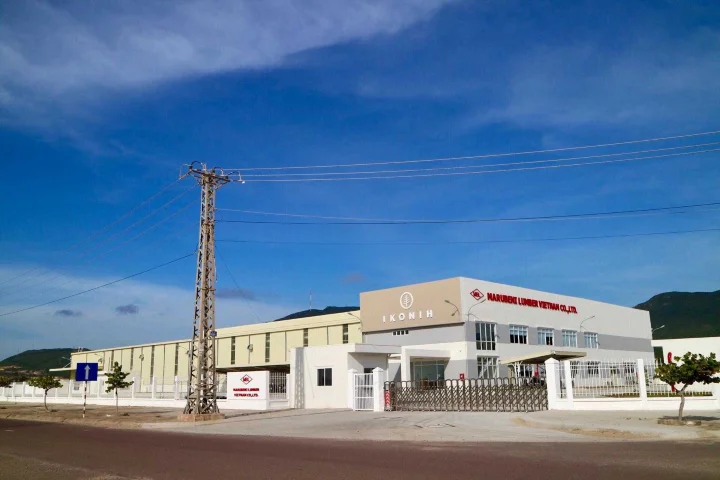
3.3. Factory buildings and industrial works
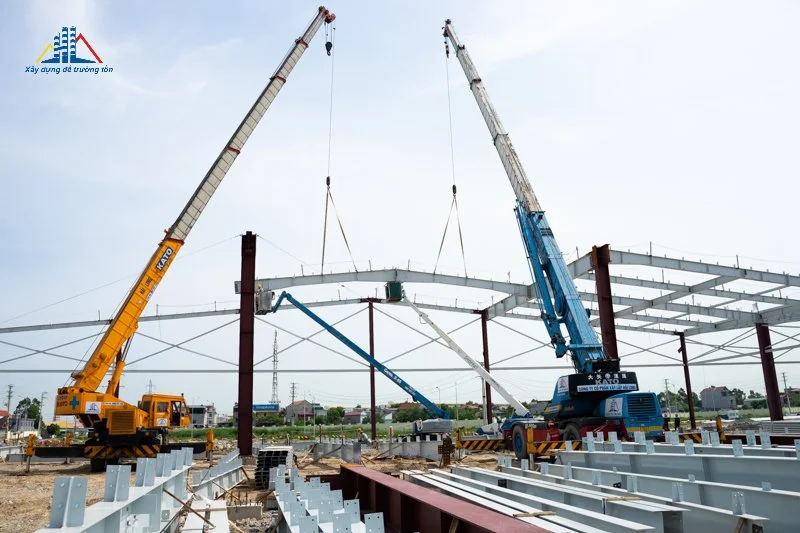
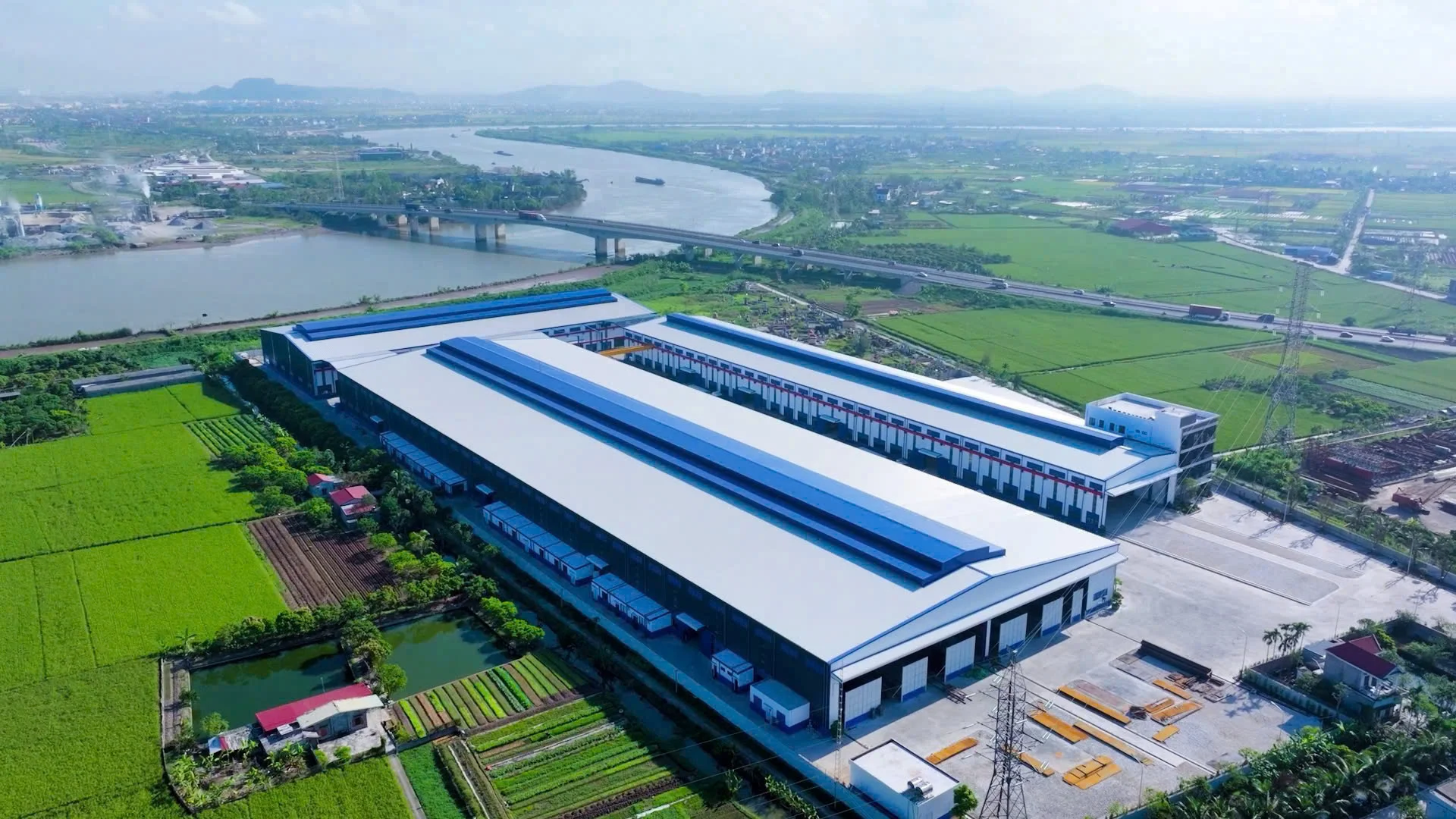
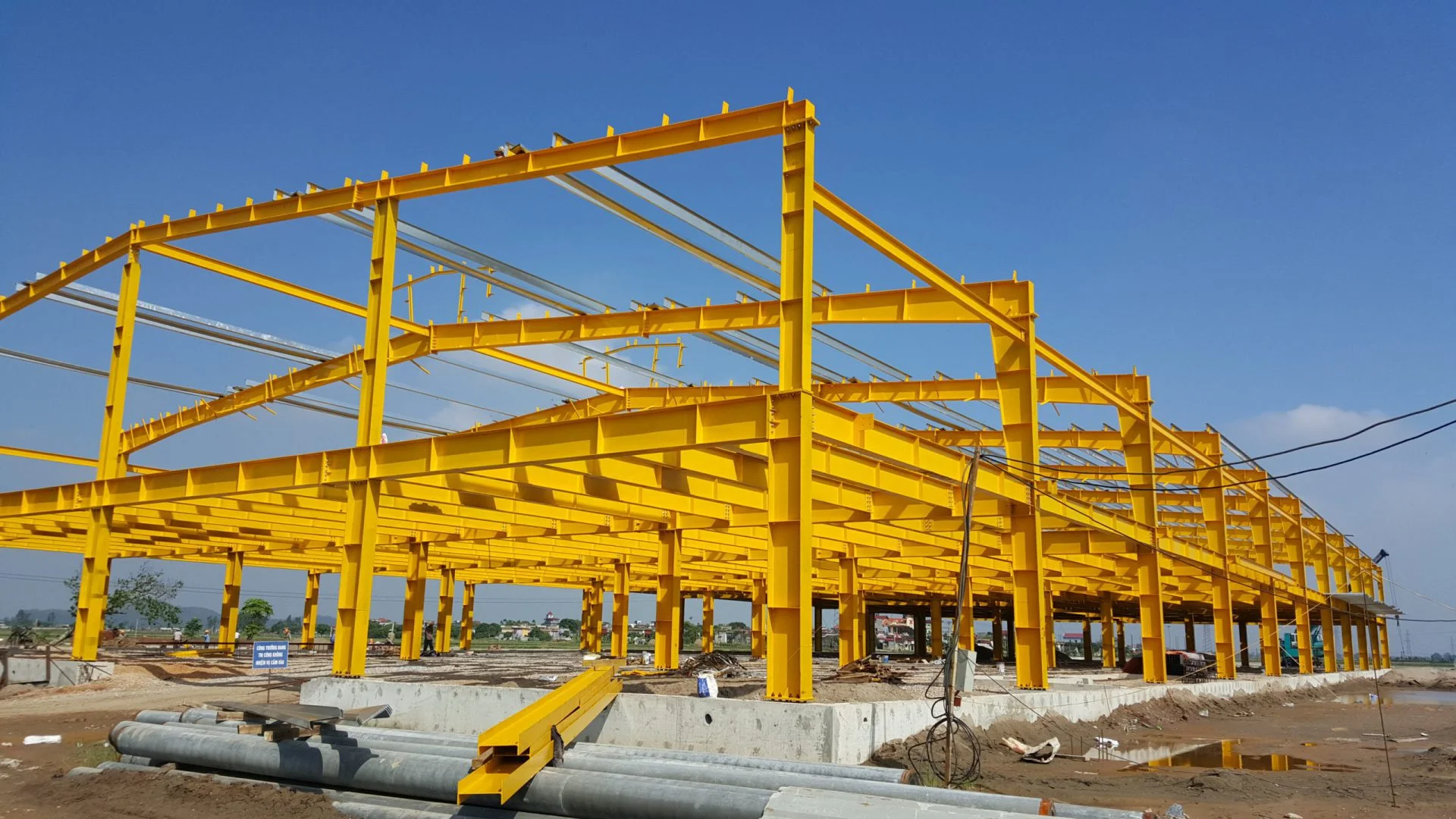
Steel structures are widely used in the construction of factory buildings, warehouses, and industrial projects. The steel frame structure is a system designed to bear loads and provide stability for construction projects, often used in large structures such as skyscrapers, bridges, and industrial plants.
Steel truss frame structures are also a popular choice for industrial projects, using a series of interconnected triangles to form an effective load-bearing system.

4. Benefits and challenges of modern steel structures
4.1. Benefits
Modern steel structures offer many superior benefits compared to traditional construction materials:
- High durability and load-bearing capacity: Steel can withstand extreme tensile and compressive forces, helping to ensure the durability and stability of the project.
- Flexibility: Steel structures are lightweight because the ratio of density to the calculated strength of steel is significantly higher than that of other materials.
- Rapid construction: Steel components are pre-manufactured at the factory, then transported to the site and erected quickly, helping to significantly shorten construction time.
- Environmentally friendly: Steel is a nearly 100% recyclable material, reducing environmental impact and aligning with current trends in green and sustainable construction.
4.2. Challenges
Besides the benefits, modern steel structures also face several challenges:
- Material costs: The cost of steel can be higher than some traditional materials, especially when using specialized or green steel.
- Fire resistance: Steel has lower fire resistance compared to concrete, requiring additional fire protection measures.
- Corrosion: Steel is susceptible to corrosion in humid or chemical-rich environments, necessitating protective measures such as anti-rust painting, galvanizing, or using stainless steel.
5. The future of steel structures in sustainable and smart construction
5.1. Steel structures and sustainable construction
Steel structures play a crucial role in the development of sustainable construction projects. With high recyclability, minimized construction waste, and optimized resource utilization, steel structures meet the requirements for sustainable development.
Sustainable certifications such as LEED, BREEAM, Green Star, and ResponsibleSteel are increasingly being widely applied in the steel structure sector, helping to evaluate and enhance the sustainability of projects. These certifications not only boost reputation but also open up international cooperation opportunities for businesses in the steel structure industry.
5.2. Smart steel structures and Industry 4.0
Industry 4.0 is bringing major changes to the steel structure industry, combining automation, smart connectivity, and data analytics to create more flexible and modern production and service systems. Core technology branches shaping Industry 4.0 in the steel structure sector include: Internet of Things (IoT), Artificial Intelligence (AI) & Machine Learning (ML), Big Data, Robotics & Automation, and Blockchain.
Artificial Intelligence (AI) is being widely applied in the steel structure field, from design and project management to occupational safety and quality management. AI can help automatically generate architectural designs, predict risks and schedules, monitor construction sites by identifying safety hazards, and even suggest solutions to optimize costs and resource usage.
5.3. 3D printing and advanced manufacturing technology
Additive manufacturing techniques, such as 3D printing, are revolutionizing the pre-engineered steel building construction industry. In the future, pre-engineered steel structures could be printed on-site, reducing the need for transportation and assembly in pre-engineered steel building construction. This technology also offers potential for complex and customized pre-engineered steel frame designs.
6. Conclusion
Modern steel structures are undergoing a revolution with the continuous development of technology and sustainable construction trends. From advanced steel materials and smart manufacturing technologies to the application of BIM and IoT, steel structures are increasingly asserting their important role in the modern construction industry.
With superior advantages in durability, load-bearing capacity, flexibility, and environmental friendliness, steel structures promise to continue developing and contributing to the construction of sustainable and smart projects in the future. The combination of steel structures and advanced technologies such as AI, IoT, and 3D printing will open up new opportunities for the construction industry, helping to optimize the design, construction, and operation processes of projects.
The future of steel structures is bright, supported by factors that positively impact the development of the steel construction industry, notably breakthroughs and improvements in steel production and recycling technology; the application of artificial intelligence in the design, construction, operation, and management of steel projects according to digital transformation trends; as well as the adaptability of steel structures to sustainable development requirements.
Hai Long Steel Structure – A Trusted Partner for Every Project
Modern steel structure fabrication technology has marked a major step forward in the efficiency, quality, and sustainability of construction projects. Improvements in design, production, and management help optimize costs, minimize risks, and ensure that projects meet the highest safety standards.
Choosing the right steel structure fabrication partner is the deciding factor for the success of every construction project. In a market that increasingly demands high quality, schedule adherence, and safety, Hai Long Steel Structure is proud to be a leading brand trusted by many major domestic and international investors:
- A team of experienced engineers, architects, and experts, knowledgeable in the design and construction of factory buildings and warehouses according to international standards.
- Diverse construction capabilities, meeting all project scales and requirements, from simple to complex factory buildings.
- Equipped with modern machinery and equipment, three steel structure factories with a capacity of nearly 50,000 tons/year ensure fast, accurate, and safe construction.
- Professional construction process, strictly managed.
Are you looking for a reputable and professional steel structure manufacturing and erection contractor? Contact Hai Long Construction for free consultation and quotation:
- HAI LONG CONSTRUCTION JSC – MEMBER OF TAIYO GROUP
- Address: Taiyo Building, 97 Bach Dang, Thuong Ly Ward, Hong Bang District, Hai Phong City, Vietnam.
- Hotline: 084 6625 888
- Email: info@hailongjsc.vn