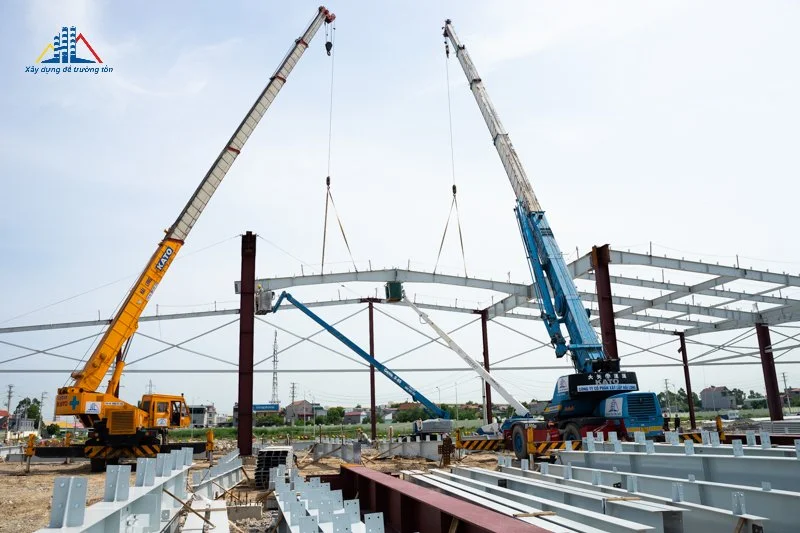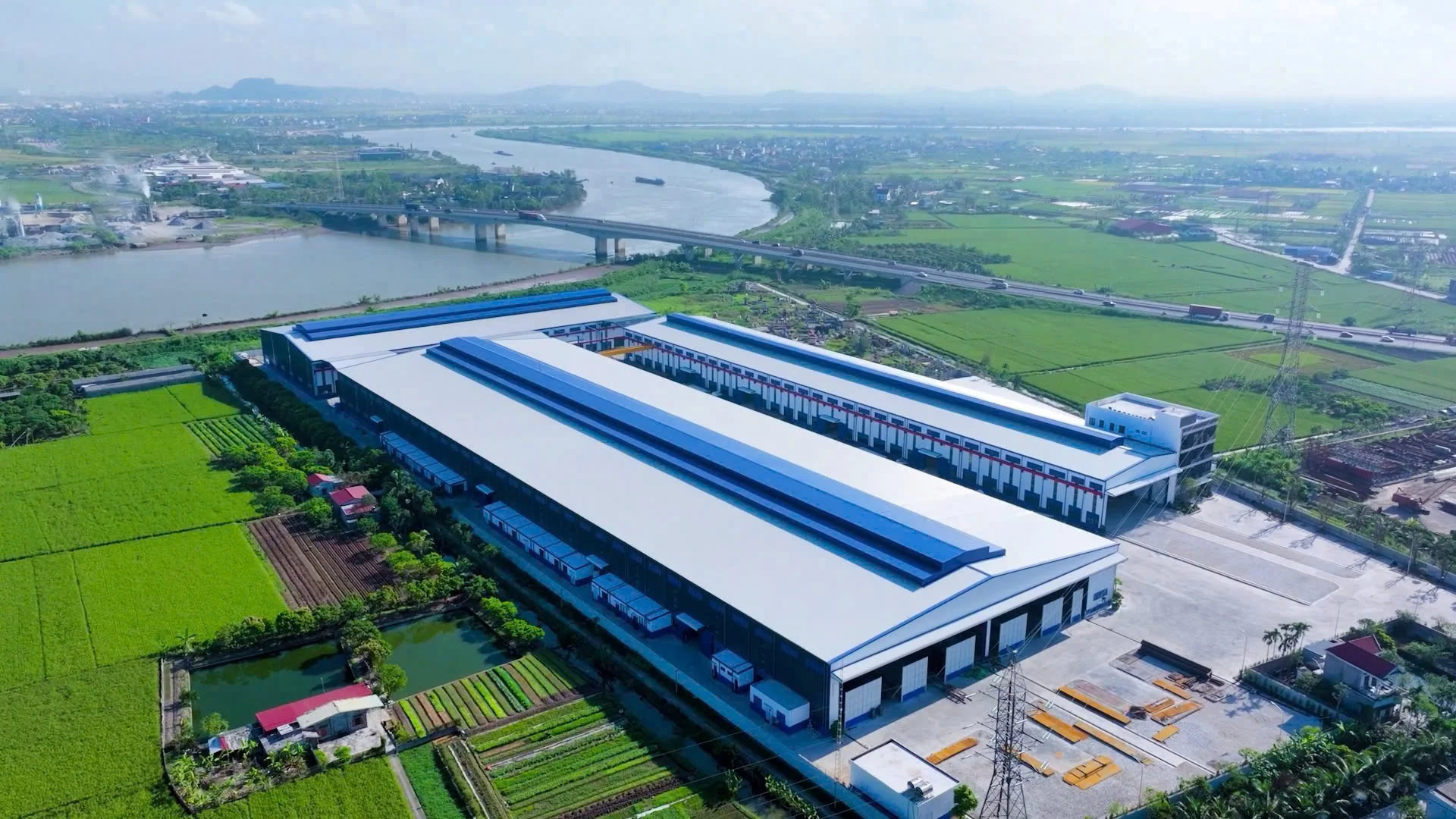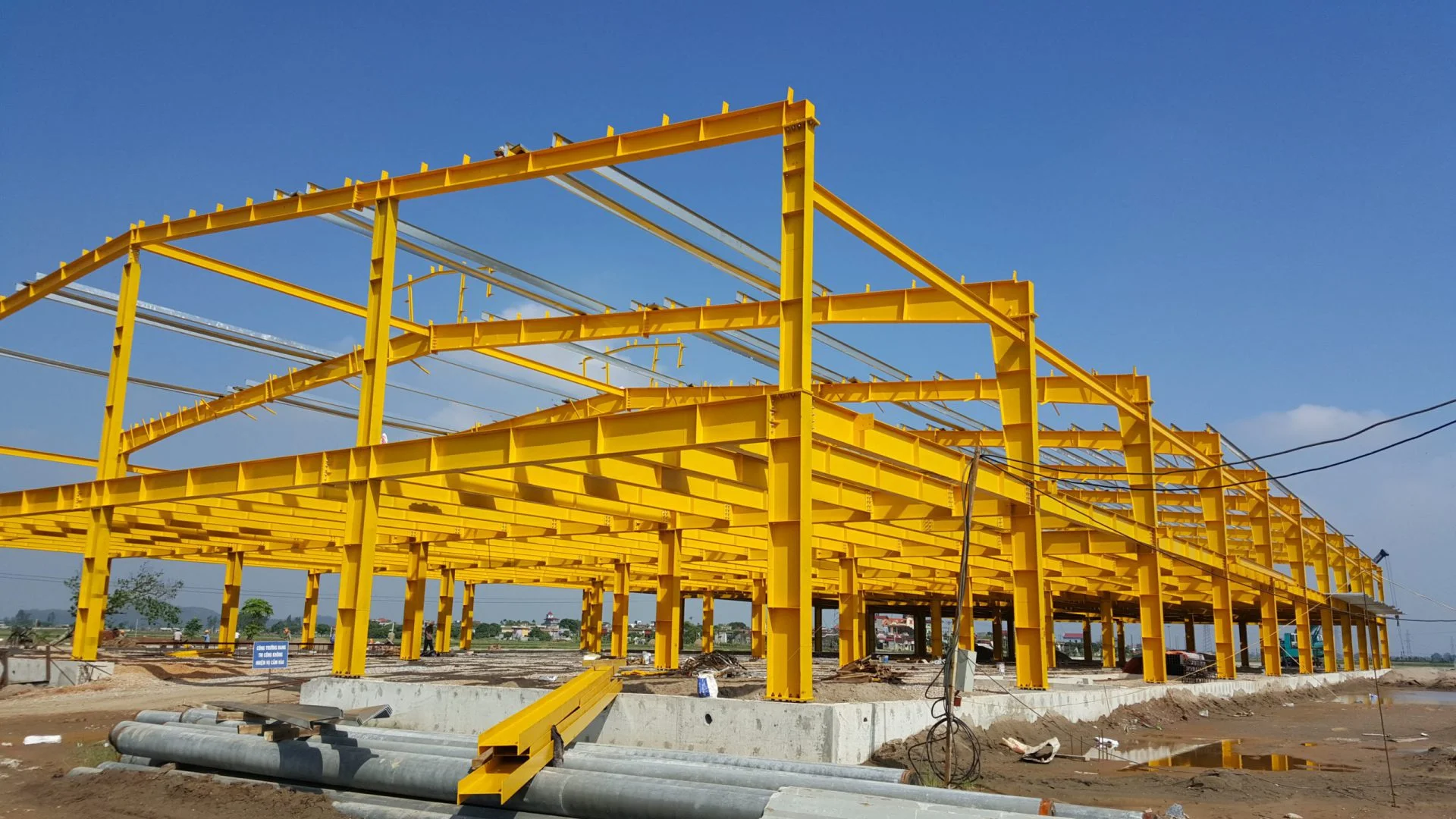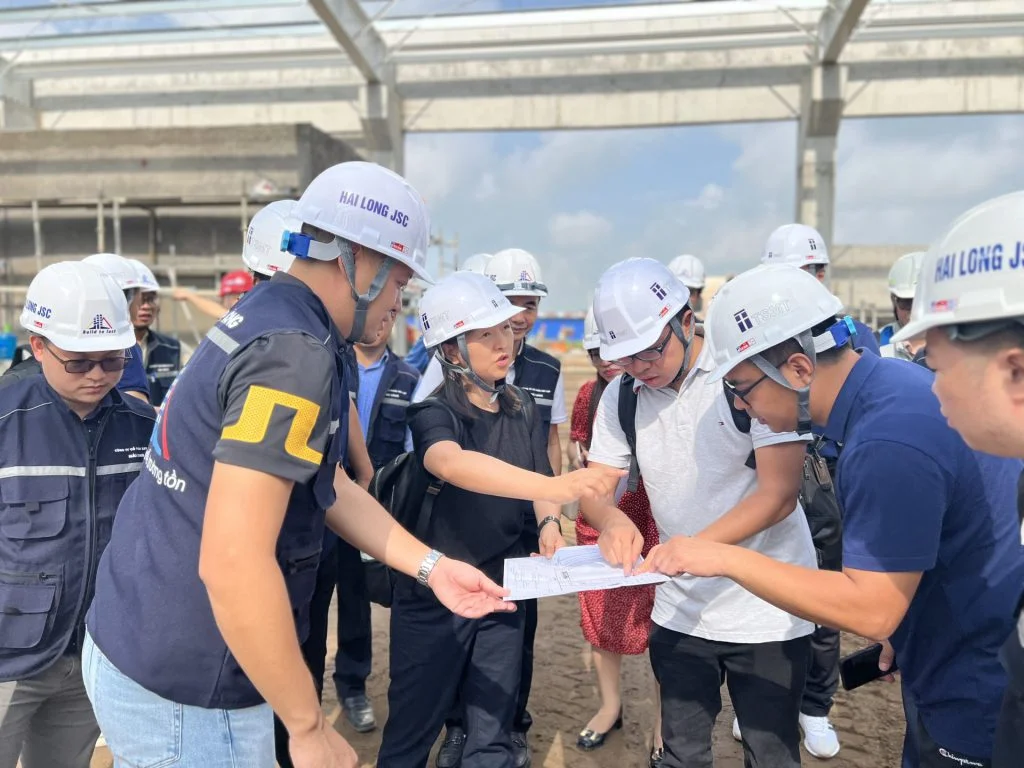


Steel factories and warehouses carry a high risk of fire and explosion due to the presence of flammable materials and chemicals. Join Hai Long Construction in learning about the mandatory fire safety regulations in construction to ensure the safety of your project!
1. Fire resistance in the construction of steel factories and warehouses
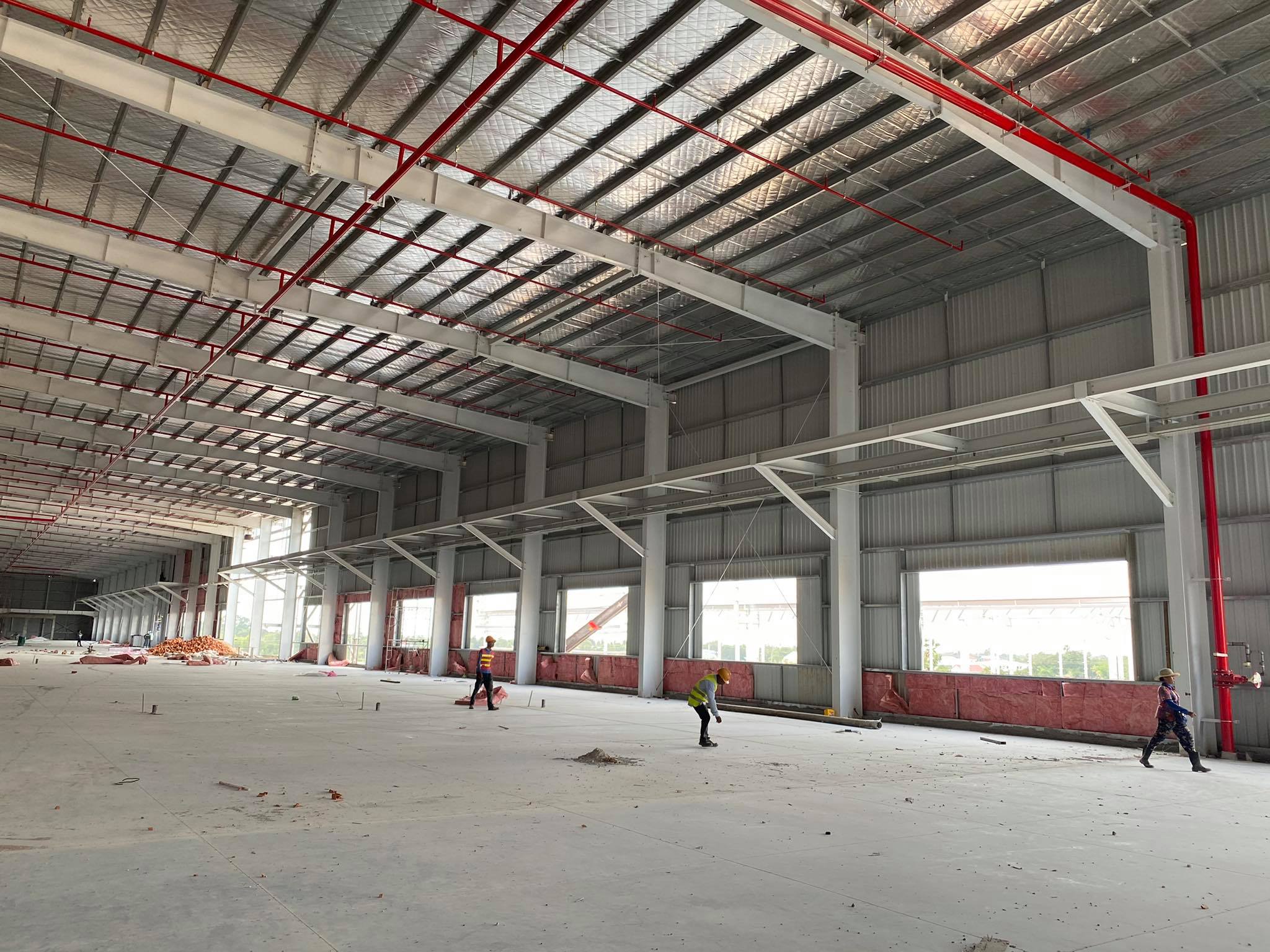
Fire resistance in facilities such as steel factories and warehouses is the ability of the structure to prevent the development and spread of fire during a fire or explosion incident. This capability is evaluated based on the following factors:
- Fire resistance rating of building structures: This is the duration that a structure can maintain its load-bearing capacity before weakening or collapsing under the influence of fire. This rating is classified from Grade I (highest) to Grade IV (lowest), reflecting the level of protection of the structure against fire. The time limit is calculated from the moment the structure begins to be exposed to heat under standard test conditions until one of the limit states occurs, such as: loss of integrity, loss of thermal insulation, or loss of load-bearing capacity.
- Ability to prevent fire spread: This capability helps prevent fire from moving from one area to another within the facility. Factors such as construction materials, structure, and fire-stopping measures like fire walls and fire doors directly affect this capability.
- Evacuation capability: This is a factor ensuring the safety of people and assets in the event of a fire or explosion. Evacuation capability is evaluated based on the number and location of exits, the size and slope of pathways, along with alarm and evacuation guidance systems.
2. Importance of fire protection regulations in the construction of steel factories and warehouses
1. Protecting human life and health
Fires in factories and warehouses can cause serious human casualties and long-term health issues. Fire protection regulations help minimize the risk of fire, protecting the lives and health of workers and related personnel.
2. Limiting property damage
Factories and warehouses often contain valuable materials and expensive machinery. Fires can destroy entire assets, causing significant economic losses for businesses. Compliance with fire protection regulations helps minimize fire risks, thereby protecting assets and reducing losses.
3. Ensuring business operations
Fires can severely damage production facilities, leading to long-term shutdowns. This not only affects production schedules but also causes losses in revenue and business reputation. Applying fire protection regulations helps maintain stability in business operations.
4. Compliance with legal regulations
The construction of factories and warehouses must comply with legal regulations on fire prevention and fighting. Adhering to these regulations not only ensures the safety of the facility but also helps businesses meet legal requirements and avoid unnecessary legal risks.
5. Raising awareness of fire safety
Implementing fire protection regulations contributes to raising awareness of fire safety among staff and employees. As a result, businesses can minimize safety violations and prevent risks that lead to fires.
6. Creating a safe working environment
A safe working environment not only improves labor productivity but also enhances employee morale. Compliance with fire protection regulations is an important part of building a safe working environment, ensuring the health and peace of mind of workers.
7. Minimize fire and explosion risks in areas with concentrated flammable materials
Factory buildings and warehouses often store various flammable materials such as chemicals and industrial products. Fire safety regulations help effectively control hazardous factors, preventing the risk of major fires that could cause serious damage.
8. Enhance the durability and fire resistance of the structure
Applying proper fire safety regulations can extend the fire resistance duration of the steel structure, providing time for rescue operations and minimizing damage to the facility.
9. Reduce insurance costs
Businesses that comply with fire safety regulations help reduce the risk of fire and explosion, thereby potentially lowering property and factory insurance premiums, providing long-term financial benefits.
10. Meet international standards
Many countries and international organizations have their own fire safety standards. Complying with fire safety regulations will help businesses easily collaborate with international partners and expand into overseas markets.
11. Support professional firefighting efforts
Factory buildings and warehouses designed and constructed in compliance with fire safety regulations will assist firefighting forces in extinguishing fires and performing rescues more easily during incidents.
12. Protect the surrounding environment
Fires in factories containing chemicals can cause environmental pollution, affecting water sources, air, and soil. Fire safety regulations not only protect the facility but also help protect the natural environment and nearby residential areas.
13. Enhance the reputation and social responsibility of the business
Compliance with fire safety regulations is a clear demonstration of the social responsibility that a business must fulfill, contributing to building a reputable and professional image in the eyes of partners, customers, and the community.
3. Fire resistance levels in warehouse and factory construction
Fire resistance levels are divided into 5 grades, from I to V, with fire resistance capacity decreasing by each grade:
1. Grade I
- Fire resistance limit: Minimum 240 minutes for walls, columns, and floors.
- Applicable to: Facilities requiring high fire safety, such as warehouses for flammable materials, gas storage facilities, and chemical plants.
2. Grade II
- Fire resistance limit: From 180 to 239 minutes for walls, columns, and floors.
- Applicable to: Facilities of significant economic, cultural, and social importance, such as commercial centers, cinemas, hospitals, and schools.
3. Grade III
- Fire resistance limit: From 120 to 179 minutes for walls, columns, and floors.
- Applicable to: Common facilities, including residential buildings, office buildings, production factories, and warehouses.
4. Grade IV
- Fire resistance limit: From 60 to 119 minutes for walls, columns, and floors.
- Applicable to: Facilities with low fire resistance requirements, such as level 4 houses, temporary structures, and simple factory buildings.
5. Grade V
- Fire resistance limit: Under 60 minutes for walls, columns, and floors.
- Applicable to: Facilities with low fire resistance requirements, such as sheds and temporary warehouses.
4. Fire Prevention and Fighting Standards
1. By type of factory building and warehouse
1.1 Factories producing flammable and explosive materials:
- Fire alarm and firefighting system: Must be equipped with an automatic system capable of detecting and extinguishing fires quickly.
- Ventilation system: An effective ventilation system is required to remove toxic gases and smoke from the factory.
- Material storage warehouse: A separate area is required for storing flammable and explosive materials, with strict safety measures.
1.2 Chemical production factories:
- Fire alarm and firefighting system: Must be suitable for the types of chemicals used in the factory.
- Neutralization system: A chemical spill treatment system is required, such as for acid/base neutralization.
- Chemical storage area: A dedicated area for chemical storage is required, with strict safety measures.
1.3 Warehouse for goods:
- Fire alarm and firefighting system: Must be suitable for the type of goods stored in the warehouse.
- Ventilation system: A ventilation system is required to ensure air circulation and prevent the accumulation of toxic gases.
- Emergency exit: Wide emergency exits are required to ensure workers can evacuate quickly in case of a fire.
2. Steel structure:
- Fire protection for steel structure: Use fire-resistant paint, fireproof coatings, or lightweight concrete to protect the steel structure from high temperatures and prevent collapse in the event of a fire.
- Zoning: Divide the factory building into separate areas using fire-resistant partitions and fire doors to limit the spread of fire.
- Load-bearing design: Ensure the steel structure has the capacity to withstand heavy loads in the event of a fire to avoid collapse due to overloading.
3. Roof:
- Roofing materials: Use fire-resistant materials such as galvanized steel sheets, cellulose fiber cement sheets, or polycarbonate sheets.
- Ventilation system: Install a roof ventilation system to exhaust hot smoke and toxic gases, helping to reduce the temperature inside the factory building during a fire.
- Skylight sheets: Install skylight sheets to create natural ventilation, supporting smoke extraction and temperature reduction in the factory building.

4.4 Door system:
- Fire doors: Install fire doors at emergency exits, entrances to high-risk areas, and partition doors to prevent the spread of fire.
- Emergency doors: Ensure the number, size, and location of emergency doors comply with regulations and are convenient for evacuation in case of a fire.
- Signage: Install clear and visible evacuation guidance signs at emergency exits.
4.5 Firefighting system
- Fire alarm system: Install an automatic or semi-automatic fire alarm system for early fire detection.
- Firefighting system: Install a firefighting system suitable for the type of factory building, fire risks, and materials used. Options include sprinkler systems, foam firefighting systems, gas-based firefighting systems, etc.
- Fire extinguishers: Fully equip the facility with portable fire extinguishers suitable for the flammable materials present in the factory building.
4.6 Fire safety management
- Fire safety planning: Develop a detailed fire safety plan, including fire prevention measures, firefighting procedures, and evacuation plans in case of a fire.
- Fire safety training: Organize periodic fire safety training for staff to improve awareness and skills.
- Periodic inspection: Regularly inspect the firefighting system, emergency exits, and firefighting equipment to ensure safety.
WHY CHOOSE HAI LONG CONSTRUCTION AS THE GENERAL CONTRACTOR FOR YOUR FACTORY BUILDING AND WAREHOUSE
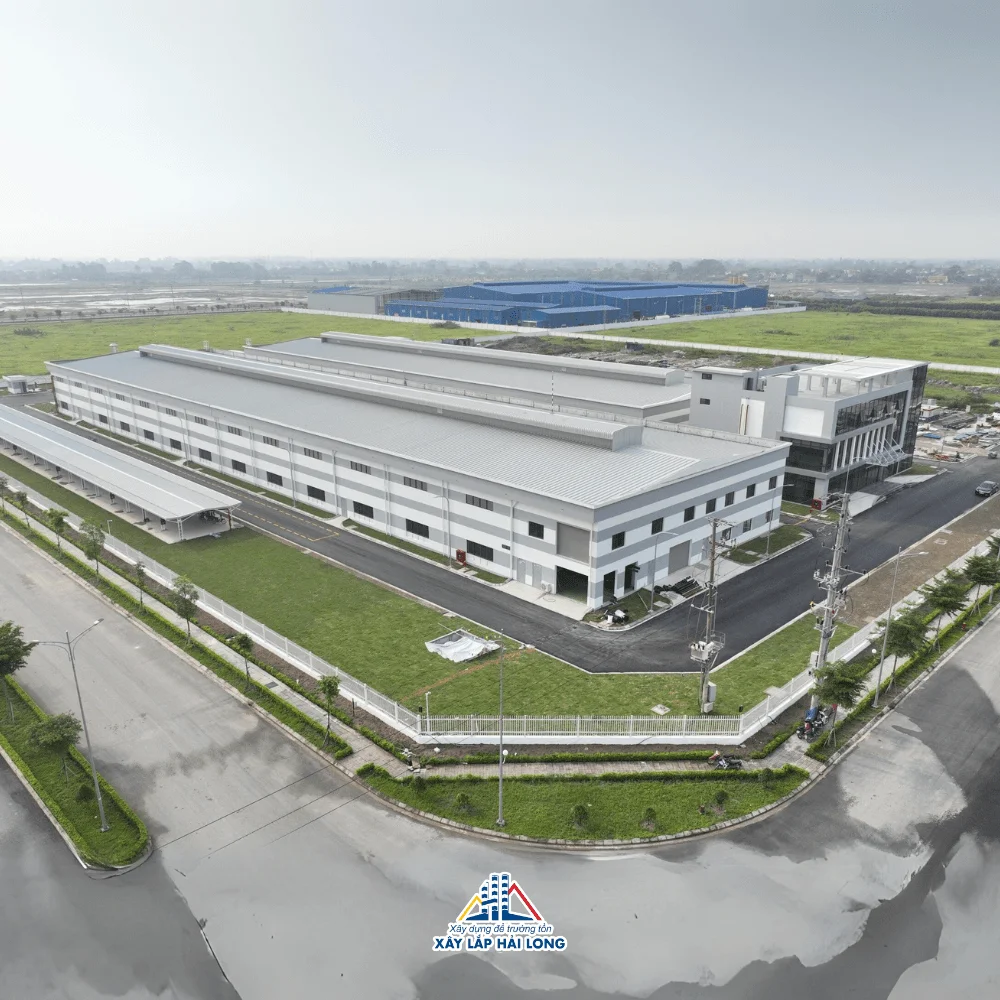
With over 25 years of experience in the field of factory and warehouse construction, Hai Long Construction is proud to be a leading reputable unit, providing customers with comprehensive construction solutions that meet all needs and requirements.
- A team of experienced engineers, architects, and experts, knowledgeable in the design and construction of factory buildings and warehouses according to international standards.
- Diverse construction capabilities, meeting all project scales and requirements, from simple to complex factory buildings.
- Equipped with modern machinery and equipment, three steel structure factories with a capacity of nearly 50,000 tons/year ensure fast, accurate, and safe construction.
- Professional construction process, strictly managed.
Are you looking for a reputable and professional factory and warehouse construction contractor? Please contact Hai Long Construction for free consultation and quotation:
- HAI LONG CONSTRUCTION JSC – MEMBER OF TAIYO GROUP
- Address: Taiyo Building, 97 Bach Dang, Ha Ly Ward, Hong Bang District, Hai Phong City, Vietnam.
- Hotline: 084 6625 888
- Email: info@hailongjsc.vn