

I. Notes before steel structure construction
1.1 Prepare personal protective equipment (PPE)
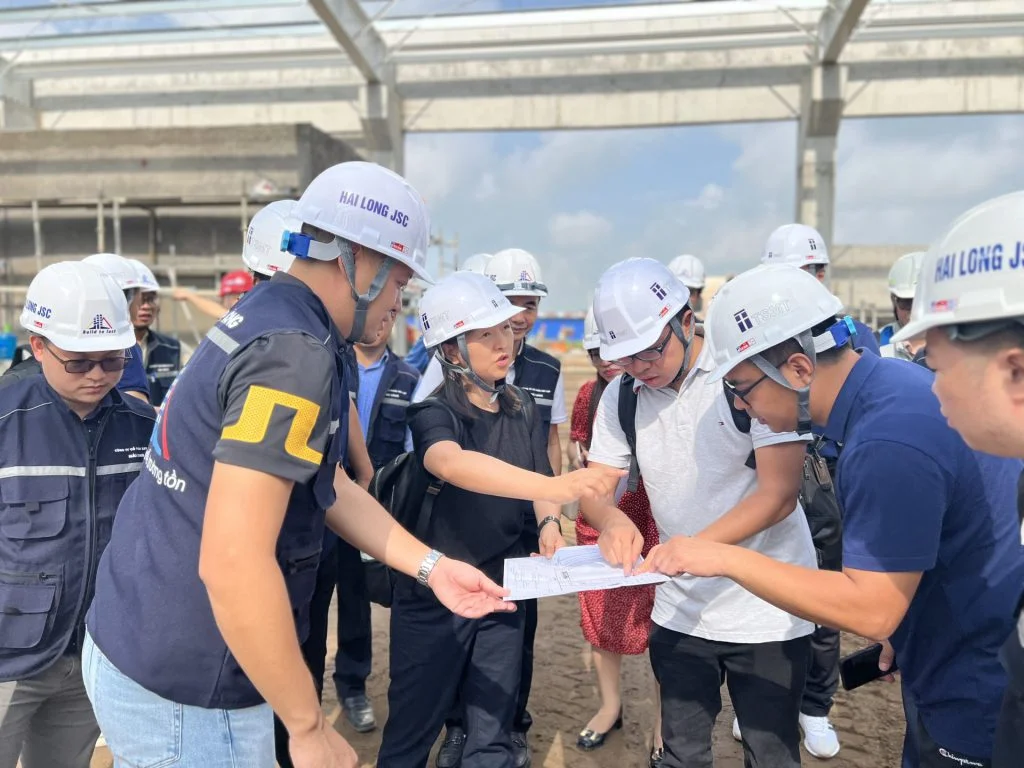
Preparing for workplace safety is crucial to help prevent occupational accidents. PPE depends on the activities and tasks of each department, but generally includes:
Reflective protective clothing
Sturdy safety helmets, safety harnesses
Fabric or canvas sheets, soft gloves
Safety goggles, tool bags
Scaffolding
Safety nets
Lifelines

1.2 Pay attention to the weather
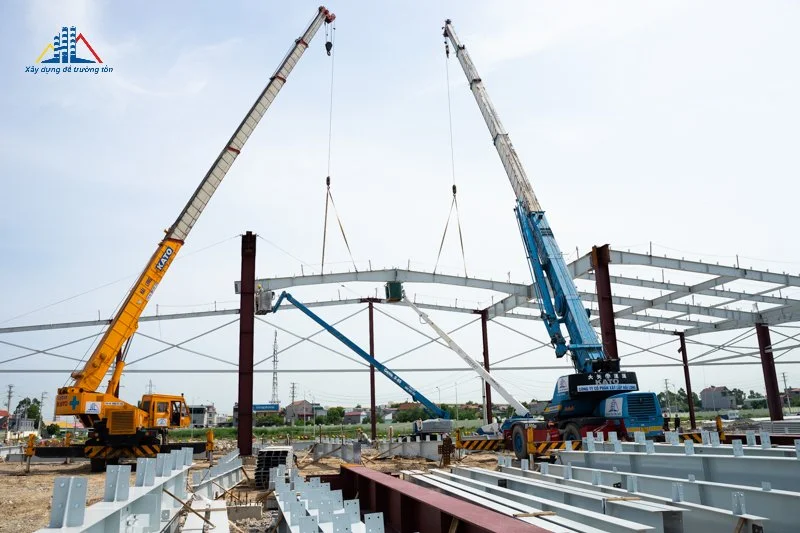
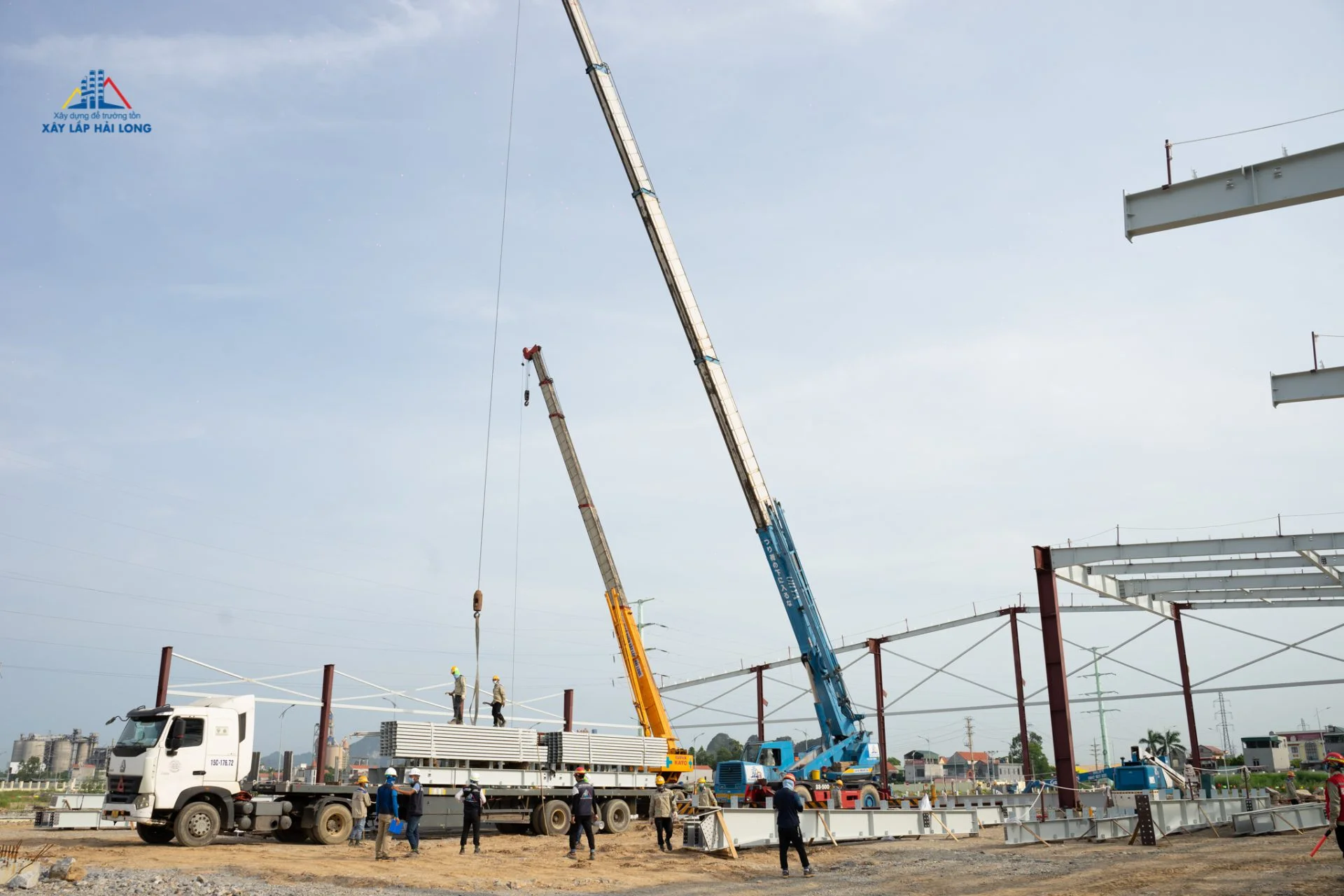
Erection of steel structures for factory buildings requires prior study of the weather. Check the weather forecast for the day. Heavy rain and humidity will make it difficult for workers to operate at heights, increasing the risk of slipping; in high winds, machinery such as cranes should not be used to lift materials.

1.3 Inspect equipment, materials, tools, and transport vehicles
Equipment, materials, tools, and transport vehicles must have their mill certificates and origins checked before being put into assembly. Especially structural bolts and anchor bolts, which are used to connect critical components of the steel frame building.

1.4 Consider the construction space
The construction space must be carefully considered. Vehicles and scaffolding are large and bulky. Therefore, to create the best conditions for movement, you must ensure a wide, tidy space, prioritizing the construction of the concrete floor, walkways, and solid foundations first.
Space must be calculated to provide sufficient means for movement between positions on the steel frame, such as stairs and walkways with guardrails. The priority plan is to design temporary walkways using wooden planks or long-span steel bridges. If working at heights above 6m (equivalent to two stories), temporary flooring made of tightly fitted planks is mandatory. Steel scaffolding and ladder trucks are equipment that increases safety, especially when there are adequate walkways, reinforced floor supports, temporary flooring, and a clear site.
II. Notes during steel structure erection
The steel structure construction process involves many tasks. Below are the basic tasks that need to be ensured during steel structure fabrication:
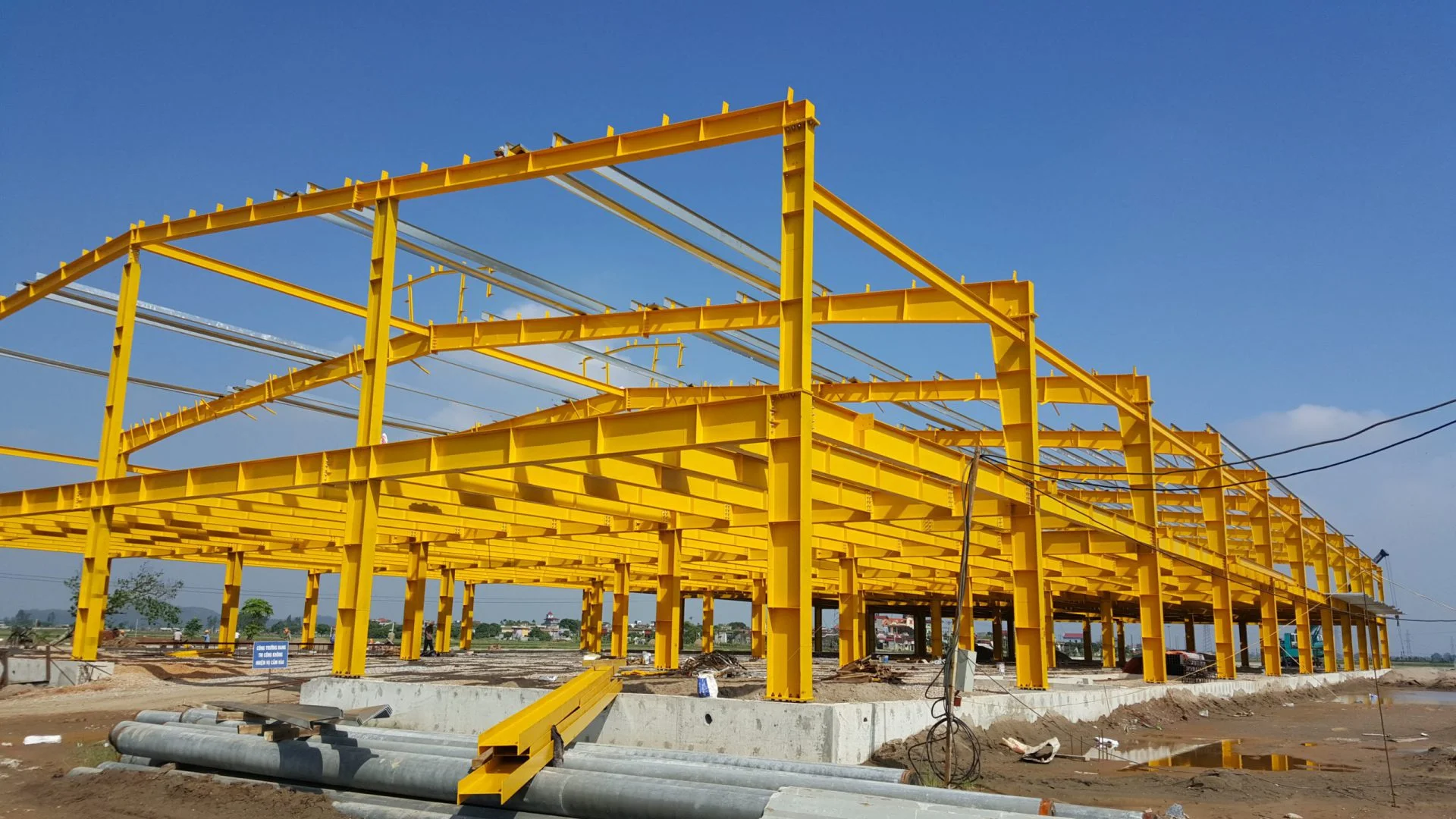
Fabrication of steel trusses: Fabricated steel trusses must meet the standard data as per the drawings
Erection of steel trusses, roof vents, and door consoles: Erection must connect them securely, paying attention to load capacity. Ensure occupational safety during installation.
Installation of roof sheeting: High-level roof sheets must be joined to match the joints.
Installation of wall sheeting
Installation of gutters and downspouts: Choose appropriate locations for gutters and downspouts. Do not affect the overall structure of the trusses
Installation of flashing.
2.1 Develop a steel structure design
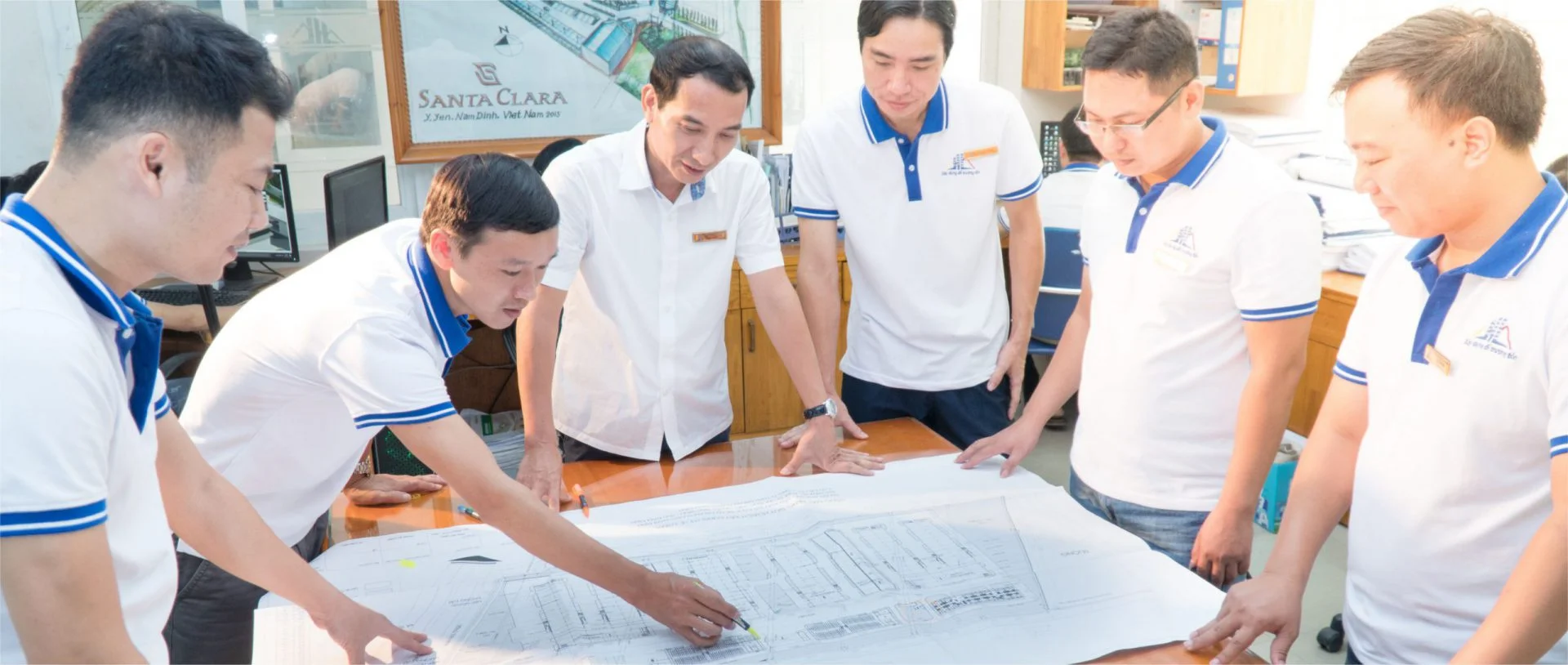
Develop a steel structure design table
The development of the steel structure design must be coordinated between the designer and the installation contractor. This will optimize the construction plan and ensure the highest quality for the project. Combine the actual site conditions with basic design theories to be flexible in the steel structure design.
2.2 Supervise the installation of steel structures
Each stage may be performed by different units or construction teams. Appoint a supervisor for the entire installation and design process of the steel structures to ensure compliance with requirements and quality standards.

2.3 Notes when moving up and down to the steel structure construction position
Dangerous actions such as climbing on bare steel bars or walking on beams often occur. Therefore, it is necessary to calculate and provide adequate means for moving materials. Prepare and fully equip safety measures. Scaffolding must be sturdy with comfortable walkways for workers. Safety nets must be installed at the site, ideally at the second-floor level.
In addition, the work should be planned and the construction position designed to start from the ground, then gradually lift according to the building components, and move to other positions using lifting equipment. Usually, ladders should be installed before the steel structure to assist in moving up and down. Ladders should be tied securely to the steel frame to avoid danger to the person standing on them when the ladder is moved, for example, moving the ladder by crane after it has been tied securely.
2.4 Check the bracing bays, column systems, and truss beams
Checking the bracing bays is an important task, especially for multi-story steel buildings. The system of columns, beams, or trusses is an important foundation, so it is necessary to meticulously check for absolute stability after erecting the bracing system. Check for any displacement or movement to have a remedial plan.
2.5 Check the tightening force of structural bolts
It is necessary to check and tighten grade 4.6/s and 8.8/s bolts. Use additional washers or shims to ensure effective contact surfaces when the connection is tightened. The tightening and final tensioning of bolts should be carried out from the stiffest part of the connection to the edges of the joints.
The position and orientation of the bolts must be aligned to see if they meet requirements before applying tightening force. Do not over-tighten bolts that have already been tightened. In cases where it is necessary to re-tighten bolts that have been tensioned, follow these principles:
Only tighten once in places where the bolt is still in the correct hole with the same wrench length.
Absolutely do not reuse bolts that have been fully tensioned in other positions.
Galvanized bolts must absolutely not be re-tensioned.
Tightening or re-tensioning bolts that have loosened when tightening adjacent bolts is not considered re-tensioning.
An important note here is that the final tensioning of bolts should only be carried out after the orientation and elevation have been adjusted as required.
2.6 Check the orientation of the main structure of the steel frame factory
Check the orientation of the main structure of the pre-engineered steel building. Checking the correct orientation will make it easier for workers to install. Do not connect structures with permanent connections yet.

III. Notes after steel structure fabrication and erection
After the steel structure fabrication is completed, the acceptance phase begins. Acceptance of steel structure construction must also follow a process and note the following:
Acceptance of construction work: Check the scaffolding system and whether the construction process ensures occupational safety.
Acceptance of completed construction stages: Check the objects of acceptance at the site, check the minutes of work acceptance, and related components.
Acceptance of completed project: All completed areas must be checked and recorded in the handover minutes, with detailed information before going into use.