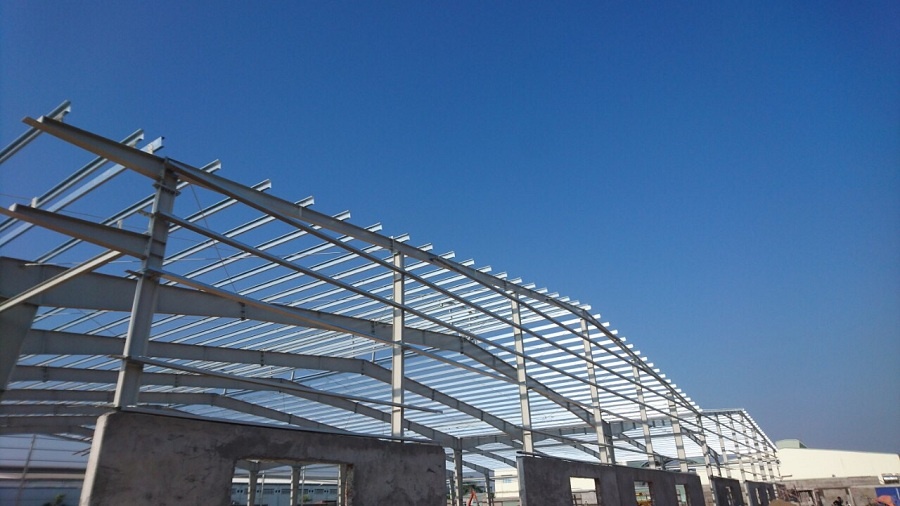


Steel structure is one of the popular construction solutions today thanks to outstanding advantages such as:
✔ High load-bearing capacity, suitable for large-scale projects.
✔ Superior durability, helping the project maintain quality over time.
✔ Easy to transport and install, shortening construction time.
However, to ensure safety, project lifespan, and compliance with technical standards, the steel structure erection process must be carried out strictly according to regulations. General contractors must comply strictly from the production and fabrication stages to construction and installation, to ensure the project achieves the highest quality and meets rigorous technical requirements.
Adhering to standards not only helps the project be sustainable but also ensures the safety of workers during construction.
1. Steel structure erection standards
Steel structure erection standards are a set of regulations and quality control processes to ensure the safety, durability, and load-bearing capacity of steel structure projects. Strict adherence to these standards helps the project achieve high quality, optimize lifespan, and ensure construction efficiency.
1.1 Standards specified in steel structure erection
The steel structure erection process needs to follow these standards:
- Steel quality:
✔ Regulations on chemical composition, strength, ductility, and corrosion resistance of steel materials.
✔ Ensuring the steel used meets the technical standards required by the design. - Structural design:
✔ Methods for calculating loads and load-bearing capacity of steel structures.
✔ Ensuring safety when subjected to impacts such as wind, earthquakes, and structural vibrations. - Installation regulations:
✔ Dimensions and shapes of components must comply with design drawings.
✔ Installation and fixing methods must ensure stability and safety during construction. - Inspection and acceptance:
✔ Performing structural quality inspections according to technical criteria.
✔ Preparing an acceptance report for the project before putting it into use. - Maintenance and upkeep:
✔ Maintenance procedures to maintain structural durability over time.
✔ Detecting and handling corrosion and thermal expansion issues to ensure operational safety.
5.2 Steel structure erection standards in Vietnam
In Vietnam, steel structure erection standards are mainly applied according to:
✔ TCVN (Vietnam Standards) – National standard system for steel structure engineering.
✔ TCXDVN (Vietnam Construction Standards) – Specialized regulations in construction and erection of steel projects.
These standards play an important role in ensuring the quality of large projects such as:
✔ Factory buildings, manufacturing plants.
✔ High-rise buildings, industrial parks.
✔ Transportation projects, bridges and roads.
Strictly following steel structure erection standards not only ensures safety and sustainability but also optimizes economic efficiency, helping the project operate stably for a long time.
2. Requirements for steel and welding materials
Requirements for steel and welding materials during the production, construction, and erection of steel structures play a crucial role in determining the quality of the project. Therefore, the steel structure design and construction unit must ensure strict compliance with the following standards:
– All steel must be inspected for technical specifications according to design requirements before fabrication.
– Steel must be classified by grade, marked, and arranged by cross-section to avoid confusion between types. Different types of steel must be marked with different paint colors.
– Steel must be straightened and cleaned of rust, grease, and impurities before use. The allowable bending radius and deflection during straightening must comply with regulations.
– Steel must be stored in sturdy batches inside a covered facility. If stored outdoors, it must be protected with a coating, and when stacked, it must be supported and tilted to facilitate drainage.
– When transporting steel, racks must be used to prevent deformation.
– Before use, the quality of welding electrodes, welding wires, and flux must be checked in accordance with current standards or technical conditions.
– Welding electrodes, welding wires, and flux must be dried according to the appropriate procedure for each type.
– The amount of dried welding electrodes and flux taken from the drying cabinet should only be used within one production shift (for low-carbon steel) or within two hours (for low-alloy steel).
– The selection of welding electrodes, wires, and flux must consider the strength of the parts to be welded and their weldability. Electrodes with damaged coatings, dirt, or defects must not be used.
– Protective coating materials for steel bridge structures must comply with TCVN 8789:2011 regulations.

In addition, the following standards must be followed throughout the steel structure production process:
– TCVN 170:2007 – Steel structures – General technical requirements
– TCVN 5574:2012 – Steel structures – Design and calculation
– TCXDVN 314:2005 – Metal welding
– TCVN 3223:1994 – Welding electrodes for carbon steel and low-alloy steel
– TCVN 2737:2020 – Steel structures – Requirements for fabrication and installation
3. Standards for steel structure erection in construction projects
In the construction industry, steel structure erection must follow strict technical standards to ensure the quality, safety, and durability of the project. Below are the common standards applied:
3.1 European Standards (EN)
EN standards regulate the design of steel structures, including requirements for calculation, material selection, installation, and quality control. These standards are widely applied in Europe and serve as an important reference for many countries worldwide.
3.2 American Standards (AISC)
AISC standards, developed by the American Institute of Steel Construction, are used in the design and calculation of steel structures in the US and many other countries. These are highly popular standards recognized by major construction organizations globally.
3.3 Vietnamese Standards (TCVN)
In Vietnam, steel structure erection follows the TCVN system, which includes regulations on:
- Dimensions and shapes of structural components.
- Methods for calculation and design of steel structures.
- Procedures for installation and quality inspection of projects.
Compliance with TCVN helps ensure that projects achieve high quality, suitable for domestic construction conditions.
3.4 Japanese Standards (JIS)
JIS standards, issued by the Japanese Industrial Standards Committee, are widely used in the industry and construction in Japan. These standards are highly rigorous, ensuring precision in the design and fabrication of steel structures.
3.5 Chinese Standards (GB)
GB standards specify requirements for materials, design, and installation of steel structures in China. This is a set of standards widely applied in the construction industry in this country.
3.6 German Standards (DIN)
DIN standards, developed by the German Institute for Standardization, are applied in many industrial and technical fields, including the design and steel structure erection. DIN is highly regarded for its precision and safety when applied in practice.
3.7 International Standards (ISO)
ISO is an international standard system developed by the International Organization for Standardization, widely applied in many industries, commerce, and services. Compliance with ISO standards helps steel structure erection projects ensure consistency and quality according to global standards.
Applying these standards in steel structure erection not only helps projects achieve high quality but also ensures safety, optimizes costs, and enhances the lifespan of the project.

WHY CHOOSE HAI LONG CONSTRUCTION AS YOUR STEEL STRUCTURE MANUFACTURING & ERECTION PARTNER
With over 25 years of experience in the field of manufacturing & erecting steel structures, Hai Long Construction is proud to be a leading reputable contractor, providing customers with comprehensive construction solutions that meet all needs and requirements.
- A team of experienced engineers, architects, and experts, knowledgeable in the design and construction of factory buildings and warehouses according to international standards.
- Diverse construction capabilities, meeting all project scales and requirements, from simple to complex factory buildings.
- Equipped with modern machinery and equipment, three steel structure factories with a capacity of nearly 50,000 tons/year ensure fast, accurate, and safe construction.
- Professional construction process, strictly managed.
Are you looking for a reputable and professional steel structure manufacturing and erection contractor? Contact Hai Long Construction for free consultation and quotation:
- HAI LONG CONSTRUCTION JSC – MEMBER OF TAIYO GROUP
- Address: Taiyo Building, 97 Bach Dang, Ha Ly Ward, Hong Bang District, Hai Phong City, Vietnam.
- Hotline: 084 6625 888
- Email: info@hailongjsc.vn